Contact Us For a Free Qoute
Basement Floor Drain Fixes (Before It’s Too Late)
Your Basement Floor Drain Just Failed—And You Probably Don’t Know It Yet
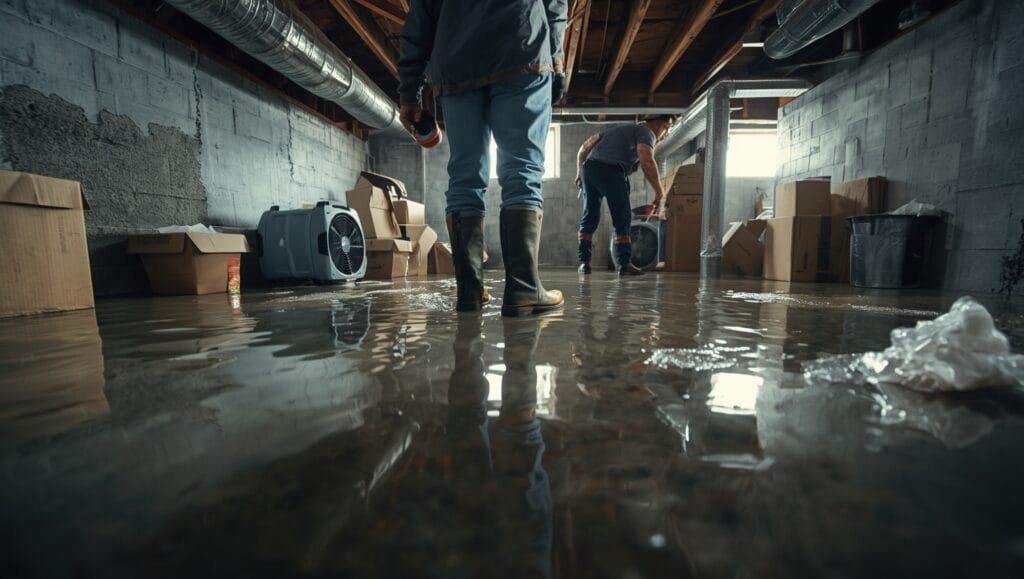
Water’s pooling in the corner of your basement, and you’re standing there wondering how it got past the drain system you thought was working fine.
A basement floor drain is supposed to catch water before it becomes a problem.
But here’s the thing: most homeowners don’t realize their drain is clogged, cracked, or completely non-functional until water’s already damaging their foundation, rotting wood, and feeding mold growth.
We’re talking about the difference between a $500 cleaning and a $15,000 foundation repair.
In this part of our guide, we’ll walk you through what a basement floor drain actually does, why it fails, and what you need to know right now to keep your basement dry.
What a Basement Floor Drain Actually Does
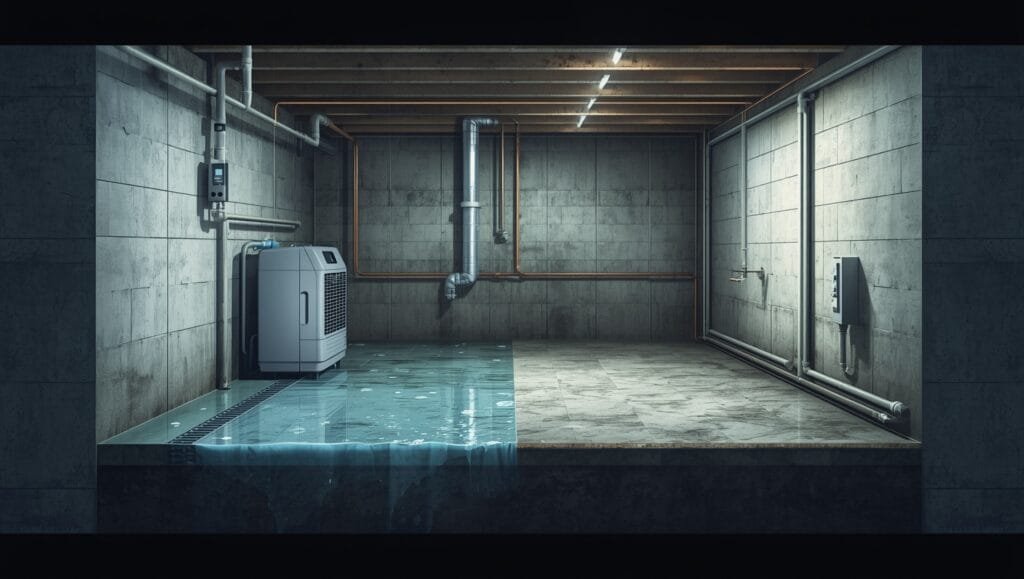
Your basement floor drain sits at the lowest point of your basement—usually near the foundation or in a floor pit.
Its job is simple: catch water before it spreads.
When water collects around your foundation, the drain channels it away from your home’s structure and either toward a sump pump system or out to the exterior drainage.
Without it, water sits directly against your concrete, seeping into cracks and compromising the structural integrity of your foundation.
Think of it like the gutter system on your roof, except it’s working underground where you can’t see it failing.
Most basements have a perimeter drain system (sometimes called a footer drain) that works alongside the floor drain—these two work as a team to manage water intrusion.
The floor drain collects water that’s already made it inside, while the perimeter drain tries to stop it before it gets that far.
Bottom line: A basement floor drain is your first defense against water damage—when it works.
Why Basement Floor Drains Fail (And Why You’re Not Alone)
One homeowner in Rochester called Healthy Spaces after discovering standing water in their basement during a heavy rain.
They’d lived there for eight years thinking their drain was fine.
It wasn’t—it had been clogged with sediment and debris for at least two years.
The damage to their basement walls alone cost $8,000 to repair.
Drains fail for a bunch of reasons, and most of them sneak up on you.
Sediment and Debris Buildup
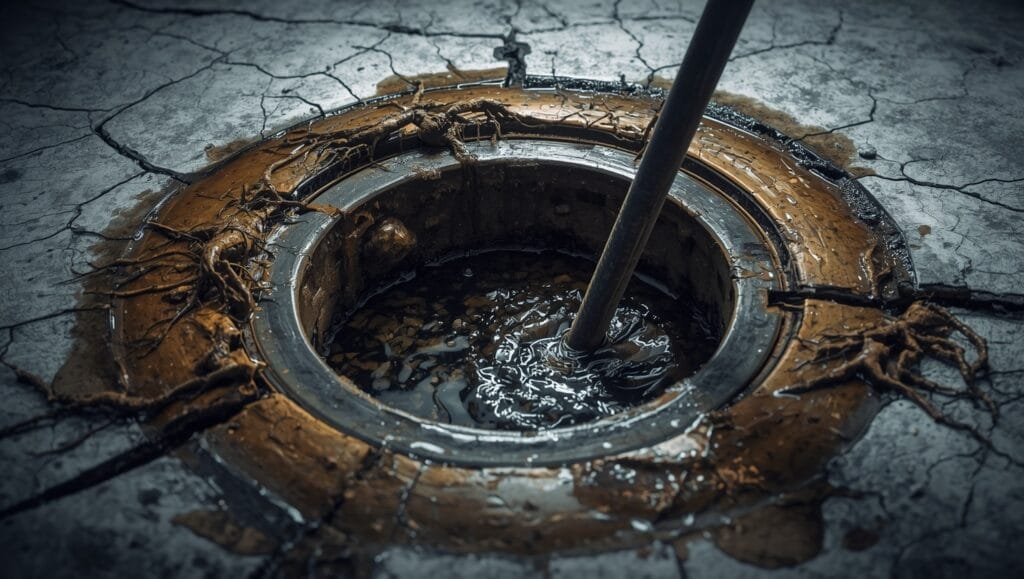
Over time, dirt, silt, and construction debris settle inside your drain pipes.
Water can’t flow through a clogged pipe—it just backs up and pools wherever it lands.
If you’ve got an older home or live in an area with clay-heavy soil, this happens faster.
Tree Roots Infiltrating the System
Tree roots are aggressive.
They seek out moisture and will literally crack into drain pipes to access water.
Once they’re inside, they expand and completely block the pipe.
Rochester’s older neighborhoods—with mature trees and aging drainage systems—see this constantly.
Pipe Cracks and Deterioration
Cast iron and clay pipes don’t last forever.
After 50+ years, they crack, collapse, or deteriorate from the inside out.
Modern PVC drains last longer, but they’re not immune to damage from ground settling or freeze-thaw cycles.
Poor Initial Installation
Not all basement floor drains are installed correctly.
Contractors sometimes skip proper slope (the drain needs a slight angle to flow correctly), use the wrong pipe materials, or connect the drain to the wrong exit point.
You could have a drain that was never going to work properly from day one.
Frozen Pipes in Winter
In northern climates like Rochester, freezing temperatures can seal off your drain if it’s not deep enough or properly insulated.
Water backs up, pressure builds, and suddenly you’ve got a flooded basement in January.
Bottom line: Drains fail silently—sediment, roots, and time are your main enemies.
The Hidden Costs of a Failed Basement Floor Drain
You might think a failed drain is just a wet basement.
It’s not.
Water damage spreads fast, and the costs compound.
Foundation Damage
Concrete absorbs water like a sponge.
When water sits against your foundation continuously, it weakens the concrete, creates cracks, and can eventually lead to structural failure.
A cracked foundation isn’t a quick fix—we’re talking about foundation repair costs that can run $10,000 to $50,000 depending on severity.
Mold Growth
Mold grows in damp basements in as little as 24–48 hours.
Once it takes hold, you’re looking at mold remediation costs that can reach $5,000 to $20,000 depending on the extent.
And that’s before you deal with health issues—respiratory problems, allergies, and asthma are all triggered by mold exposure.
Structural Rot and Decay
Wood beams, joists, and support structures start rotting the moment they’re exposed to persistent moisture.
Replacing structural components in your basement is expensive and invasive.
Decreased Property Value
A wet basement is a red flag for any home buyer.
You’ll lose 10–20% of your home’s value if the issue isn’t resolved before sale.
Bottom line: Ignoring a failed drain turns a $500 problem into a $20,000+ disaster.
How to Tell Your Basement Floor Drain Is Failing
The warning signs are there—you just need to know what to look for.
Standing Water After Rain
If water pools on your basement floor within hours of rain, your drain isn’t working.
Even if it dries eventually, that pooling water is a sign of failure.
Musty, Damp Odors
A smell like wet earth or old basement isn’t normal—it’s mold and mildew growing because moisture levels are too high.
Your drain should be keeping your basement dry enough that you don’t smell anything.
Visible Mold or Mildew
Black or green spots on basement walls, floors, or stored items mean your drain has been failing for a while.
Mold doesn’t appear overnight—it’s been growing in the moisture your failed drain created.
Efflorescence (White Powdery Deposits on Concrete)
This white, chalky buildup on your concrete floor or walls means water’s moving through the concrete and leaving mineral deposits behind.
It’s proof your foundation is absorbing moisture—and your drain isn’t stopping it.
Cracks in the Basement Floor or Walls
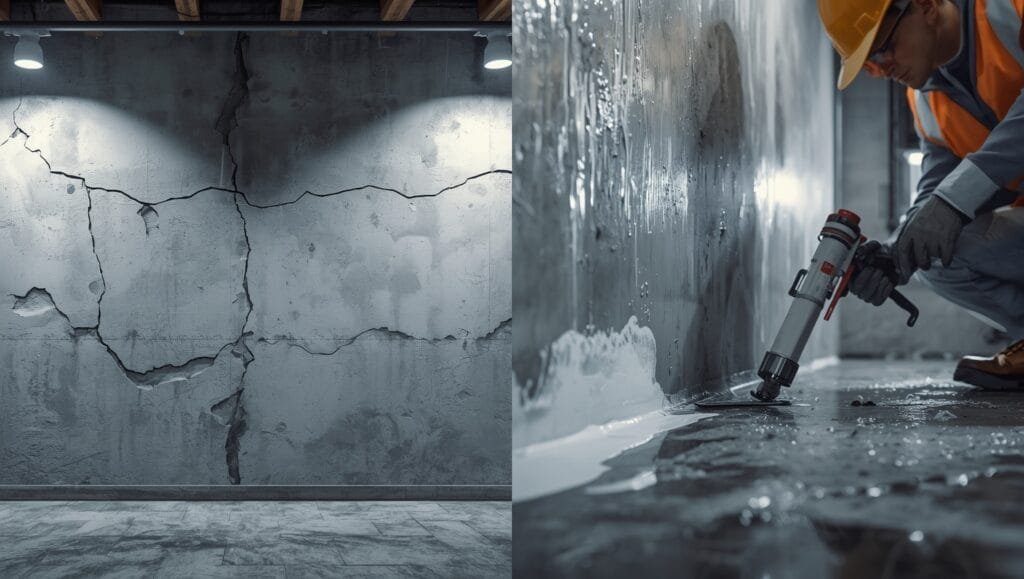
Water pressure from poor drainage can force cracks to expand.
If you see new cracks or cracks that seem to be getting bigger, water intrusion is likely the cause.
Rust Stains or Discoloration
Orange or brown stains around floor drains indicate mineral-rich water that’s not flowing properly.
The water’s sitting there, oxidizing, leaving marks behind.
Bottom line: Pooling water, mold, and damp smells mean your basement floor drain needs attention now.
Why DIY Drain Cleaning Often Doesn’t Work
You’ve probably thought about renting a drain snake or pouring some chemical cleaner down there.
Sounds logical, right?
The problem is that basement floor drains aren’t like your kitchen sink.
They’re buried under concrete, connected to complex systems, and often blocked by things a basic drain snake can’t reach.
Tree roots won’t budge with a standard snake.
Sediment that’s been compacting for years needs professional-grade equipment to clear.
And chemical drain cleaners?
They can actually damage older pipes and won’t touch root blockages at all.
One homeowner in Rochester tried a DIY approach after their basement started smelling like mold.
They spent $200 on equipment and chemicals, got zero results, and called Healthy Spaces three weeks later when water started pooling again.
The actual fix required a camera inspection (to see what was really wrong), professional hydro-jetting to clear the blockage, and a drainage system assessment to make sure everything was working correctly.
Total: $1,500.
But that’s still way less than the $8,000+ they would’ve paid if water had continued damaging their foundation.
Bottom line: DIY drain fixes ignore the root cause and waste time—professional inspection catches real problems fast.
What Professional Drain Assessment Looks Like
When you call in someone who knows what they’re doing, they don’t just guess.
They diagnose.
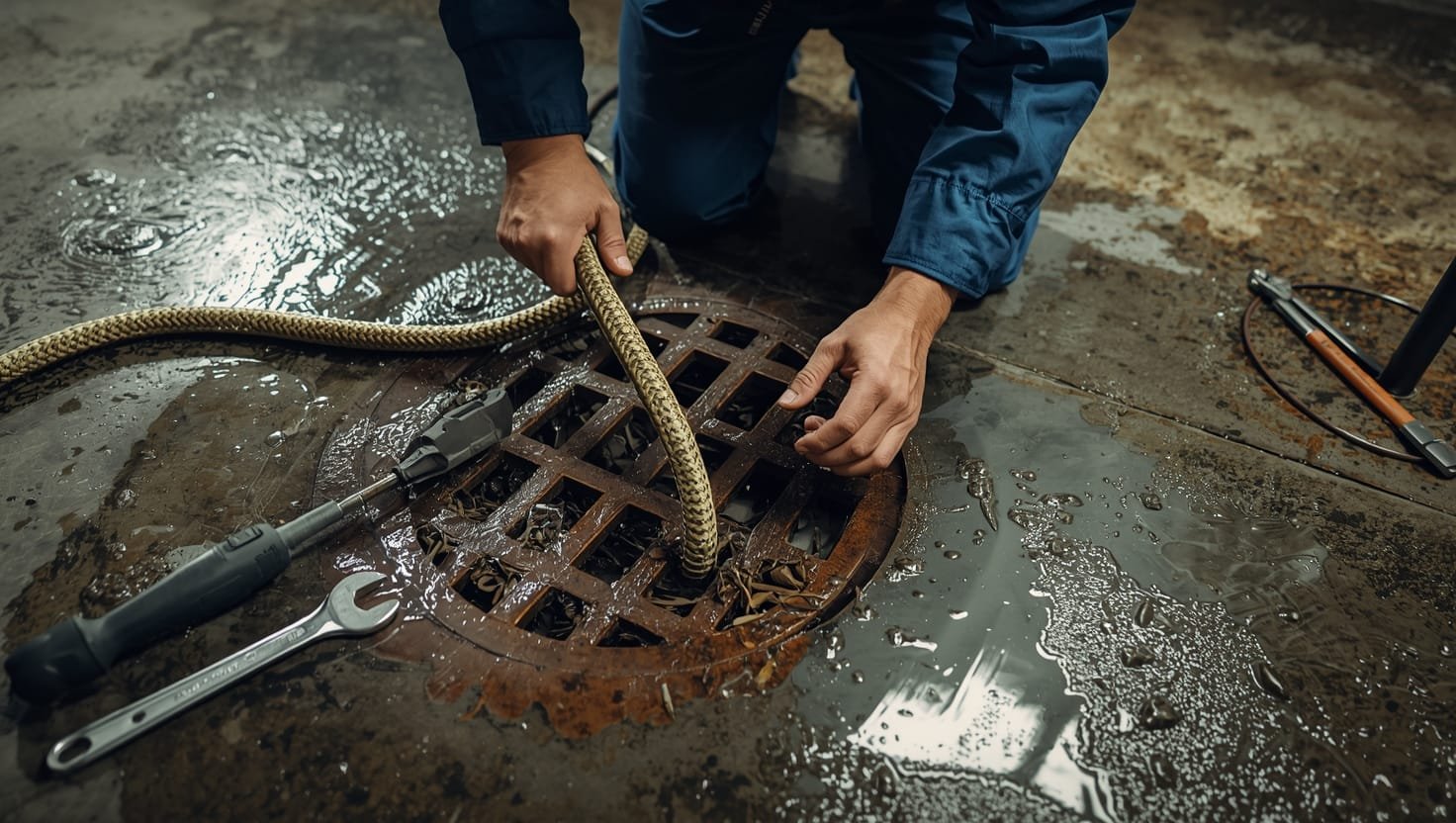
A proper basement floor drain assessment starts with a video camera inspection.
This lets you see exactly what’s inside the pipe—blockages, cracks, root intrusion, pipe deterioration, everything.
You’re not paying for work blindly.
You’re seeing the problem with your own eyes.
From there, a professional can recommend whether you need cleaning, repair, or complete replacement.
They’ll also evaluate whether your drain system is even adequate for your basement’s water management needs.
Some older homes have drains that were never properly sized for the amount of water that collects around the foundation.
In those cases, upgrading to a complete basement drainage system might be the real solution.
Mark Frillici, founder of Healthy Spaces, has been diagnosing and fixing basement drainage issues for over 20 years.
His team uses industry-standard camera inspections and hydro-jetting equipment to clear drains without damaging pipes—and they don’t recommend work you don’t need.
Bottom line: Professional assessment reveals the real problem and prevents unnecessary spending on wrong solutions.
The Connection Between Failed Drains and Mold Growth
Here’s where things get serious—a failed basement floor drain doesn’t just create water damage, it creates the perfect environment for mold.
Mold needs three things: moisture, darkness, and organic material.
Your basement has all three.
When your drain fails and moisture levels spike, mold colonization starts within days.
You might not see it at first—it grows inside walls, under flooring, and in the crawl space before you notice any visible growth.
By the time you smell it or see it, mold’s been spreading for weeks.
The health impacts are real too.
Mold spores spread through your home’s air system and can trigger asthma attacks, allergies, and respiratory infections—especially in kids and elderly family members.
One family in Rochester discovered black mold in their basement after their daughter’s asthma suddenly got worse.
The source?
A failed floor drain that had been creating high humidity for months.
After mold inspection and remediation plus drain repair, humidity levels dropped and her symptoms improved within weeks.
The connection between drainage and health is direct.
Bottom line: Failed drains fuel mold growth—which damages your home and your family’s health simultaneously.
What Happens Next in Part 2
You now understand what a basement floor drain is, why it fails, and what it costs when you ignore the problem.
Part 2 is going to walk you through the exact steps to fix it—from emergency response if you’ve got active flooding, to long-term solutions that keep your basement dry for decades.
We’ll cover drain cleaning options, replacement considerations, and how to integrate your floor drain with a complete basement waterproofing system.
You’ll learn what Mark and his team at Healthy Spaces recommend for different situations, real costs, and timelines you can actually plan around.
If you’re dealing with a wet basement, mold concerns, or you just want to know if your drainage system is working, don’t wait for Part 2.
Contact Healthy Spaces now for a professional basement floor drain assessment—Mark and his team have solved thousands of water and mold problems across Rochester and beyond, and they can tell you exactly what’s happening under your basement in about an hour.
Your Basement Floor Drain Just Failed—Now What? The Step-by-Step Fix That Saves Thousands
Water’s backing up, and you’re realizing that drain you thought was working isn’t doing a damn thing.
The panic sets in—how much is this going to cost?
How fast do you need to act?
The truth is, there’s a clear path forward, and it doesn’t always mean ripping up your entire basement floor or dropping $20,000 on repairs.
Most basement floor drain problems can be solved—but only if you know what to do first.
Part 2 walks you through the exact recovery steps, from emergency response to permanent fixes that actually work.
The Emergency Response: What to Do Right Now
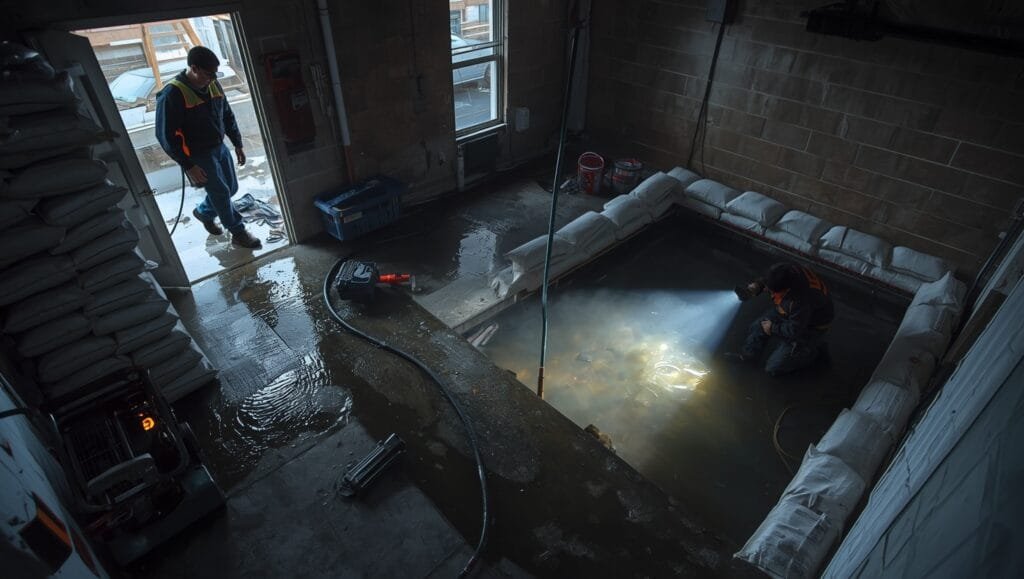
If water’s actively pooling or rising in your basement, you’re in emergency mode.
Forget everything else for the next 30 minutes.
Stop the Water Source (If You Can)
Look for where the water’s coming from.
Is it seeping through foundation cracks, coming up through the floor, or pooling near your basement floor drain?
If you can identify an obvious source—like a burst pipe or overflowing gutter—address it immediately.
Turn off water to that area if needed.
For groundwater coming through the floor or walls, you’re dealing with drainage failure, not a plumbing leak.
That’s a different fix, and we’ll cover it below.
Get Water Out Now
Don’t wait for it to dry on its own.
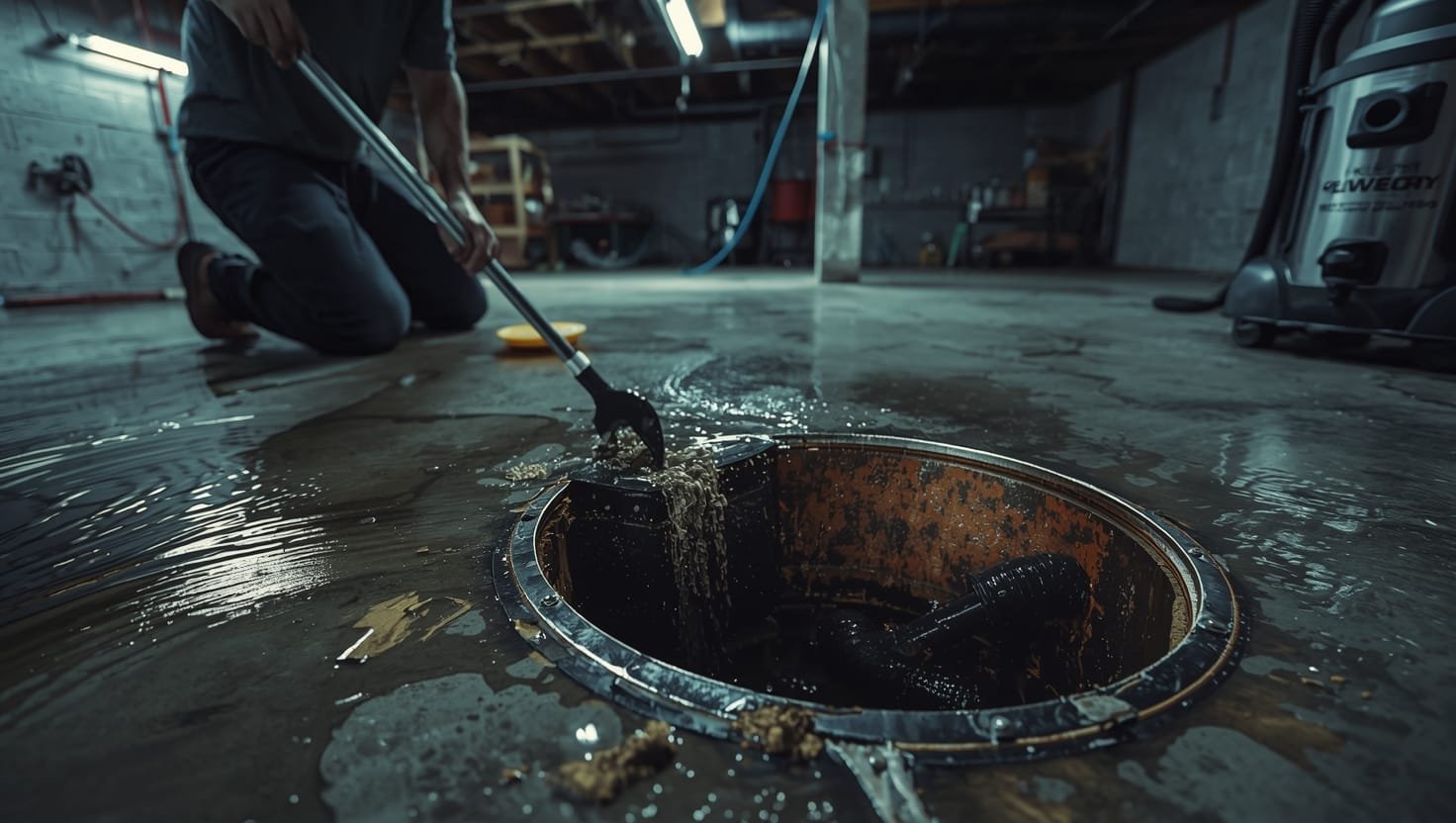
Rent a submersible pump from a hardware store (they cost $30–$50 per day) or use a wet vac to pull standing water out of your basement.
The longer water sits, the more damage spreads—mold starts growing within 24 hours, and concrete begins absorbing moisture immediately.
One homeowner in Rochester ignored standing water for three days while waiting for a contractor.
By day four, mold was visible on the walls and the concrete had absorbed enough water to start cracking.
The cleanup and remediation bill jumped from $2,000 to $6,500.
Bottom line: Get standing water out within hours, not days—it’s the difference between a contained problem and a cascading disaster.
Increase Air Circulation
Open windows if weather permits.
Set up fans to push air around the basement.
Wet basements breed mold fast, and moving air slows that process down.
If you’ve got a dehumidifier, run it at full capacity.
This isn’t a permanent fix—it’s buying you time while you figure out the real problem.
The Diagnostic Step: Finding Out What Actually Failed
Now that you’re not in panic mode, you need to know what’s broken.
And you need to know it before you throw money at solutions that won’t work.
Schedule a Professional Camera Inspection
This is non-negotiable if you want accuracy.
A video camera inspection of your basement floor drain costs $300–$500 and shows you exactly what’s happening inside the pipe—blockages, root intrusion, cracks, collapsed sections, everything.
You see it with your own eyes on a screen.
No guessing.
No wasted money on fixes that don’t address the real problem.
The camera feeds through the drain and captures footage of the entire system.
A professional then reviews it and tells you whether you need cleaning, repairs, or replacement.
Mark Frillici at Healthy Spaces has been running these inspections for over 20 years—and he says most homeowners are shocked at what they find.
“People think their drain is blocked by sediment, but we find tree roots that’ve completely wrapped around the pipe,” Mark explained during a recent job in Rochester.
“Or the drain was never sloped correctly from day one, so water never really flows through it at all.”
Bottom line: A camera inspection costs $300–$500 and prevents you from spending $5,000 on the wrong fix.
Get a Full Drainage System Assessment
Don’t just look at the floor drain in isolation.
Ask the inspector to evaluate your entire basement drainage system.
This includes your perimeter drain (the one running around your foundation), your sump pump (if you have one), and where all that water actually exits your property.
Some basements have a floor drain that’s perfectly clean but doesn’t connect to anything that works—it just drains into a pit that’s clogged or broken.
That means you’ve fixed nothing.
A full assessment tells you if you’re dealing with one problem or multiple failures.
Bottom line: One broken component in your drainage system defeats the whole setup—assess everything, not just the floor drain.
The Cleaning Solution: When Your Drain Just Needs Clearing
If your inspection shows a clogged but otherwise intact basement floor drain, you’re looking at the cheapest fix available—professional drain cleaning.
Hydro-Jetting: The Professional Standard
Forget the drain snake and chemical cleaners.
Hydro-jetting uses high-pressure water (up to 4,000 PSI) to blast through blockages, sediment, and even small root intrusions.
It’s fast, effective, and doesn’t damage modern pipes.
Cost runs $400–$1,200 depending on how far the blockage extends and how severe it is.
Most jobs take 2–4 hours.
A homeowner in Rochester had their basement floor drain hydro-jetted after sediment buildup was found during camera inspection.
The cleaning cost $650, and their basement stayed dry through the next heavy rain—something that hadn’t happened in two years.
They avoided a $3,000+ foundation repair because they caught and fixed the problem before water damage got worse.
Chemical Treatments for Recurring Blockages
If roots keep growing back into your drain, a professional might recommend a root-killing chemical treatment.
These products line the pipe and kill roots on contact without damaging the pipe itself.
Cost is typically $200–$400 per treatment.
It’s not a permanent solution—roots can regrow—but it buys you 1–2 years before you need to address the bigger problem of pipe replacement.
Bottom line: Hydro-jetting clears most blockages for $400–$1,200 and avoids costly replacement if the pipe itself is still intact.
The Repair and Replacement Path: When Cleaning Isn’t Enough
Sometimes your camera inspection reveals cracks, deterioration, or collapsed sections of pipe.
Cleaning won’t fix that—you need repair or replacement.
Spot Repairs for Minor Cracks
If the damage is localized to a small section, a contractor can cut out the damaged piece and install a new section of pipe.
This costs $800–$2,000 depending on pipe material and how deep the damage goes.
It’s faster than full replacement and preserves most of your existing system.
The trade-off?
You’re only fixing part of the problem—if the rest of the pipe is aging, you might face another failure in a few years.
Full Basement Floor Drain Replacement
If your pipe is 50+ years old, heavily deteriorated, or has multiple problem areas, replacement is the real solution.
Yes, it’s expensive—$2,500–$8,000 depending on pipe length and accessibility.
But here’s what you get: a new system that’ll work for the next 50 years, no more emergency calls, no more water pooling in corners, and no more worrying about foundation damage.
Modern PVC pipes last indefinitely when installed correctly.
One family in Rochester bit the bullet on a $5,500 full replacement after their 60-year-old cast iron drain started failing.
They’d been dealing with recurring blockages and damp basement smells for years.
Six months post-replacement, their basement is bone dry, no smells, no mold concerns.
They told Healthy Spaces it was the best money they spent on their house.
Bottom line: Full replacement costs $2,500–$8,000 but eliminates drain problems for life—way cheaper than repeated emergency fixes.
Integrating Your Floor Drain Into a Complete Waterproofing System
Here’s what most homeowners don’t realize: a basement floor drain only works if it’s part of a bigger system.
A drain sitting alone in your basement is like having a bucket under a roof leak—it catches what’s already inside, but it doesn’t stop water from getting in.
Pairing Your Floor Drain With a Sump Pump
Your floor drain should connect to a sump pump system that automatically removes water from your basement.
When water collects in the sump pit (usually a small basin under the floor), the pump kicks on and pushes water away from your foundation—either to a storm drain, dry well, or exterior discharge line.
A basic sump pump system costs $800–$2,000 installed.
Without it, your floor drain just channels water into a pit where it sits and causes damage.
Bottom line: Floor drain + sump pump = a system that actually works; one without the other is incomplete.
Adding Interior Perimeter Drainage
If water’s coming through your basement walls or pooling near the foundation, you might need interior perimeter drainage—a channel cut along the inside base of your foundation that catches water before it spreads.
This connects to your sump pump system, creating a complete moisture management setup.
Cost is $2,000–$5,000 depending on basement size and complexity.
It’s a bigger project, but it solves the root issue instead of just managing symptoms.
Check out Healthy Spaces’ wet basement and drainage solutions to see how these systems work together.
Exterior Waterproofing for Long-Term Protection
The gold standard is stopping water before it reaches your foundation.
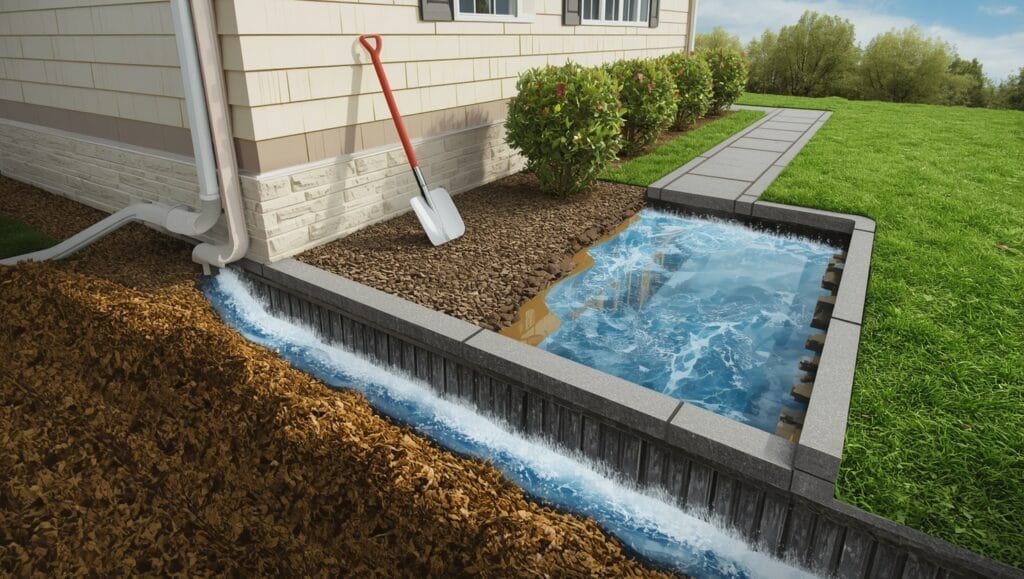
Exterior waterproofing involves excavating around your foundation, applying a waterproof membrane, and installing exterior drainage pipes.
It’s expensive ($5,000–$15,000) and disruptive, but it solves the problem at the source.
Most homeowners don’t need this unless they’re dealing with chronic water intrusion that interior solutions can’t handle.
For detailed guidance on basement waterproofing options, explore professional basement waterproofing in Rochester, NY.
Bottom line: A floor drain works best as part of a complete system—pair it with sump pumps and perimeter drainage for real results.
Timeline and Cost Breakdown: What to Expect
You’re probably wondering when you can expect relief and what the actual costs look like.
Emergency Situations (Active Flooding)
Response time: Same day to next morning.
Cost: $500–$2,000 for emergency water removal and temporary fixes.
What happens: A contractor removes standing water, assesses damage, and stabilizes the situation while you plan the real fix.
Standard Repairs (Clogged or Damaged Drain)
Response time: 3–7 days for inspection and scheduling.
Cost: $400–$2,000 for cleaning or spot repairs; $2,500–$8,000 for full replacement.
Timeline: Most jobs complete within 1–3 days.
Complete System Upgrades (Floor Drain + Sump Pump + Perimeter Drainage)
Response time: 1–2 weeks for planning and permitting.
Cost: $4,000–$12,000 depending on scope.
Timeline: 3–5 days of work spread over 1–2 weeks.
Bottom line: Simple cleaning runs $400–$1,200; full system replacement runs $4,000–$12,000—but prevents $50,000+ in future damage.
Preventing Future Basement Floor Drain Failures
Once your drain is fixed, don’t just forget about it.
A little maintenance keeps it working for decades.
Annual Inspections
Have your basement floor drain inspected once a year—ideally in spring before heavy rain season.
A quick visual check and listening for unusual sounds can catch problems early.
Cost: Usually $100–$200 as part of a maintenance plan.
Keep Debris Out
Make sure gutters and downspouts are clean and directing water away from your foundation.
A clogged gutter sends water straight to your basement, overloading your drain system.
Clear gutters twice a year—spring and fall.
Monitor Your Sump Pump
If you have one, test it monthly by pouring water into the pit and making sure the pump kicks on.
Replace the battery backup annually.
A failed sump pump is like having no drainage system at all.
Bottom line: Annual inspections and basic maintenance keep your basement floor drain working—and keep your wallet from getting destroyed.
FAQ: Your Basement Floor Drain Questions Answered
How do I know if my basement floor drain is broken?
Standing water after rain, musty smells, visible mold, or white mineral deposits on concrete all point to a failed drain. If you see any of these signs, get a professional inspection—don’t wait.
Can I fix my basement floor drain myself?
Basic cleaning with a drain snake might help if the blockage is minor and close to the opening, but most basement floor drains are too complex and buried too deep for DIY fixes. Professional hydro-jetting and camera inspections are worth the money because they catch real problems that DIY tools miss.
How much does it cost to replace a basement floor drain?
Full replacement typically runs $2,500–$8,000 depending on pipe length, material, and how accessible it is. Simple cleaning costs $400–$1,200. A camera inspection to diagnose the problem costs $300–$500 and prevents you from overspending on unnecessary work.
Will my homeowner’s insurance cover basement floor drain repair?
Most standard homeowner’s policies don’t cover drain repair or water damage from failed drainage systems. Flood insurance is separate and usually doesn’t cover this either. Check your policy, but plan to pay out of pocket—which is exactly why catching problems early matters.
How often should I have my basement floor drain inspected?
Once a year is ideal, especially in spring before heavy rain. If you’ve had repairs done, get a follow-up inspection after the first heavy rain to make sure everything’s working correctly.
What’s the difference between a floor drain and a sump pump?
A floor drain catches water that’s already pooled on your basement floor and channels it away. A sump pump sits in a pit and actively pumps water out of your basement. They work together—the drain directs water to the pump, and the pump removes it from your property entirely.
Can tree roots really destroy a basement floor drain?
Absolutely. Tree roots seek moisture and will crack into drain pipes to access it. Once inside, they expand and completely block the pipe. If you’ve got mature trees near your foundation, this is a real risk—camera inspections catch root intrusion early.
The Real Cost of Waiting vs. Acting Now
Let’s be honest about the math.
Ignoring a failing basement floor drain isn’t free—it just feels free because you’re not paying for it today.
You’re paying for it in foundation damage, mold remediation, structural rot, and lost property value.
One homeowner in Rochester ignored a musty basement smell for 18 months.
When they finally called for help, the inspection revealed a completely clogged floor drain, black mold throughout the basement, and $12,000 in foundation damage that could’ve been prevented with a $650 cleaning.
The full remediation—drain cleaning, mold removal, foundation repair, and dehumidification—cost $18,500.
If they’d acted when the smell first appeared, the total would’ve been around $2,000.
That’s a $16,500 difference.
Acting now isn’t an expense—it’s an investment that saves you thousands.
Bottom line: A $500 fix today beats a $20,000 disaster tomorrow—always.
Your Next Move
You now know what a failed basement floor drain looks like, how to fix it, and what it costs.
The question is: are you going to act?
If you’re seeing standing water, smelling mold, or noticing any of the warning signs from Part 1, don’t sit on this.
Water damage accelerates fast, and mold spreads faster.
Mark Frillici and the team at Healthy Spaces have been fixing basement drainage problems across Rochester, NY for over 20 years.
They’ve saved homes from thousands in damage by catching problems early and fixing them right.
Contact Healthy Spaces now for a professional basement floor drain assessment and camera inspection.
It takes about an hour, costs $300–$500, and tells you exactly what’s wrong and what needs to happen next.
No pressure, no sales pitch—just honest answers about your basement.
Because waiting always costs more.
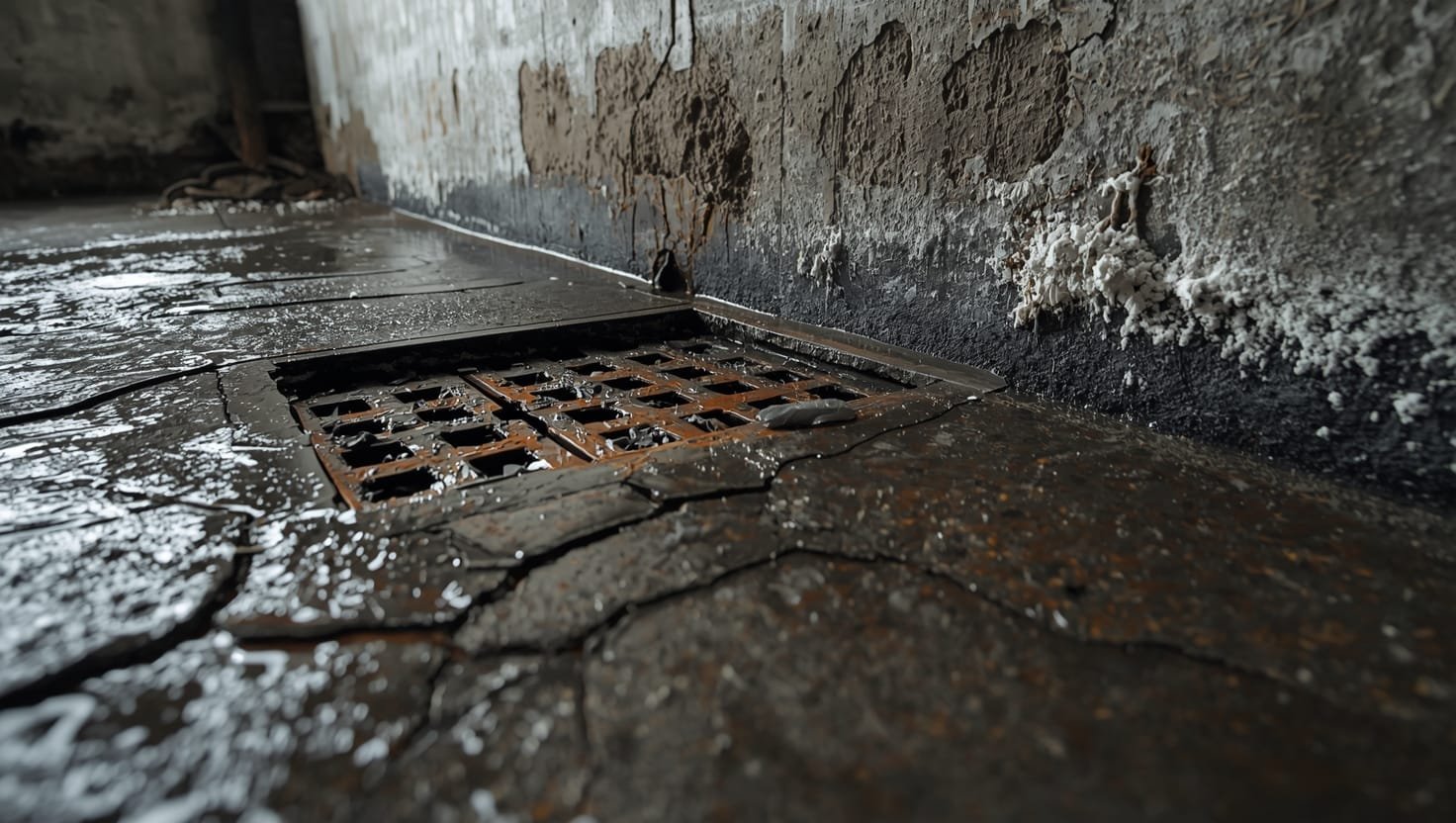
Your Basement Floor Drain Looks Fine—But It’s Silently Destroying Your Foundation Right Now
You walk downstairs, flip the light on, and everything seems normal.
The basement floor’s dry.
No smell.
No visible water pooling in the corners.
So you figure your basement floor drain is doing its job.
Except it might not be.
Here’s what most homeowners miss: a basement floor drain can look like it’s working while it’s actually failing at a microscopic level.
Water’s moving through your concrete foundation right now—you just can’t see it happening.
By the time the damage becomes visible, you’re looking at structural cracks that cost $15,000 to $50,000 to repair.
This is Part 3 of our basement floor drain guide, and it’s about the sneaky failures you won’t catch with your eyes alone.
The Silent Killer: Slow Water Infiltration Through Your Foundation
Most homeowners think foundation damage happens fast—a big storm, water pools everywhere, panic mode.
That’s one scenario.
But the real threat is different.
It’s slow, invisible, and happening in thousands of basements across Rochester right now.
Your basement floor drain might be channeling water away from the surface, but groundwater is still seeping through your concrete at a rate you can’t see.
Concrete is porous—it’s basically a sponge for water.
Even if your drain catches the big stuff, moisture vapor is moving through the concrete walls and floor constantly.
Over months and years, this creates a wet microclimate inside your foundation.
Cracks form from the inside out.
Rebar corrodes.
The structural integrity of your home gets compromised before you ever notice standing water.
One homeowner in Rochester had their basement inspected after noticing a slight dampness near the foundation wall.
The inspector found moisture levels at 95%—well above the safe threshold of 60%.
The basement floor drain was technically working, but it wasn’t designed to handle the volume of water pushing against the foundation.
Water was finding its way through microcracks faster than the drain could manage.
Bottom line: Dry basements can still have wet foundations—moisture moves through concrete invisibly.
Why Your Basement Floor Drain Isn’t Enough (And Never Was)
This is the uncomfortable truth nobody wants to hear: a basement floor drain alone isn’t a complete water management system.
It’s reactive, not preventative.
A floor drain catches water that’s already made it inside your basement.
It’s like mopping up a flood instead of fixing the leak.
The water got past your first line of defense—your foundation itself—and now you’re dealing with damage control.
Think about what’s actually happening.
Groundwater is pushing against your foundation from the outside.
Your foundation is supposed to stop it.
But 50-year-old concrete with hairline cracks?
That’s not stopping anything.
Water finds those cracks and seeps through.
Your basement floor drain catches it on the inside and channels it away.
But the damage to your foundation is already happening.
Hydrostatic pressure—the force of groundwater pushing against your foundation—is one of the most destructive forces in home construction.
It doesn’t just cause cracks.
It can bow walls, crack footings, and eventually compromise the entire structural system of your home.
A proper drainage system needs to work from the outside in, not the inside out.
That means stopping water before it reaches your foundation, not catching it after it’s already breached the walls.
Most older homes in Rochester were built before modern exterior waterproofing standards.
Their basement floor drains are Band-Aids on a much bigger problem.
Bottom line: Floor drains manage water inside; they don’t stop water from attacking your foundation.
The Moisture Vapor Trap: How Your Basement Stays Damp Even When It Looks Dry
You’ve probably noticed that musty basement smell that never quite goes away.
You blame it on the old basement.
You light candles.
You run a dehumidifier.
But the smell comes back.
That’s not just mold growing in dark corners.
That’s moisture vapor moving through your concrete foundation continuously.
Water doesn’t just move through concrete as liquid.
It also moves as vapor—invisible water molecules that travel through the porous structure of the concrete itself.
Your basement floor drain can’t stop vapor.
It only catches standing water.
So even if your drain is working perfectly, your basement is still absorbing moisture through the walls and floor.
This moisture creates the perfect environment for mold growth.
Mold doesn’t need standing water.
It just needs humidity above 60%.
And in a basement where moisture vapor is constantly moving through the concrete, you’re guaranteed to hit that threshold.
Mark Frillici from Healthy Spaces has inspected thousands of basements where the owner swears their floor drain is working fine.
But when he runs a moisture meter on the walls, the numbers tell a different story.
Moisture content at 80%, 90%, sometimes higher.
The floor drain isn’t the problem—it’s that the foundation itself is wet.
Vapor barrier systems and proper interior drainage address this, but a basement floor drain alone can’t.
Bottom line: Moisture vapor moves through concrete regardless of your floor drain—humidity stays high, mold stays inevitable.
The Sump Pump Failure Nobody Sees Coming
Here’s a scenario that plays out more often than you’d think.
Your basement floor drain is connected to a sump pump system.
Water collects in the sump pit, the pump kicks on, water gets pumped out of your basement.
Perfect system, right?
Except sump pumps fail silently.
You don’t know it’s broken until water starts pooling again.
And by then, you’ve got a problem.
Sump pumps fail for several reasons.
The motor burns out from age.
The check valve gets stuck and water flows backward into the pit instead of out.
The discharge line freezes in winter—especially common in Rochester.
Sediment clogs the intake and the pump can’t draw water.
The float switch gets stuck and never triggers the pump to turn on.
You could have a basement floor drain that’s working perfectly, but if your sump pump is dead, water’s not leaving your basement.
It’s just pooling in the pit below the floor.
One homeowner discovered their sump pump had been non-functional for three months when they finally got their basement inspected.
The basement looked fine because water was collecting below the floor level in the sump pit.
But the moisture and humidity created mold throughout the basement.
The repair bill was $2,000 for mold remediation plus $1,500 for a new sump pump system.
A simple annual inspection would’ve caught it in minutes.
Bottom line: Sump pumps fail without warning—your floor drain is useless if the pump’s dead.
Seasonal Changes That Break Your Basement Floor Drain System
Your basement floor drain works fine in spring.
Then summer hits.
Heavy rains come, and suddenly your basement’s wet.
Or winter arrives—temperatures drop, and the discharge line freezes.
Seasonal changes expose weaknesses in your drainage system that don’t show up during normal conditions.
Spring snowmelt is brutal on older drainage systems.
The volume of water moving through the ground around your foundation spikes dramatically.
If your basement floor drain was marginally adequate before, it gets overwhelmed now.
Water can’t flow fast enough through the drain, so it backs up and pools.
Or the sump pump can’t keep up with the volume and falls behind.
Winter brings a different threat—freeze-thaw cycles.
Water in the discharge line freezes, blocking the flow.
Water backs up into the sump pit, pressure builds, and your basement floods.
Rochester’s winters are brutal on drainage systems that aren’t designed for them.
If your discharge line runs above ground or isn’t insulated properly, freezing is almost guaranteed.
Summer storms are another stress test.
A heavy rain event dumps more water into the ground in a few hours than your drain system was designed to handle.
The drain gets overwhelmed, water backs up, and you’ve got a wet basement.
Seasonal flooding isn’t a sign that your drain failed permanently—it’s a sign that your drain is undersized for your property’s actual water management needs.
Bottom line: Seasonal stress reveals drainage weaknesses that normal conditions hide year-round.
The Perimeter Drain Connection: Why Your Floor Drain Can’t Work Alone
Your basement floor drain is only half the equation.
The other half is your perimeter drain—the system that runs around the foundation trying to stop water before it gets inside.
When the perimeter drain fails, your floor drain gets overwhelmed.
Water that should’ve been intercepted outside is now coming through the foundation, and your floor drain has to catch everything.
A perimeter drain that’s clogged, cracked, or improperly installed means water pressure against your foundation increases dramatically.
More water seeping through the walls.
Higher moisture levels in the basement.
More stress on your floor drain.
Eventually, the floor drain can’t keep up.
Water starts pooling, and you’ve got damage.
Many older homes in Rochester have perimeter drains that were never properly maintained.
They’re clogged with sediment, cracked from ground settling, or disconnected from the sump pump system entirely.
Homeowners think their floor drain is the problem when actually the real issue is 20 feet away, running under the foundation perimeter.
You can’t fix a wet basement by only addressing the floor drain.
You have to evaluate and fix the entire drainage system—perimeter drain, floor drain, sump pump, and discharge lines all working together.
That’s why professional assessment looks at the whole picture, not just the visible part.
Bottom line: A failed perimeter drain overloads your floor drain—the whole system has to work together.
What Professional Maintenance Looks Like (And Why You’re Probably Not Doing It)
Your basement floor drain isn’t a set-it-and-forget-it system.
It needs maintenance.
But most homeowners don’t know that, so they don’t do it.
Then they’re shocked when the drain fails.
Professional maintenance for a basement floor drain system includes several things.
Annual inspections with a moisture meter to check humidity levels in the basement.
Testing the sump pump monthly to ensure it’s working.
Checking the discharge line in winter to make sure it’s not frozen.
Clearing gutters and downspouts twice a year so water isn’t being directed toward the foundation.
Video camera inspections every 3–5 years to check for cracks or blockages in the drain pipes.
Hydro-jetting the drain if sediment buildup is detected.
Cleaning the sump pit and pump intake annually to prevent clogs.
This isn’t expensive maintenance—it’s preventative.
You’re spending $200–$500 per year to keep a system working that would cost $10,000+ to repair if it fails.
Most homeowners skip the maintenance, ignore the warning signs, and then face emergency repairs.
That’s when a simple cleaning that costs $600 becomes a $15,000 foundation repair.
Bottom line: Annual maintenance costs hundreds; ignoring it costs tens of thousands.
Red Flags That Your Basement Floor Drain Is Failing (Even If It Looks Dry)
You don’t need standing water to know your drain is failing.
There are subtle signs most people miss.
Humidity that stays high even with a dehumidifier running.
That persistent musty smell that candles and air fresheners can’t cover.
Efflorescence—those white mineral deposits on your basement walls or floor.
Cracks in the concrete that seem to be growing.
Rust stains around the floor drain opening.
Visible mold on stored items or in corners.
A sump pump that’s running constantly instead of just during heavy rain.
Any of these means your basement floor drain isn’t managing water properly.
Water is moving through your foundation faster than your drain can handle.
Or the drain itself is failing and water’s backing up.
The point is—don’t wait for visible flooding to take action.
These subtle signs are your early warning system.
Catch them, and you’re looking at a $1,000–$3,000 fix.
Ignore them, and you’re looking at a $20,000+ disaster.
Bottom line: Musty smells and high humidity mean your floor drain’s failing—act before water damage starts.
FAQ: The Questions Homeowners Actually Ask About Basement Floor Drains
Can a basement floor drain fail if my basement looks dry?
Yes—moisture can be moving through your concrete foundation invisibly through vapor diffusion, or the drain might be undersized and only handling part of the water load.
High humidity and musty smells are signs of failure even without visible water.
How often should I test my sump pump?
Test it monthly by pouring water into the sump pit and watching it activate and drain.
If it doesn’t turn on or doesn’t pump water, it needs immediate repair or replacement.
What’s the difference between a floor drain and a perimeter drain?
A floor drain catches water that’s already pooled on the basement floor; a perimeter drain runs around the foundation and tries to stop water before it gets inside.
Both need to work for effective water management.
Can I clean my own basement floor drain?
Basic clearing with a plunger might help minor clogs, but professional hydro-jetting is needed for serious blockages.
DIY attempts often miss the real problem and waste time.
Why is my basement humid if the floor drain is working?
Moisture vapor moves through concrete regardless of your floor drain—you need a dehumidifier system and proper ventilation to control humidity.
What should I do if my sump pump discharge line freezes?
Thaw it immediately using heat tape or warm water, then upgrade to a below-grade discharge line or add insulation to prevent future freezing.
How do I know if my perimeter drain is failing?
A professional camera inspection will show blockages, cracks, or root intrusion in the perimeter drain system.
High water pressure against your foundation walls is also a sign of perimeter drain failure.
Your Action Plan: Stop Ignoring the Invisible Problem
You now understand that a basement floor drain can look like it’s working while your foundation is being silently destroyed.
The question is what you’re going to do about it.
If you’ve got a basement—especially an older one in Rochester—you need a professional assessment of your entire drainage system.
Not just the floor drain.
The whole picture.
Perimeter drain, floor drain, sump pump, humidity levels, moisture content in the concrete—all of it.
Mark Frillici and the team at Healthy Spaces have been diagnosing these systems for over 20 years.
They’ll run a moisture assessment, inspect your drainage system with a camera, and tell you exactly what’s happening—and what it’s going to cost to fix.
No guessing.
No wasted money on wrong solutions.
Just honest answers about the condition of your basement.
If you’re seeing any of the warning signs from this guide—or if you just want to know whether your basement floor drain is actually protecting your home—don’t wait.
Contact Healthy Spaces now for a professional basement assessment and get the answers you need.
Mark and his team have prevented thousands of homes from water damage and mold by catching problems early.
Your basement could be next.