Contact Us For a Free Qoute
Sump Pump Flooded Basement? Here’s Why
Your Sump Pump Failed and Your Basement’s Flooded—Now What?
It happens fast. You head downstairs for laundry and your foot hits standing water. Your sump pump—that device you’ve barely thought about since installation—just stopped working. Now you’re staring at thousands of dollars in potential damage, and mold can start colonizing within 48 hours. A sump pump flooded basement isn’t just an inconvenience; it’s a property threat that gets worse by the hour.
The good news? You’re not helpless. A failed sump pump doesn’t mean your basement’s permanently ruined. What matters now is speed and knowing exactly what to do in the next few hours. We’re going to walk you through the immediate steps, why sump pumps fail, and how to prevent this from happening again.
The First 24 Hours: What You Need to Do Right Now
When your basement floods, those first hours determine whether you’re dealing with a cleanup or a full-scale restoration project.
Step 1: Stop the Water Source
If water’s actively entering your basement, find where it’s coming from. Is it seeping through cracks in the foundation? Backing up from a floor drain? Pouring in from a window well?
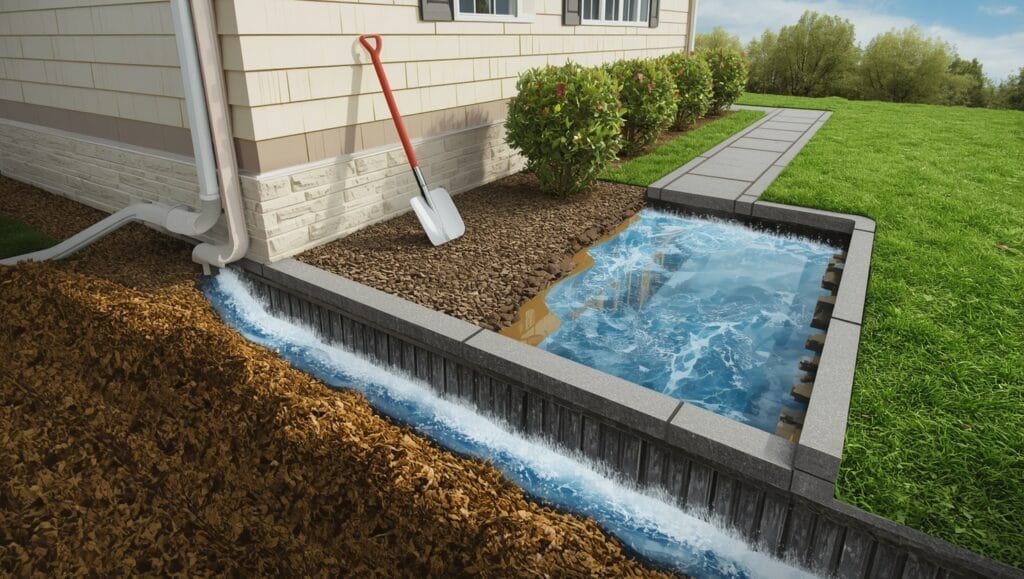
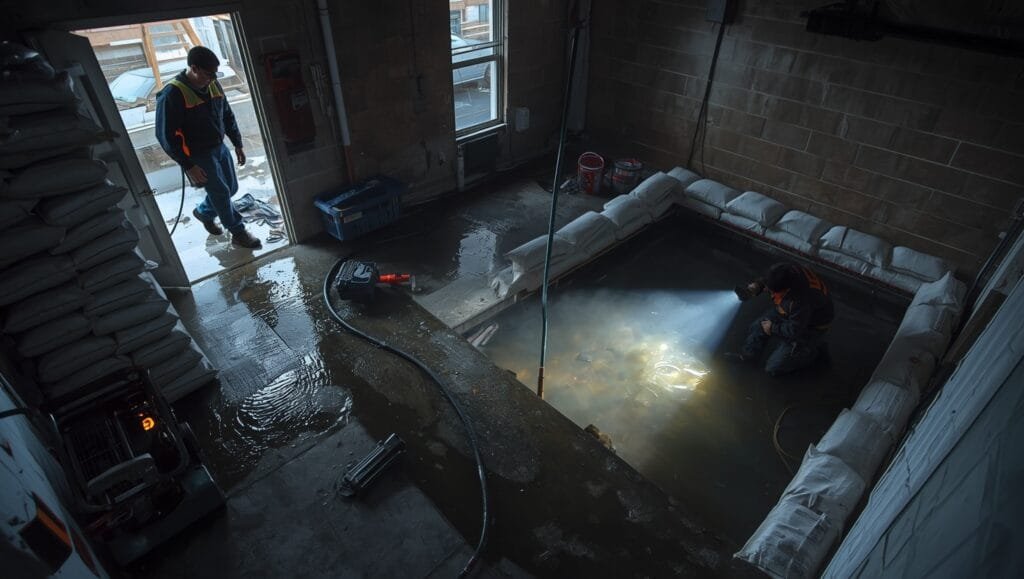
If it’s heavy rain or groundwater, you might not be able to stop it completely—but you can redirect it. Move sump pump discharge lines away from the foundation. If you have a window well, clear debris so water can drain. Sandbags or waterproof barriers can buy you time while you call a professional.
If water’s backing up from plumbing or a sewer line, that’s different. Turn off your main water supply if needed, and get a plumber involved immediately.
Bottom line: Find the source fast—redirecting water beats fighting it.
Step 2: Get Water Out of Your Basement
You’ve got two options here: pump it out or let it drain. If water’s deeper than a few inches, you need equipment.
Submersible pumps (wet-dry vacuums work for shallow water) will move water out faster than you’d think. Rent one from a hardware store if you don’t own one—they’re cheap for a day or two. Point the discharge line away from your foundation (seriously, don’t pump it back toward the house).
If water’s only an inch or two deep and you’ve got good drainage outside, sometimes gravity does the work for you. But don’t count on it. Get the water moving.
Bottom line: Every hour water sits is an hour mold gets closer to taking over.
Step 3: Dry Everything Out
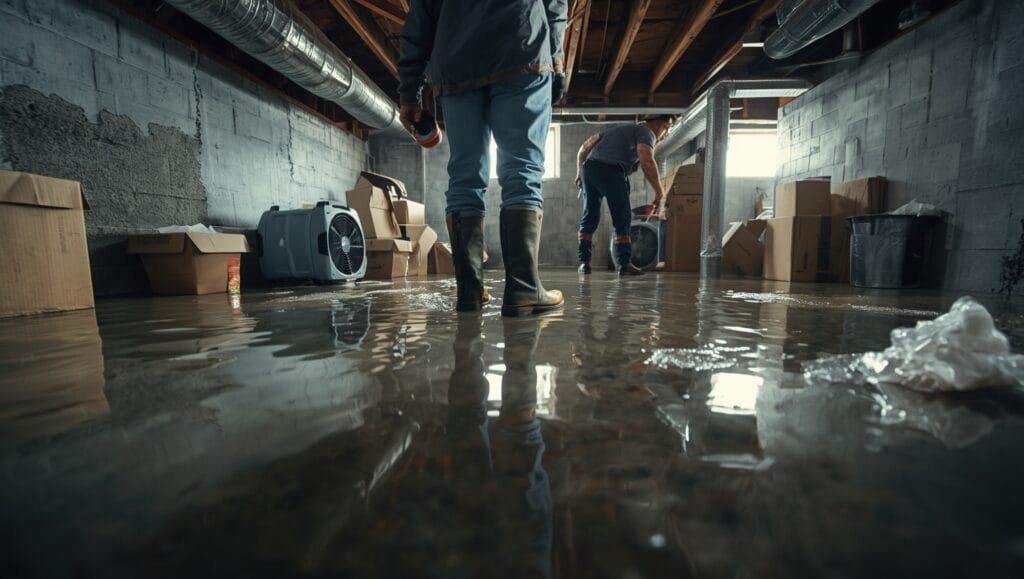
Once standing water’s gone, drying becomes your obsession. Open windows if weather permits. Run fans. Crack doors to get air moving through the space.
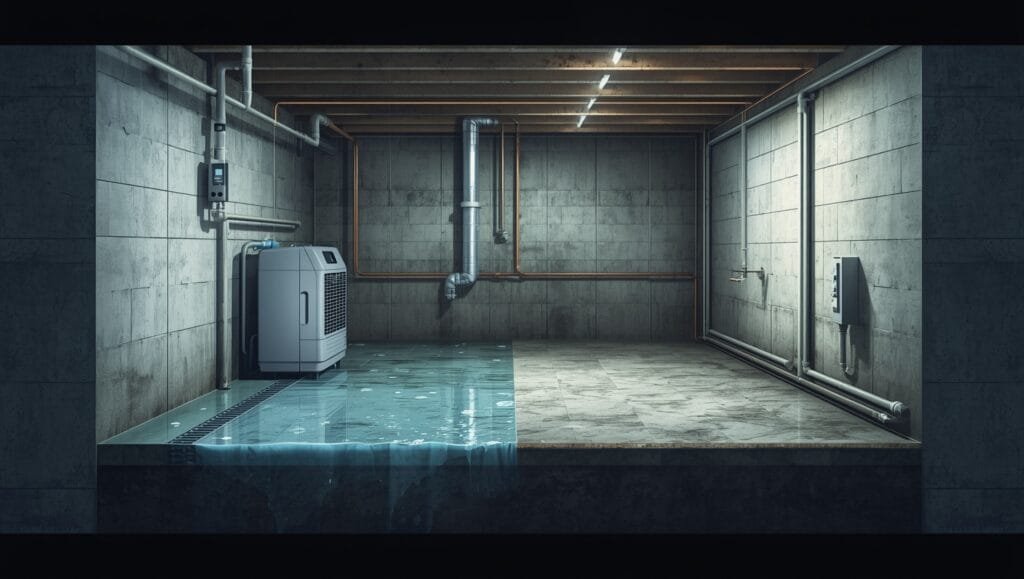
Dehumidifiers are non-negotiable here. Moisture that’s invisible is still destroying your basement. A basement dehumidifier system can pull gallons of water from the air daily. If you don’t have one, rent industrial-grade units. This isn’t optional—it’s the difference between a salvageable basement and a mold farm.
Pull up wet carpet, move furniture away from walls, and let air circulate underneath everything. Wet drywall, insulation, and wood are mold’s favorite food. The faster you dry it, the more you save.
Bottom line: Moisture kills; airflow and dehumidifiers save basements.
Why Your Sump Pump Failed (And It Probably Didn’t Just Happen)
Sump pumps don’t usually fail out of nowhere. They give signs—you just might’ve missed them.
The Most Common Failure Points
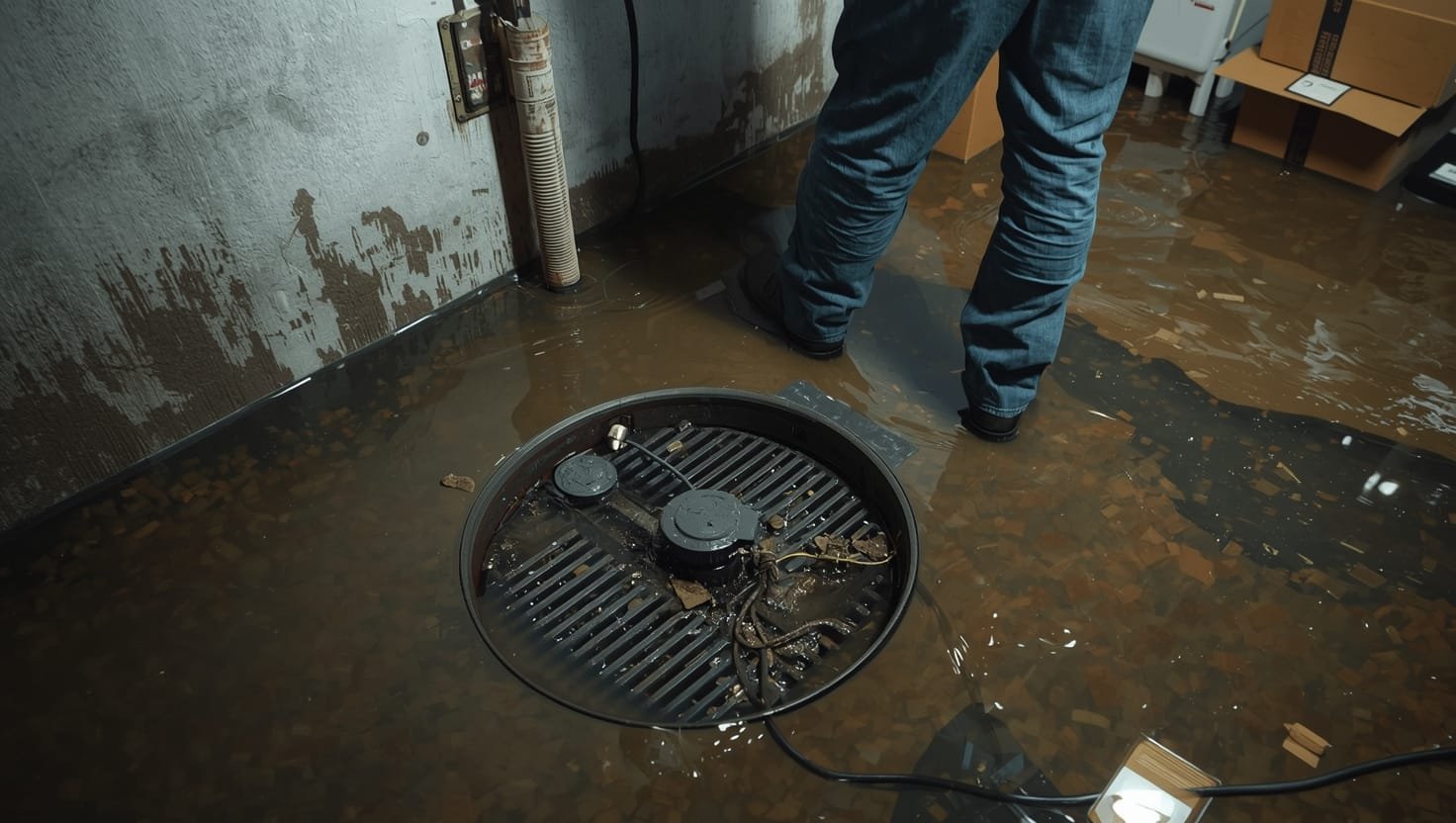
Clogged discharge line: This is the #1 killer. Your pump works fine, but the pipe carrying water out gets blocked by sediment, ice, or debris. Water backs up into your basement while the pump runs uselessly. Check your discharge line regularly—it should flow freely year-round.
Power loss: Storm knocks out electricity, pump stops working. You’re vulnerable for hours or days depending on how long the outage lasts. Battery backup systems exist for exactly this reason, but most homeowners skip them until it’s too late.
Mechanical failure: The pump itself wears out. Seals fail. Impellers crack. After 5-10 years of continuous use, even quality pumps start to struggle. If your pump’s running constantly, making noise, or cycling on and off rapidly, it’s telling you it’s dying.
Float switch malfunction: The switch that tells the pump to turn on gets stuck or corroded. The pump never activates, so water accumulates until it overflows into your basement.
Poor installation: If your sump pump was installed wrong—wrong size, wrong placement, inadequate discharge—it’ll fail when you need it most. You can’t rely on equipment that was never set up properly.
Bottom line: Most sump pump failures are preventable with basic maintenance and monitoring.
The Real Cost of Waiting
One homeowner in Rochester called Healthy Spaces after ignoring a slow sump pump for weeks. When it finally failed during spring thaw, 4 inches of water sat in the basement for nearly two days before anyone noticed. The damage? $47,000 in mold remediation, structural repairs, and content loss. The pump itself would’ve cost $800 to replace.
That’s not an outlier. That’s what happens when a flooded basement gets ignored.
Bottom line: Fixing a pump before it fails costs hundreds; fixing a flooded basement costs tens of thousands.
The Mold Clock Is Ticking
You’ve heard the 48-hour rule, and it’s real. Mold spores can germinate and start spreading within 24-48 hours of water exposure. By day three, you’ve got visible growth in some cases. By week two, you’ve got a health hazard.
But here’s what most people don’t understand: mold isn’t just a surface problem. It colonizes inside your walls, under flooring, within insulation. You can’t see it, but it’s there. This is why professional mold remediation isn’t optional after a flood—it’s essential.
The smell alone tells you something’s wrong. That musty, earthy odor? That’s mold spores in the air. You’re breathing them in. If anyone in your household has allergies, asthma, or a compromised immune system, mold exposure becomes a serious health issue fast.
Bottom line: Mold moves faster than you think; professional remediation saves your health and your property.
What a Real Sump Pump Solution Looks Like
Replacing a failed sump pump is one thing. Setting up a system that actually prevents flooding is another.
Sizing Matters
Your pump needs to match your basement’s water influx rate. If you’re in a high water table area or have a large basement, an undersized pump will run constantly and fail faster. A properly sized pump handles peak water flow without overworking.
This is where most DIY approaches fail. People grab whatever pump’s on sale at the hardware store, install it, and hope for the best. Then they’re shocked when it fails during heavy rain.
Redundancy Saves You
Smart homeowners install two pumps—a primary and a backup. If one fails, the other kicks in. You’re not relying on a single point of failure anymore. Battery backups add another layer, keeping your pump running even during power outages.
Yeah, it costs more upfront. But it’s pennies compared to water damage.
Proper Discharge Is Non-Negotiable
Water has to go somewhere, and “somewhere” can’t be back toward your foundation. Discharge lines should extend at least 10 feet away from your house, ideally into a storm drain or proper drainage area. In winter, the discharge needs to stay unfrozen—that means insulation or heated lines in cold climates.
Most people never check their discharge line. It gets buried, forgotten, and clogs silently. Then their pump “fails” even though it’s working perfectly.
Bottom line: A good sump pump system has backups, proper sizing, and reliable discharge—not just a pump.
When DIY Ends and Professional Help Begins
You can handle some water damage cleanup yourself. You can’t handle everything.
If your basement’s flooded, you need professional assessment for hidden damage. Wet basement drainage systems require expertise to design correctly. Mold remediation absolutely needs professionals—improper cleanup spreads spores and makes things worse.
Foundation repair and basement waterproofing are long-term investments that prevent future flooding. These aren’t quick fixes. They require assessment, planning, and quality execution.
Mark Frillici founded Healthy Spaces in 2006 after seeing too many homeowners lose their basements to preventable flooding and mold. His team handles everything from emergency water extraction to complete basement restoration. They don’t just pump water out—they assess why it got in, fix the root cause, and make sure it doesn’t happen again.
One homeowner in Rochester had a sump pump fail during a heavy rain event. Within hours, water was seeping through cracks in the foundation. Mark’s team arrived, extracted the water, identified the foundation cracks, and installed a comprehensive foundation waterproofing system. The result? No more flooding, even during the worst storms.
Bottom line: Professional help prevents the next flood; DIY handling of the current one leaves you vulnerable.
The Path Forward
A flooded basement from a failed sump pump feels like a disaster. It is—but it’s a manageable one if you act fast.
Get water out. Dry everything. Check for mold. Fix the pump. Upgrade your system so it doesn’t fail again.
That’s the formula. Speed in those first 24 hours determines whether you’re looking at a $5,000 recovery or a $50,000 nightmare.
If you’re in the Rochester, NY area and you’re dealing with a flooded basement right now—or you want to make sure it never happens—Mark and his team at Healthy Spaces have handled hundreds of cases just like yours. Contact Healthy Spaces Now for emergency water extraction, assessment, and a real plan to keep your basement dry.
Your Sump Pump’s Warranty Expired—And That’s When Things Get Expensive
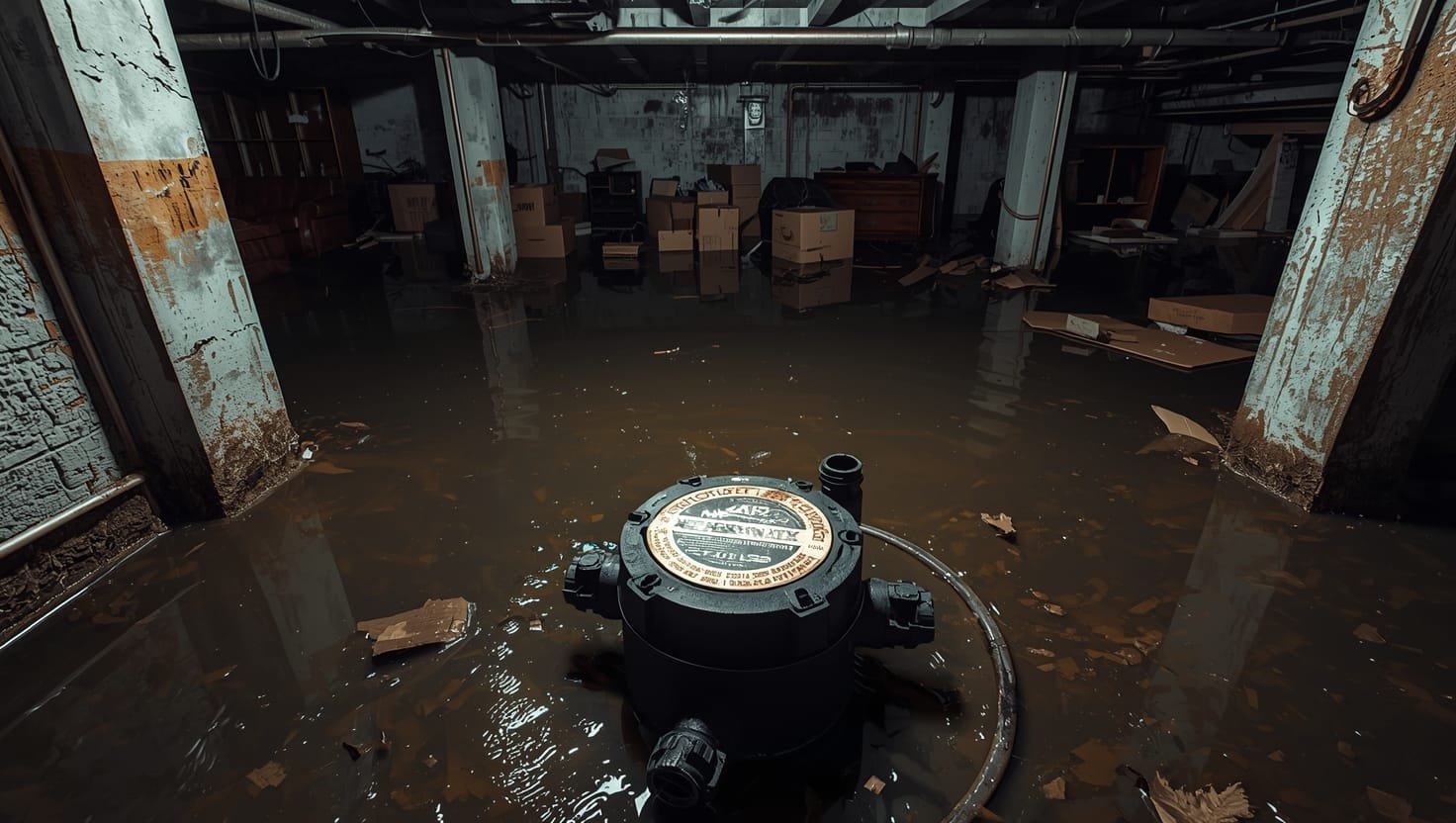
Most homeowners don’t think about their sump pump until it fails. Then they’re shocked to learn that a five-year-old pump that “seemed fine” is now causing thousands in damage. Here’s the thing: sump pumps don’t have a ten-year lifespan like people think. They have a lifespan measured in how many gallons they’ve moved and how many power cycles they’ve survived. Once you hit year five or six, you’re basically playing Russian roulette with your basement.
A sump pump flooded basement isn’t just about water damage on day one. It’s about what happens in the weeks after when hidden moisture settles into your foundation, your walls, and your crawl space. That’s when the real cost hits—and it compounds fast.
The Hidden Costs Nobody Talks About After a Sump Pump Flooded Basement
Water damage is never just water damage. It’s a chain reaction.
One homeowner in Rochester discovered their basement flooded after a pump failure during spring thaw. The standing water was gone in 24 hours. But six weeks later, they noticed soft spots in the drywall. A month after that, the HVAC system started making noise. By month three, they were dealing with structural rot in the rim joist. Total cost: $34,000. The initial water extraction? $1,200.
This happens because water doesn’t just sit there and dry up. It seeps into wood framing, concrete block, insulation, and the soil around your foundation. If you don’t catch it all—and most people don’t—it keeps working against your house’s integrity long after the basement looks dry.
Bottom line: Hidden water damage costs more than visible damage; catch it early or pay later.
Structural Damage Creeps In Slowly
Wood can handle a few hours of water exposure. It can’t handle weeks of it.
When water sits against wooden beams, floor joists, or rim joists for days, it starts breaking down the cellular structure. Mold colonizes it. Rot sets in. The wood loses its load-bearing capacity. Now you’re not just replacing wet materials—you’re replacing the structural components that hold your house up. That’s not a DIY fix. That’s a contractor job that costs $10,000 to $30,000 depending on what’s affected.
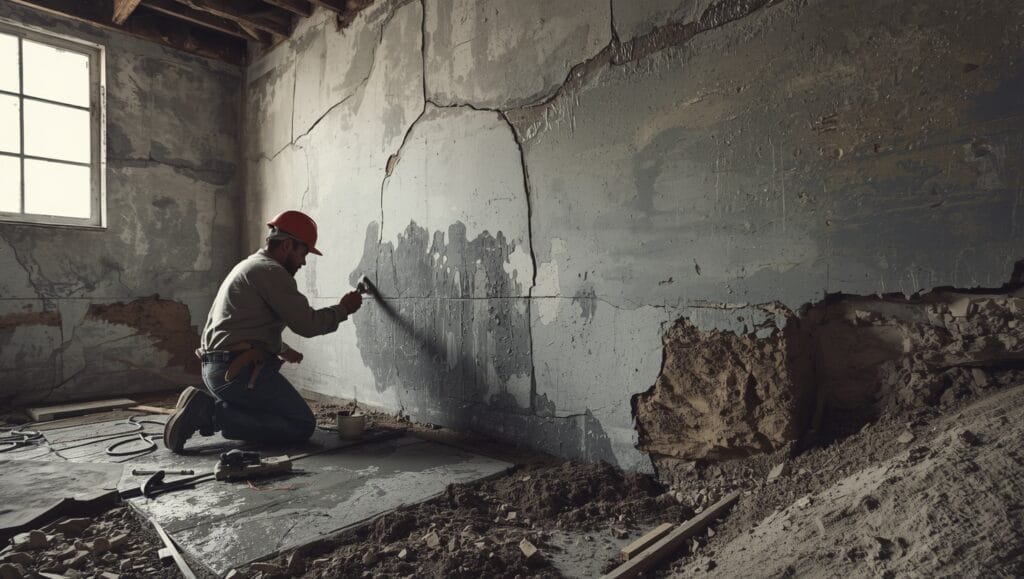
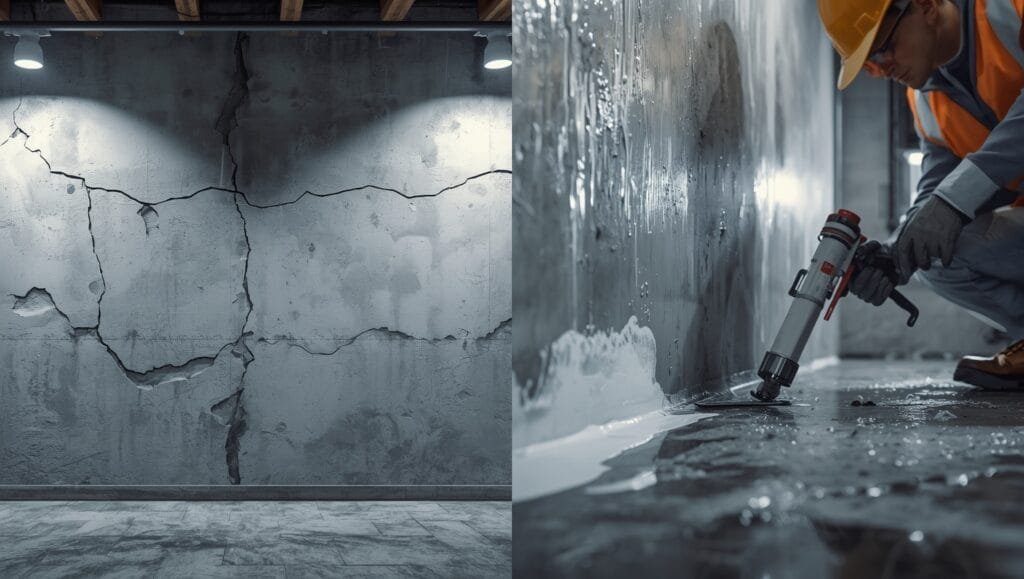
Foundation cracks that let water in? They don’t close up on their own. They get bigger. Each freeze-thaw cycle pushes them wider. Water pressure from groundwater keeps forcing its way through. Eventually, you’re not dealing with a crack—you’re dealing with chronic seepage that turns your basement into a damp cave year-round.
This is why foundation waterproofing after a flood isn’t optional. It’s the difference between a one-time repair and a permanent problem.
Bottom line: Structural damage compounds; repair it before it spreads through your entire basement.
Your Insurance Might Not Cover What You Think
Most homeowners assume flood insurance covers sump pump failure. It doesn’t.
Standard homeowners insurance doesn’t cover flooding from groundwater, heavy rain, or sump pump failure. You need separate flood insurance for that. And if you don’t have it? You’re self-insured, which means you’re paying out of pocket for everything.
Even if you do have flood coverage, there’s a deductible—usually $1,000 to $5,000. And the coverage might not include everything. Basement finished space? Sometimes not covered. Personal belongings? Depends on your policy. Mold remediation? That’s often excluded unless you can prove it was caused by the covered flood event (and insurers fight that constantly).
Read your policy now, before you need it. Call your agent. Ask specifically what a sump pump failure would cover. Don’t guess. One homeowner in Rochester thought they were covered, filed a claim after a pump failure, and got denied because the policy excluded “water damage from mechanical failure.” They paid $22,000 out of pocket.
Bottom line: Insurance gaps leave you exposed; verify coverage before disaster strikes.
Why Your Sump Pump Is Failing Faster Than It Should
Not all sump pump failures are bad luck. Some are preventable neglect.
Sediment Buildup Kills Pumps Faster Than You’d Think
Every time your pump runs, it’s moving water that contains sediment, sand, and particles. That sediment settles in the sump basin. Over months and years, it builds up. The pump has to work harder to move water through the sediment. The impeller (the spinning part inside) gets clogged. Seals wear faster because they’re grinding against grit.
Most people never clean their sump basin. They don’t even know it exists inside the pump. The sediment keeps accumulating. The pump keeps working harder. Eventually, it fails.
You should be cleaning your sump basin every six months. Drain the water, remove the sediment, check for debris. Takes 30 minutes. Prevents a $5,000 pump replacement and the water damage that comes with it.
Bottom line: Sump basin sediment doubles failure risk; clean it twice a year.
Continuous Running Shortens Lifespan Dramatically
A sump pump that runs constantly is a pump that’s about to fail.
If your pump is cycling every few minutes or running non-stop, something’s wrong. Either your sump basin is filling faster than the pump can handle (undersized pump, high water table), or the discharge line is clogged so water’s backing up into the basin. Either way, the pump’s working at maximum capacity all the time.
Pumps rated for a 10-year lifespan? They’re rated under normal operating conditions—maybe 5-10 cycles per hour during heavy rain. If your pump’s running 30 times an hour, you’re cutting its lifespan in half. It’ll burn out in 2-3 years instead of 5-10.
Listen to your pump. If it sounds like it’s working overtime, that’s your warning. Check the discharge line for clogs. If the line’s clear and the pump’s still running constantly, you need a bigger pump or better drainage around your foundation.
Bottom line: Continuous running means your pump’s dying; fix the root cause before it fails.
Age + Wear + Neglect = Failure Guaranteed
A sump pump is like a car engine. It has a finite lifespan. You can extend it with maintenance, but you can’t make it last forever.
At year five, you’re past the halfway point. At year seven, you’re living on borrowed time. At year ten, you’re basically asking for trouble. The seals degrade. The motor bearings wear. The float switch corrodes. Everything’s working, but nothing’s working well.
If your pump’s older than six years, you should be thinking about replacement—not waiting for failure. A new pump costs $800 to $1,500 installed. Water damage from a failed pump costs $15,000 to $50,000. The math is simple.
Bottom line: Replace pumps at year six; waiting for failure costs tens of thousands more.
The Backup System That Actually Prevents a Sump Pump Flooded Basement
Single-pump systems are inherently unreliable. You’ve got one device doing one job. It fails, and you’re done.
Dual-Pump Systems With Alternating Duty
The smartest setup uses two pumps alternating duty. Primary pump runs during normal conditions. When water level rises above a certain point, the secondary pump kicks in. They share the workload, which means both pumps last longer.
If the primary pump fails, the secondary keeps working. You’ve got hours or even days to replace the bad pump without flooding. That’s not theoretical—that’s real protection.
One commercial property in Rochester had a sump pump failure during a heavy rain event. The building owner had installed a dual-pump system three years earlier. The primary pump failed, but the backup kept the basement dry. They replaced the bad pump the next day. No flooding, no water damage, no emergency calls at 2 AM.
Bottom line: Dual pumps share load and provide backup; single pumps fail alone.
Battery Backup Systems for Power Outages
Heavy rain often comes with power outages. That’s when your sump pump becomes useless—assuming it’s electric.
A battery backup system keeps your pump running even when the grid goes down. Most systems use a deep-cycle battery that can power the pump for 6-12 hours depending on water volume. That’s enough time to get through most outages or call for help.
Battery backups aren’t cheap—$1,500 to $3,000 installed. But they’re worth every penny if you live in an area with frequent storms or outages. One homeowner in upstate New York had a backup system that saved their basement during a 36-hour power outage. Without it, they’d have had 8+ inches of water.
Bottom line: Battery backups run pumps during outages; outages without backups flood basements.
Sump Pump Alarms That Alert You to Failure
You can’t fix a problem you don’t know about.
Sump pump alarms monitor water level and sound an alarm if water rises above normal operating range. Some also alert you if the pump stops running when it should be running. These are cheap—$100 to $300—and they catch failures early.
One homeowner in Rochester had a float switch fail silently. An alarm went off at 3 AM when water started rising. They woke up, discovered the problem, and got a plumber out before any real damage happened. Without the alarm, they’d have woken up to standing water.
Bottom line: Alarms catch failures early; silent failures cost thousands in damage.
What To Do If Your Sump Pump Is About to Fail (But Hasn’t Yet)
If your pump’s showing warning signs, you’ve got a window to act. Don’t waste it.
Get a Professional Inspection Before Failure
A technician can tell you if your pump’s dying. They’ll check the motor, the float switch, the discharge line, and the impeller. They’ll listen to it run. They’ll tell you straight: replace it now or prepare for failure.
This costs $150 to $300. A failed pump costs $5,000 to $50,000 in water damage.
Mark Frillici’s team at Healthy Spaces handles sump pump inspections regularly. They’ve seen hundreds of pumps and can spot the ones about to fail. They’ll give you a timeline and a real assessment—not a sales pitch, just facts.
Bottom line: Professional inspection costs $200; ignoring warning signs costs $25,000.
Replace Before Peak Season
Spring thaw and heavy rain season are when pumps fail most often. If you’re going to replace yours, do it in winter or early spring—before the heavy rain hits.
If you wait until May or June, you’re competing with every other homeowner whose pump failed. Contractors are booked. Pump prices might be higher. You’re stressed. Do it now while you’ve got time and options.
Bottom line: Replace pumps before peak season; waiting means emergency rates and delays.
Upgrade Your System While You’re At It
If you’re replacing the pump anyway, spend a little more and add a backup system, battery backup, and alarm. You’re already paying for labor. The extra cost for redundancy and protection is minimal compared to the difference it makes.
One homeowner in Rochester had their original pump replaced with a dual-pump system with battery backup. Total cost: $3,200. That system has already saved them once during a power outage. They’ll never go back to a single pump.
Bottom line: Upgrade while replacing; the extra cost now prevents catastrophe later.
Frequently Asked Questions About Sump Pump Flooded Basements
How long does it take for mold to grow after a sump pump flooded basement?
Mold can start germinating within 24 hours of water exposure and become visible within 48 hours. Get water out and start drying immediately—that’s your only chance to prevent major mold growth.
Will homeowners insurance cover water damage from a failed sump pump?
Standard homeowners insurance doesn’t cover sump pump failure. You need separate flood insurance. Check your policy now and talk to your agent about coverage gaps before disaster strikes.
How often should I test my sump pump?
Test your pump monthly by pouring water into the sump basin and watching it activate and discharge. If it doesn’t respond or runs continuously, get it inspected immediately.
What’s the average lifespan of a sump pump?
Most quality sump pumps last 5-10 years depending on usage and maintenance. Pumps that run constantly wear out faster. Plan for replacement around year six to avoid unexpected failure.
Can a flooded basement be fixed permanently?
Yes, but it requires addressing the root cause—whether that’s poor drainage, foundation cracks, or an inadequate sump pump system. Comprehensive drainage systems and foundation repair prevent future flooding.
Should I clean my sump basin myself?
Yes. Drain the water, remove sediment and debris, and inspect the pump for damage. Do this every six months to keep your pump running efficiently and extend its lifespan.
What’s the difference between a primary and backup sump pump?
A primary pump handles normal water flow. A backup pump activates when water level rises above normal or if the primary fails. Dual systems share the workload and provide redundancy if one fails.
Don’t Let a Failed Sump Pump Destroy Your Home
A sump pump flooded basement doesn’t happen overnight. It happens when warning signs go ignored. A pump that’s six years old. A discharge line that’s never been checked. No backup system. No battery backup. No alarm.
Then one heavy rain hits, and suddenly you’re looking at tens of thousands in damage.
Mark Frillici and his team at Healthy Spaces have been protecting Rochester homes from water damage since 2006. They know what happens when sump pump systems fail. They know how to fix them. And they know how to set up systems that actually prevent flooding—not just move water around.
If your pump’s old, if you’ve never had it inspected, or if you’re dealing with a flooded basement right now—don’t wait. Contact Healthy Spaces Now for emergency water extraction, professional assessment, and a real plan to keep your basement dry. Mark’s team will be honest about what you need and what you don’t. That’s why homeowners in Rochester trust them.
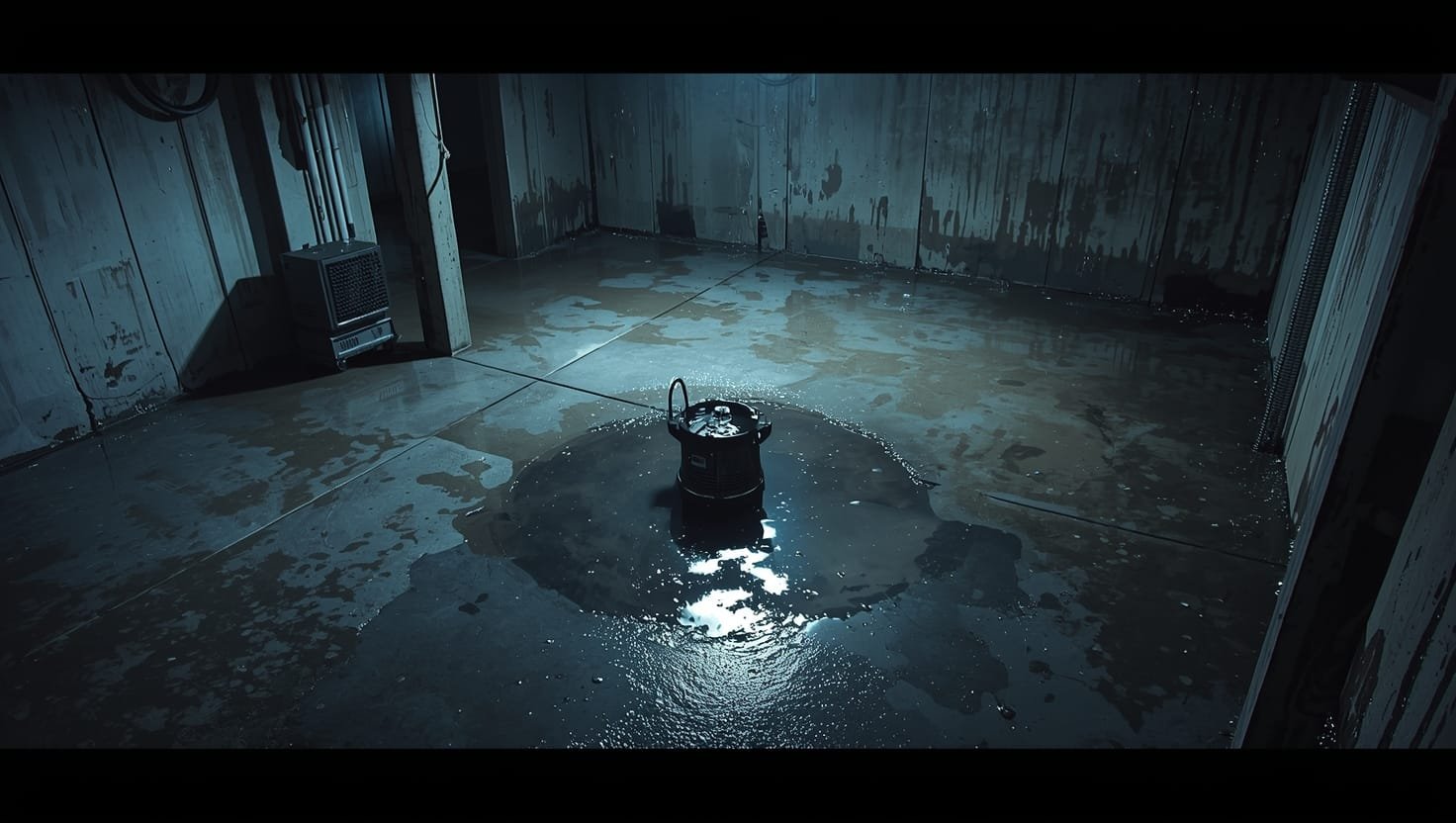
Your Basement Stays Wet for Months After the Sump Pump Flooded Basement—Here’s Why
You’ve pumped out the water. You’ve run fans and dehumidifiers for a week. Everything looks dry. Then in week three, you smell it—that musty, earthy odor creeping back. Your basement isn’t actually dry. It’s just pretending to be.
This is the part nobody talks about. A sump pump flooded basement doesn’t just damage what you see. It saturates everything below the surface—concrete, soil, insulation, wood framing. Water doesn’t evaporate on its own timeline. It moves slowly through materials, wicking upward, settling into foundation cracks, hiding in wall cavities. You can have a “dry” basement that’s still actively harboring moisture for weeks or months.
That’s when the real problems start.
The Moisture That Hides Is More Dangerous Than Standing Water
Standing water is obvious. You see it, you pump it out, you move on. Hidden moisture is different. It’s silent. It’s everywhere. And it’s destroying your basement from the inside out while you think the crisis is over.
Concrete Wicks Water Like a Sponge—For Months
Concrete looks solid. It’s not. It’s porous. Water gets inside the concrete matrix and travels upward through capillary action—basically the concrete is drinking water from the soil and pulling it up your foundation walls.
This keeps happening even after you’ve removed standing water. The concrete stays saturated. Paint peels. Efflorescence (white mineral deposits) appears. Basement walls feel damp to the touch weeks later. You can’t see the water, but it’s there, and it’s moving.
One homeowner in Rochester had their basement flooded from a failed pump. They got the water out in 24 hours, thought they were good, and didn’t do anything else. Two months later, their basement walls were still weeping moisture. They ended up installing a comprehensive drainage system to stop the moisture cycle permanently. Cost could’ve been prevented with proper drying and sealing right after the flood.
Bottom line: Concrete wicks moisture for months; visible dryness doesn’t mean the water’s gone.
Insulation Holds Water Like a Sponge—And Never Fully Dries
Fiberglass insulation absorbs water and holds it. Once wet, it loses its insulating value. Once colonized by mold, it becomes toxic. And once saturated, it takes forever to dry—if it dries at all.
Most people don’t remove wet insulation after a flood. They think it’ll dry out. It won’t. Not completely. It’ll sit there, damp, slowly growing mold while you’re upstairs thinking the problem’s solved. By month two, you’ve got mold spores spreading through your HVAC system.
The right move? Rip out any insulation that got wet. Don’t save it. Don’t try to dry it. Remove it, let the wall cavity air out, and replace it once everything’s completely dry. Yeah, it costs money. Not doing it costs way more when you’re dealing with mold remediation.
Bottom line: Wet insulation never fully dries; remove it or accept hidden mold growth.
Wood Framing Swells, Warps, and Rots From the Inside
Wood is strong when dry. Water turns it into a disaster waiting to happen. Exposed wood framing—floor joists, rim joists, beams—absorbs water and starts swelling immediately. Then it warps as it dries unevenly. Nails pop. Connections weaken. Mold colonizes.
The damage isn’t always visible. A floor joist can look fine on the surface while rot is eating through the core. By the time you see sagging, the damage is serious. You’re looking at structural repairs, not just cleanup.
If your basement had standing water touching wooden framing, that wood needs inspection and likely replacement. Don’t guess. Get a professional assessment. One homeowner’s “minor flood” turned into a $18,000 rim joist replacement because they ignored the wet wood and let rot spread.
Bottom line: Wet wood rots from inside out; inspect and replace before structural failure happens.
Why Your Dehumidifier Isn’t Solving the Problem
You’ve got a dehumidifier running 24/7. Humidity’s dropping. Seems like it’s working, right? Wrong. A single dehumidifier can’t handle the moisture load after a major flood, and it definitely can’t dry out saturated materials.
One Dehumidifier Isn’t Enough After a Sump Pump Flooded Basement
A standard dehumidifier pulls maybe 50-80 pints of water per day in ideal conditions. After a flood, your basement is dumping hundreds of pints of moisture into the air as materials dry. You’re not keeping up. You’re barely making a dent.
This is why professionals bring in industrial-grade equipment—multiple dehumidifiers, commercial-sized air movers, specialized drying units. They’re not overkill. They’re necessary. They actually move moisture out of the space instead of just circulating damp air around.
If you’re dealing with a flooded basement, rent industrial dehumidifiers. Not one. Multiple. Position them strategically. Run them 24/7 for at least two weeks. The cost is $500-$1,000 for rental. It’s worth every penny to prevent mold and hidden damage.
Bottom line: Consumer dehumidifiers can’t match flood moisture; rent industrial equipment instead.
Air Movement Matters More Than You Think
Stagnant air is mold’s best friend. Air that’s moving is mold’s enemy. After a flood, you need aggressive air circulation, not just humidity reduction.
Open windows if weather permits. Run box fans. Use air movers (those barrel-shaped fans that push air horizontally). Point them at wet walls, wet floors, anywhere moisture is hiding. Get air moving under furniture, into corners, into wall cavities if possible.
The goal is to keep moisture from settling and to move saturated air out of the space. A dehumidifier handles the humidity; fans handle the circulation. You need both, and you need them running together.
Bottom line: Air circulation plus dehumidification works; dehumidification alone fails.
The Real Cost of Ignoring Residual Moisture
You think the expensive part of a sump pump flooded basement is the water removal. You’re wrong. The expensive part is what happens when you don’t address moisture properly.
Mold Remediation Costs Way More Than Prevention
Mold that grows because of improper drying isn’t just a cosmetic issue. It’s a health hazard and a structural threat. Professional mold remediation can cost $5,000 to $20,000+ depending on extent and location. And that’s just the remediation. There’s also testing, inspection, and potentially HVAC cleaning.
Prevention would’ve cost you $1,000 in industrial dehumidifier rentals and a few days of effort. You chose not to spend that. Now you’re spending $15,000.
One commercial building in Rochester had a sump pump failure. The owner thought they could handle drying it themselves with consumer equipment. Three weeks later, mold was growing in the HVAC system. Remediation cost $32,000. The owner’s insurance denied the claim because the mold was deemed “preventable with proper drying.” Lesson learned the expensive way.
Bottom line: Proper drying costs $1,000; mold remediation costs $15,000+.
Structural Damage Compounds When Moisture Lingers
Water damage isn’t a one-time event. It’s a process. Water gets in, sits, seeps deeper, starts breaking down materials. If you stop the process early with aggressive drying, damage is limited. If you let moisture linger, damage spreads.
Concrete deteriorates faster when it stays wet. Wood rots faster when it stays damp. Mold spreads faster in moist environments. Every day you delay proper drying, you’re giving damage more time to compound.
The homeowner who spent $1,000 on proper drying equipment saved themselves from $20,000 in structural repairs down the line. The homeowner who tried to DIY it with consumer dehumidifiers? They’re dealing with rot, mold, and foundation issues now.
Bottom line: Lingering moisture creates cascading damage; aggressive drying stops it fast.
What Professional Drying Actually Looks Like
If you hire a professional to handle drying after a sump pump flooded basement, here’s what you should expect.
Assessment First—Not Guessing
A professional walks in with moisture meters. They check concrete. They check walls. They check hidden spaces. They’re not guessing where water is. They’re measuring it. This tells them exactly what needs to dry and how long it’ll take.
Moisture readings guide the drying plan. If concrete reads 90% moisture content, it needs weeks of aggressive drying. If walls read 40%, they need different treatment than walls reading 80%. The assessment determines the strategy.
Bottom line: Moisture mapping guides treatment; guessing leads to incomplete drying.
Equipment Placement Is Strategic
You can’t just throw dehumidifiers in a basement and hope for the best. Equipment placement matters. Air movers need to be positioned to push moist air toward exhaust points. Dehumidifiers need to be placed where they’ll capture the most moisture. Negative pressure systems might be needed to pull moisture out of walls.
A professional knows how to set this up. You probably don’t. That’s not a knock—it’s just reality. Drying science isn’t intuitive.
Bottom line: Strategic placement beats random equipment placement every time.
Monitoring and Adjustment Happens Daily
Drying isn’t set-it-and-forget-it. Equipment needs monitoring. Moisture levels need checking. Humidity trends need tracking. If something’s not working, adjustments happen immediately.
A professional stays on top of this. They’re checking readings, adjusting equipment, optimizing the process. A homeowner trying to DIY it? They’re checking maybe once a day, if that. They miss problems until it’s too late.
Bottom line: Active monitoring catches problems; passive drying misses them.
When to Call a Professional vs. When You Can DIY
Not every flooded basement needs a professional drying team. Some do. Some don’t. Here’s how to know the difference.
Call a Professional If:
Your basement had more than 2 inches of standing water—you’re dealing with serious saturation. Water was present for more than 24 hours—materials are deeply saturated. You have wooden framing, insulation, or finished spaces that got wet—these need professional treatment. You smell mold or see discoloration after initial drying—growth has already started. Your basement has poor ventilation or drainage—moisture will linger without intervention.
In any of these cases, DIY drying will fail. You’ll end up calling a professional anyway, just later when damage is worse and costs are higher.
You Can DIY If:
Water was minimal (under 1 inch) and removed quickly (within 12 hours). No structural materials got saturated. Moisture readings are low (under 40% in concrete). You have good ventilation and can open windows. You’re willing to run industrial dehumidifiers for two weeks straight.
Even then, consider getting a professional assessment. The cost ($150-$300) is cheap insurance against hidden damage.
Bottom line: Professional drying prevents long-term damage; DIY drying often creates it.
The Hidden Timeline Nobody Warns You About
Here’s what actually happens after a sump pump flooded basement if you do nothing:
Week 1: Standing water’s gone. Basement looks dry. You’re relieved.
Week 2-3: Musty smell appears. You open windows. Smell fades a bit.
Week 4-6: Mold starts growing in hidden spaces. Walls still feel slightly damp. You notice it but tell yourself it’ll dry eventually.
Month 2-3: Mold spreads visibly. Drywall shows discoloration. HVAC system starts smelling. You finally realize something’s wrong.
Month 4+: Structural damage becomes obvious. Wood’s soft. Foundation cracks are spreading. Mold remediation is now necessary. Cost has ballooned from $1,000 to $25,000.
This timeline isn’t theoretical. It’s what happens repeatedly. Mark Frillici and his team at Healthy Spaces have seen it dozens of times. The homeowners who acted fast? They spent $2,000-$5,000 and got clean, dry basements. The ones who waited? They spent $20,000-$50,000 and dealt with months of disruption.
Bottom line: Delayed drying creates months of damage; fast action stops it in weeks.
Frequently Asked Questions About Post-Flood Drying
How long does it actually take to dry a flooded basement completely?
With proper equipment and aggressive drying, 2-4 weeks for light floods. Severe saturation takes 4-8 weeks. Without professional equipment, expect 2-3 months—if you’re lucky and mold doesn’t start growing first.
Can I just leave windows open and let it air dry?
Not after a serious flood. Outside air has humidity too. In humid climates, open windows can actually add moisture. You need dehumidifiers and air movement, not just ventilation.
Will mold definitely grow if I don’t dry aggressively?
Not definitely, but probably. Mold needs moisture and time. After a flood, you’ve got both. Aggressive drying removes one of those factors. Without it, you’re betting against mold. Bad bet.
What’s the difference between my dehumidifier and a rental unit?
Capacity and speed. A consumer dehumidifier pulls 50-80 pints daily. An industrial unit pulls 200-300 pints daily. After a flood, you need industrial equipment. Consumer equipment just can’t keep up.
Should I remove drywall if it got wet?
If water touched it and it stayed wet for more than 24 hours, yes—remove it. Drywall absorbs water and provides perfect mold food. Dry it out completely or replace it. Don’t try to save it.
Can I use a regular fan instead of an air mover?
A regular fan helps but isn’t ideal. Air movers are designed to push air horizontally across surfaces, which is what you need for drying. Regular fans just circulate air around. Get air movers if you can.
What if I can’t afford professional drying?
Rent industrial equipment instead. Cost is $500-$1,000 for two weeks. That’s less than one day of professional service. DIY the labor, rent the equipment, do it right.
Your Next Move After a Sump Pump Flooded Basement
If your basement’s already flooded, don’t wait for the smell. Don’t wait for visible mold. Act now.
Get water out. Assess moisture levels. Rent industrial dehumidifiers and air movers. Run them aggressively for at least two weeks. Check moisture levels daily. If readings aren’t dropping, adjust equipment or call a professional.
Mark Frillici and his team at Healthy Spaces handle this every spring. They’ve dried hundreds of basements. They know what works and what doesn’t. If you’re in Rochester, NY and you’re dealing with a sump pump flooded basement—whether it just happened or you’re worried it might—they can help.
They’ll assess the damage, pull out the water, set up proper drying, and make sure mold doesn’t take over. They’ll also look at why your pump failed and fix it so it doesn’t happen again. Contact Healthy Spaces Now for emergency response and a real drying plan. Don’t let residual moisture turn a water problem into a mold nightmare.