Contact Us For a Free Qoute
How To Measure Humidity In Basement (Fast)
Mold can take over in less than 48 hours. Do you know how to measure humidity in basement before it’s too late?
Most homeowners don’t realize their basement is a humidity problem waiting to happen.
You can’t see excess moisture the way you see a puddle on the floor, which makes it sneaky—and dangerous.
The truth is, measuring basement humidity is one of the easiest, cheapest ways to catch water damage and mold before they spiral into a $10,000+ repair job.
We’re going to walk you through exactly how to measure humidity in your basement, what the numbers mean, and when it’s time to call a pro.
Why You Actually Need to Measure Basement Humidity
Your basement is ground zero for moisture problems.
It’s below grade, surrounded by soil and groundwater, with little air circulation—basically a perfect storm for dampness.
Here’s the thing: mold doesn’t need standing water to grow.
It just needs humidity levels above 60% and a food source (hello, drywall and wood framing).
One homeowner in Rochester called Healthy Spaces after noticing a musty smell in their finished basement.
When Mark Frillici’s team tested the air, humidity was sitting at 78%—way above safe levels.
They found mold already colonizing behind the walls.
A quick humidity check two months earlier could’ve saved this homeowner $8,500 in remediation costs.
That’s not an edge case—it happens constantly.
Bottom line: Early humidity detection stops mold and water damage before they eat your wallet.
Understanding Humidity Levels: What’s Normal, What’s Not
Before you measure anything, you need to know what you’re looking for.
The EPA recommends keeping indoor humidity between 30% and 50%.
Your basement should ideally sit in that range, though basements naturally run higher because of their location and structure.
Here’s the breakdown:
- 30-50%: Ideal. Your basement is breathing right, and mold won’t establish itself.
- 50-60%: Borderline. Not dangerous yet, but you’re creeping into risky territory. Watch it closely.
- 60-70%: Problem zone. Mold and dust mites thrive here. You need to act.
- 70%+: Critical. Mold is either already growing or will be within days. Call a professional immediately.
The thing about basement humidity is that it fluctuates with seasons and weather.
Summer brings moisture, winter can bring it too if you’re not careful with condensation on pipes and foundation walls.
That’s why one measurement doesn’t tell the whole story—you need to track it over time.
Bottom line: Keep your basement between 30-50% humidity; anything above 60% demands action.
The Tools You Need to Measure Basement Humidity
You don’t need expensive equipment or a degree in engineering.
There are three main tools people use, and each has pros and cons:
Hygrometers (The Most Popular Option)
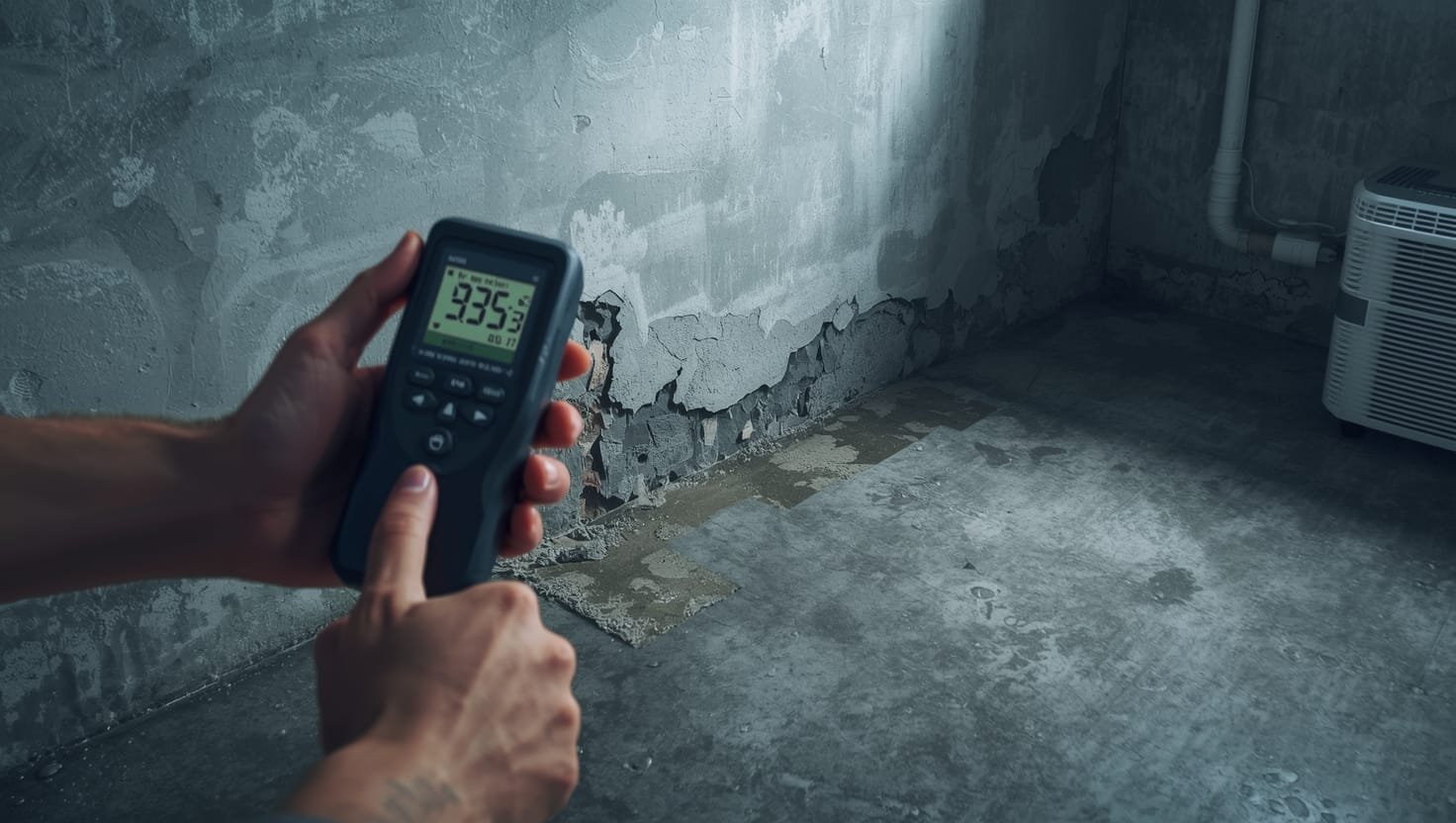
A hygrometer is a small device that measures humidity and usually temperature too.
They’re cheap—you can grab a decent one for $15-40 on Amazon—and they work fast.
Just place it in your basement and it’ll give you a reading in minutes.
Digital hygrometers are more accurate than analog ones, and they often come with data logging features so you can track humidity over days or weeks.
Some even connect to your phone via Bluetooth, which is handy if you’re serious about monitoring.
The downside?
A single hygrometer only gives you a snapshot of one spot in your basement.
If your basement is large or has multiple zones, humidity might be 55% near the dehumidifier but 72% in the corner by the foundation wall.
You’ll want to place hygrometers in at least 2-3 different areas to get a real picture.
Moisture Meters
These measure moisture content directly in materials like drywall, wood, and concrete—not just the air.
They’re useful if you suspect hidden moisture in walls or floors, but they’re less useful for general humidity monitoring.
A moisture meter costs $30-150 depending on the model.
Pin-type meters are cheaper but damage the surface slightly; pinless meters are pricier but non-invasive.
If you’re just measuring air humidity, skip this and go with a hygrometer.
Professional Testing Equipment
When you call in a pro like Healthy Spaces for a mold inspection, they bring calibrated equipment that measures humidity, temperature, and sometimes even air quality.
They’ll test multiple zones and compare basement readings to outdoor conditions to identify problem areas.
This costs $300-600 but gives you a complete picture and professional recommendations.
Worth it if you’re dealing with a suspected mold problem or planning major basement work.
Bottom line: Start with a cheap digital hygrometer; go pro if you suspect hidden mold or water damage.
How to Measure Humidity in Your Basement: Step by Step
Grab your hygrometer and let’s get to work.
This takes less than five minutes, but there are a few things you need to do right to get accurate readings.
Step 1: Pick Your Spot (Or Spots)
Don’t just slap the hygrometer on a shelf near your dehumidifier.
That’s one of the driest spots in the room and won’t tell you much.
Instead, place it in areas where moisture typically collects: near exterior walls, in corners, by foundation cracks, or in closets where air doesn’t circulate well.
If your basement is finished, put one in the living area and one in a utility room or corner.
If it’s unfinished, aim for spots away from active dehumidifiers or HVAC vents—these artificially skew readings.
Step 2: Wait for Stabilization
Don’t read the hygrometer immediately after placing it.
It needs 15-30 minutes to acclimate to the basement air and give you an accurate reading.
Some digital models will show you when they’re ready; others you just have to wait and watch.
If you’re impatient, grab a coffee—this is a good time to step away anyway.
Step 3: Record the Reading
Write down the humidity percentage and the date/time.
Yeah, actually write it down or snap a photo.
One reading doesn’t mean much; patterns do.
If you measure 62% on a humid August afternoon, that’s different from 62% in dry February.
Track readings over at least a week—better yet, a full month across different seasons.
Step 4: Check Multiple Areas
If you only have one hygrometer, move it around and record readings from different zones.
Humidity isn’t uniform in basements—it clusters in low-air-circulation spots.
You might find 50% near your dehumidifier but 68% in the opposite corner.
Both readings matter because the 68% zone is where mold risk lives.
Step 5: Monitor Over Time
One-off measurements are useful, but consistent tracking is gold.
Check humidity once a week or every few days during humid seasons.
If you notice a trend upward—say, 55% last week, 62% this week, 70% next week—that’s a red flag.
It means you’ve got an active moisture source: maybe a foundation leak, maybe condensation buildup, maybe poor ventilation.
Bottom line: Test multiple spots, wait for the reading to stabilize, and track trends over time.
What to Do When Your Humidity Readings Are High
So you measured your basement and the number’s above 60%.
Don’t panic, but don’t ignore it either.
High humidity is fixable—it just depends on what’s causing it.
Is It Seasonal Moisture?
Summer and spring bring moisture through the air.
If your readings spike in June and drop in October, you’re dealing with seasonal humidity, not a structural problem.
A dehumidifier handles this.
Run it during humid months and you’ll keep levels manageable.
Check out basement dehumidifier systems to see what options exist beyond the hardware store unit.
Is It a Moisture Source?
If humidity stays high year-round or spikes suddenly, you’ve got an active moisture source.
That could be:
- Groundwater seeping through cracks in the foundation or walls.
- Condensation on cold pipes or foundation during temperature swings.
- Poor or missing gutters causing water to collect near the foundation.
- A sump pump that’s failing or overwhelmed.
- Inadequate drainage around your home’s perimeter.
This is where you need to dig deeper—literally sometimes.
Walk your basement and look for:
- Visible water stains or efflorescence (white mineral deposits) on walls.
- Musty smells, which signal mold or mildew.
- Soft spots in drywall or wood.
- Cracks in the foundation, especially horizontal ones.
If you spot any of these, get professional basement waterproofing and drainage assessment before the problem spreads.
One homeowner in Rochester ignored a 71% humidity reading for three months.
When Mark’s team finally came out, they found a hairline crack in the foundation weeping water into the rim joist.
The wood was already soft and harboring mold colonies.
Waterproofing that crack cost $3,200—the initial inspection would’ve cost $400.
The math speaks for itself.
Bottom line: High humidity needs diagnosis—figure out if it’s seasonal or structural before you treat it.
Preventing High Basement Humidity Before It Starts
The best humidity problem is the one you never have.
Prevention is cheaper and easier than cleanup.
Here’s what actually works:
Ventilation
Get air moving in your basement.
Open windows on dry days, run a fan, or install ventilation if your basement is finished.
Stagnant air holds moisture like a sponge.
Moving air dries things out naturally.
Gutters and Grading
Make sure water flows away from your foundation, not toward it.
Clean gutters, extend downspouts at least 4-6 feet away from the house, and slope the ground away from your foundation.
This stops groundwater from pooling around your basement walls.
Sump Pump Maintenance
If you have a sump pump, keep it working.
Test it monthly, clean the intake screen, and replace the battery backup if it’s been sitting for years.
A failed sump pump is a fast track to a flooded, moldy basement.
Dehumidifier as Routine Maintenance
A good dehumidifier isn’t just for emergencies—it’s preventative medicine.
Run it during humid seasons to keep humidity steady at 40-50%.
You’ll spend $20-30 a month on electricity but avoid thousands in mold remediation.
That’s a trade-off worth taking.
Bottom line: Ventilation, drainage, and a working sump pump stop most basement humidity problems before they start.
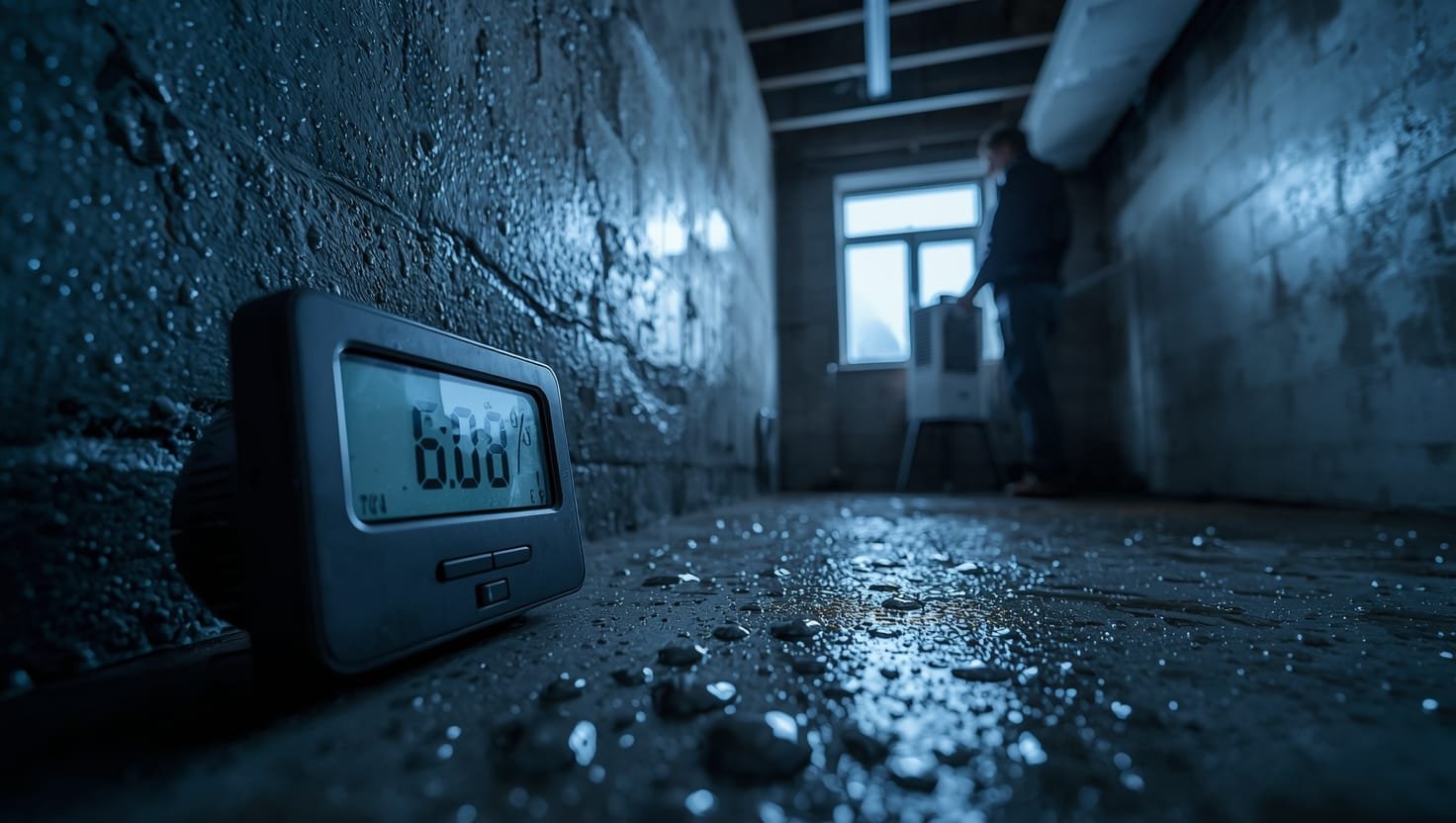
Your Basement Humidity Reading is Climbing. Here’s What That Spike Actually Means—And Why You Need to Act Fast.
You’ve measured your basement humidity and the number’s creeping up week after week.
Last month it was 58%. Now it’s 65%.
The question isn’t whether you should worry—it’s whether you know what’s actually driving that climb.
Because not all high humidity readings are created equal, and treating the wrong problem will drain your wallet while mold keeps growing behind your walls.
In this section, we’re going to walk you through what those trending numbers really mean, how to figure out if you’re dealing with a fixable seasonal issue or a structural nightmare, and exactly when to call in the pros before your basement becomes a total loss.
Why Humidity Trends Matter More Than Single Readings
Most people measure their basement humidity once, see a number above 60%, panic, and buy a dehumidifier.
That’s not wrong—but it’s incomplete.
A single reading is like checking your blood pressure once and assuming you’re healthy.
You need context.
If your basement hits 65% on a hot, humid July afternoon but drops back to 52% in October, you’re looking at seasonal moisture—annoying but manageable.
If your basement stays locked at 68% in January (when it should be dry), that’s a different beast entirely.
That’s your warning sign that water’s actively entering your space.
Mark Frillici and his team at Healthy Spaces have seen this pattern hundreds of times in Rochester homes.
The homeowners who track humidity over weeks and months catch problems early.
The ones who ignore a single high reading?
They come back six months later with mold colonies in their rim joists and a $7,000+ remediation bill.
Bottom line: Trends reveal truth; single readings just create confusion.
Decoding Your Humidity Pattern: Is It Seasonal or Structural?
Here’s the real skill in how to measure humidity in your basement—knowing what your numbers are telling you.
Two different basements can both hit 70% humidity, but the fixes are completely different.
The Seasonal Pattern (Fixable With a Dehumidifier)
Your humidity spikes in summer, stays elevated through early fall, then drops in winter.
June: 52%
July: 64%
August: 71%
September: 68%
October: 55%
November: 48%
This pattern matches outdoor humidity and temperature swings.
Warm air holds more moisture, and basements—being below grade—absorb that moisture from the surrounding soil.
It’s not a leak.
It’s not a structural failure.
It’s just physics.
The fix is straightforward: run a basement dehumidifier system during humid months to keep levels between 40-50%.
A decent dehumidifier pulls 50-70 pints of moisture per day and costs $15-30 monthly to run.
That’s insurance against mold at a fraction of remediation costs.
The Year-Round Pattern (Structural Problem)
Your humidity stays elevated regardless of season.
January: 66%
February: 64%
March: 68%
April: 72%
May: 70%
This is your red flag.
Winter air is dry—it should pull moisture out of your basement, not feed it in.
If humidity’s still climbing in February when outdoor air is 30% humidity, something’s actively bringing water into your space.
Could be a foundation crack weeping groundwater.
Could be a sump pump that’s overwhelmed or broken.
Could be condensation pooling on cold pipes or foundation walls.
Could be poor drainage around your perimeter forcing water against your foundation.
Any of these needs professional diagnosis because a dehumidifier alone won’t solve it—you’ll just be treating the symptom while the problem gets worse.
Bottom line: Seasonal spikes are manageable; year-round elevation means water’s entering your basement.
The Sudden Spike Pattern (Emergency)
Your readings were stable at 50-55% for months, then suddenly jump to 72% in a single week.
Something broke.
Maybe a heavy rainstorm overwhelmed your drainage system.
Maybe your sump pump failed.
Maybe a pipe burst.
Maybe the seal around your basement window cracked.
Don’t wait on this one.
Call a professional for mold inspection and water source assessment within 48 hours.
Mold loves sudden moisture spikes—they create perfect growing conditions before you even realize there’s a problem.
Bottom line: Sudden humidity jumps demand immediate professional attention.
Reading the Physical Signs Your Basement’s Telling You
Numbers don’t lie, but they’re only half the story.
Your basement’s also sending visual and sensory signals that confirm what the hygrometer’s showing.
Learn to read them.
Condensation on Surfaces
If your basement windows are fogging up, or you see water droplets on pipes and foundation walls, humidity’s definitely high.
This happens when warm, moist air hits a cold surface—usually pipes, concrete, or metal fixtures.
The condensation itself isn’t dangerous, but it’s a symptom.
It means moisture is present and looking for places to settle.
Wipe condensation away daily and watch if it comes back within hours—that tells you humidity’s actively elevated.
Musty Smells
That earthy, stale smell isn’t just unpleasant.
It’s mold or mildew already colonizing.
Mold releases volatile organic compounds (VOCs) as it grows, and your nose detects them before your eyes see visible growth.
If your basement smells musty and your hygrometer reads above 60%, mold’s probably already present behind walls, under flooring, or in insulation.
Time to get professional testing done.
Efflorescence (White Powdery Deposits)
See white, chalky buildup on your concrete basement walls or floor?
That’s efflorescence—mineral salts left behind when water evaporates from concrete.
It means water’s been moving through your foundation, which is a direct signal of moisture intrusion.
Efflorescence plus elevated humidity readings equals a structural moisture problem that needs professional waterproofing and drainage assessment.
Soft or Discolored Drywall and Wood
Touch your basement drywall.
Does it feel spongy or soft?
Are there dark stains or discoloration spreading across surfaces?
That’s water damage in progress.
Drywall starts breaking down around 60% humidity, and wood framing gets soft and weak around 65-70%.
If you’re seeing this combined with high humidity readings, structural damage is already happening.
Every day you wait costs you more—not just in repair bills but in how deep the damage spreads.
Bottom line: Condensation, musty smells, efflorescence, and soft surfaces confirm your humidity readings are a real threat.
Common Mistakes People Make When Interpreting Humidity Readings
You’ve got your hygrometer, you’re taking readings, but you’re still missing something.
Here are the traps most homeowners fall into.
Measuring in the Wrong Spots
Remember earlier when we talked about placement?
This is where it actually matters.
If you only measure near your dehumidifier or HVAC vent, you’re getting artificially low readings.
Those spots are doing their job—they’re dry.
But the corner by the foundation wall, the closet with no air circulation, the storage room under the stairs—those spots are where humidity really lives.
A homeowner in Rochester measured 55% humidity near his basement HVAC system and thought he was fine.
When Mark’s team came out for an inspection, they found 74% humidity in the finished bedroom corner and mold already colonizing the drywall behind the bed.
The homeowner had been measuring in the wrong spot for six months.
One hygrometer in a central location tells you nothing.
Three hygrometers spread across different zones tells you everything.
Not Accounting for Time of Day
Humidity fluctuates throughout the day.
Early morning readings (5-7 AM) are usually highest because overnight condensation and cool temperatures trap moisture.
Afternoon readings are lower because warmth helps moisture evaporate.
If you measure at 7 AM and get 72%, then measure at 2 PM and get 58%, both readings are real—but they’re telling different stories.
Track readings at the same time each day for consistent data.
Morning readings are actually more useful for spotting problems because they show your baseline moisture load.
Ignoring Outdoor Humidity
Your basement humidity doesn’t exist in a vacuum.
If outdoor humidity is 85% on a given day, your basement will naturally be higher than when outdoor humidity is 40%.
Comparing your basement reading to outdoor conditions gives you context.
If outdoor humidity is 50% but your basement is 68%, that’s a 18-point gap—and that gap is the problem.
Your basement should be only 5-10 points higher than outdoor conditions.
Anything more signals active moisture intrusion or poor ventilation.
Bottom line: Wrong placement, wrong timing, and ignoring outdoor data kill your ability to spot real problems.
When High Humidity Readings Mean You Need Professional Help—Not Just a Dehumidifier
You’ve been tracking humidity for two weeks.
The numbers aren’t dropping.
You’re wondering: do I just buy a bigger dehumidifier, or do I call someone?
Here’s the decision tree.
Call a Pro If…
Your readings stay above 65% for more than two weeks straight.
That’s not seasonal noise.
That’s a moisture source you can’t control with a dehumidifier alone.
Humidity is high year-round, even in winter.
Winter air should be pulling moisture out of your basement, not feeding it in.
If you’re seeing 60%+ in January or February, water’s actively entering.
You see physical damage—soft drywall, mold spots, water stains, efflorescence.
A dehumidifier won’t fix structural damage.
You need to find and stop the moisture source, then deal with what’s already been damaged.
Your basement smells musty and humidity’s above 60%.
Mold doesn’t wait for you to feel ready.
It grows in 24-48 hours under the right conditions.
If smell + humidity are both present, get testing done immediately.
You’ve run a dehumidifier for a month and humidity still won’t drop below 60%.
A working dehumidifier should bring basement humidity down 10-15 points.
If it’s not working, you’re fighting an active moisture source that’s stronger than your dehumidifier’s capacity.
That’s a structural problem.
Mark and his team at Healthy Spaces have spent years diagnosing exactly these situations in Rochester basements.
They’ll test your basement’s humidity in multiple zones, check outdoor conditions for comparison, look for visible moisture sources, and run air quality tests to see if mold’s already present.
A complete assessment costs $300-600 and takes about 2-3 hours.
Skipping it because you’re hoping the dehumidifier will work?
That’s how you end up with a $10,000+ mold remediation bill.
Bottom line: Year-round elevation, visible damage, and musty smells demand professional diagnosis—not just dehumidifier fixes.
The Real Cost of Ignoring High Humidity Readings
Let’s talk money, because that’s what actually gets people to act.
A dehumidifier costs $200-500 upfront and $20-30 monthly to run.
A professional humidity and mold assessment costs $300-600.
Basement waterproofing to stop an active moisture source costs $2,000-8,000 depending on the problem.
Mold remediation for a contaminated basement costs $5,000-15,000.
Structural repairs (rotted rim joists, soft framing, damaged concrete) can run $8,000-25,000.
That gap between $600 and $25,000 is the price of waiting.
One Rochester homeowner ignored humidity readings of 68-72% for four months.
He thought the smell would go away and the numbers would drop on their own.
When Mark finally inspected, mold had colonized his entire rim joist and the wood was soft enough to push a finger through.
The remediation, structural repair, and waterproofing fix totaled $18,500.
A professional assessment four months earlier would’ve cost $400 and caught the problem before it spread.
That’s a $18,100 difference.
Bottom line: Early diagnosis saves thousands; ignoring readings costs tens of thousands.
FAQ: How to Measure Humidity in Your Basement
What’s the fastest way to check basement humidity without buying equipment?
You can’t get accurate readings without a hygrometer—your senses aren’t reliable enough.
But a basic digital hygrometer costs $15-40 on Amazon and gives you accurate data in minutes.
That’s the fastest, cheapest starting point.
How often should I measure basement humidity?
Track readings once daily at the same time for at least two weeks to spot patterns.
During humid seasons (summer), measure every few days.
Once you’ve established a baseline, weekly checks are usually enough unless you suspect a problem.
Can I use my phone’s humidity sensor instead of buying a hygrometer?
Most phones don’t have humidity sensors, and the few that do are notoriously inaccurate.
A $20 hygrometer is far more reliable and worth the investment.
What should I do if my basement humidity is exactly 60%?
60% is the threshold where mold risk begins.
Don’t panic, but don’t ignore it either.
Track it daily for a week—if it stays at or above 60%, start running a dehumidifier and look for visible moisture sources.
Is 70% humidity in a basement always mold?
Not always—but it’s the perfect environment for mold to start growing within 24-48 hours.
If you’re at 70% with no visible damage or musty smell yet, you’ve caught it early.
Act immediately to bring humidity down and inspect for hidden moisture.
Can a dehumidifier alone fix 75% humidity?
A dehumidifier can bring readings down 10-15 points if the moisture source is just ambient humidity.
If humidity stays above 65% even with a running dehumidifier, you’ve got an active water source that needs professional attention.
How do I know if my hygrometer is accurate?
Most digital hygrometers are accurate within ±5%.
If you want to verify, place it next to a professional-grade meter during a professional inspection.
For most homeowners, a $25 digital hygrometer is accurate enough for tracking trends and spotting problems.
Should I measure humidity in finished vs. unfinished basements differently?
Place meters in both areas if you have both.
Finished areas with drywall and insulation trap moisture differently than open, unfinished spaces.
Humidity readings can vary 10-15 points between the two zones.
Stop Guessing About Your Basement. Get Answers Today.
You know how to measure humidity in your basement now.
You understand what the numbers mean and when they signal real danger.
But understanding and acting are two different things.
If your readings are trending up, staying high year-round, or combined with musty smells and visible damage—don’t wait for it to get worse.
Mark Frillici and the team at Healthy Spaces have spent nearly 20 years protecting Rochester homes from water damage and mold.
They’ll measure your basement’s humidity in multiple zones, identify the moisture source, and give you a clear action plan—not just a sales pitch for the most expensive fix.
Contact Healthy Spaces now for a professional assessment and stop the guessing game.
Your basement—and your wallet—will thank you.
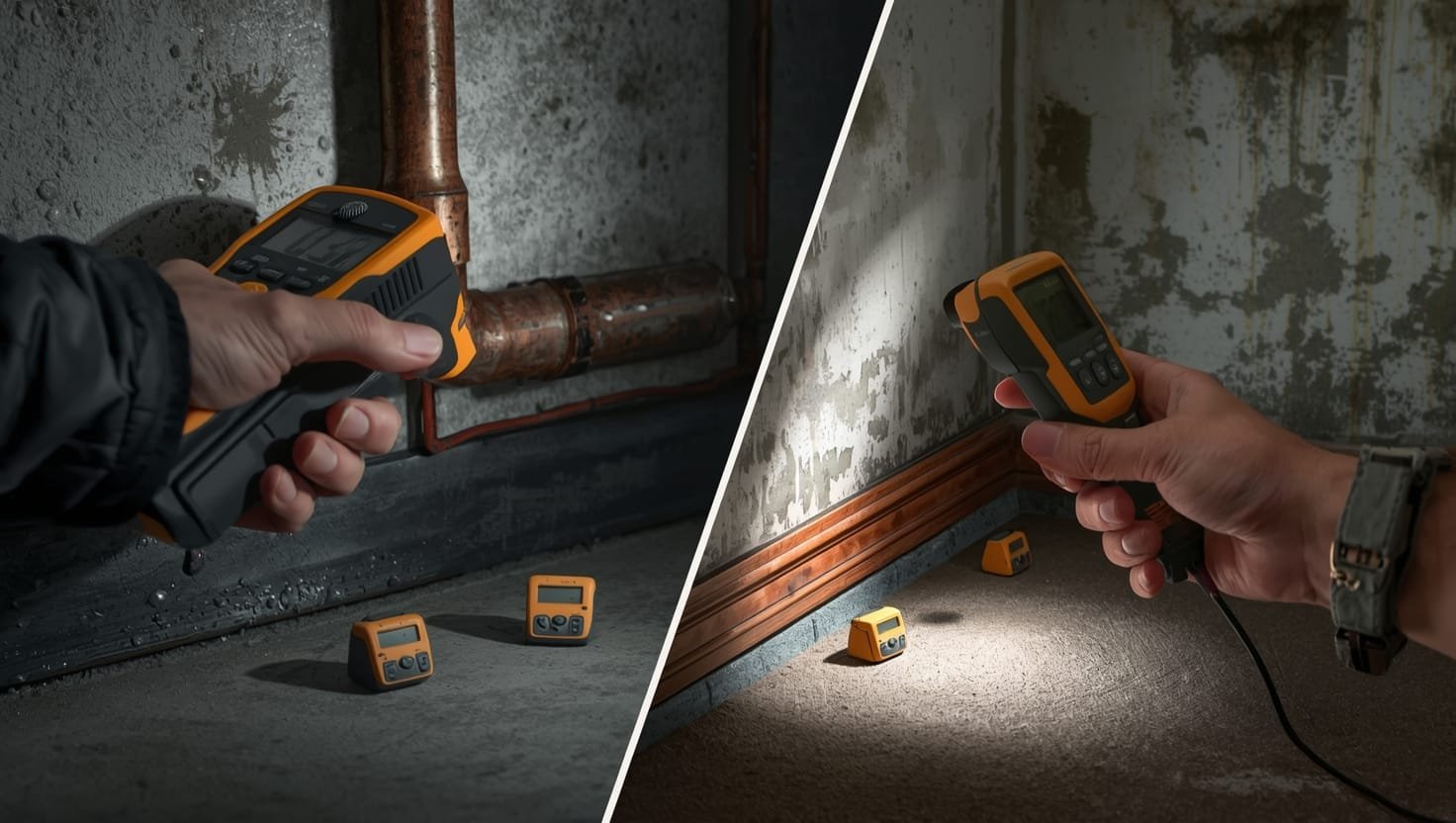
Your Basement Humidity Meter Isn’t Telling You Everything—Here’s What You’re Actually Missing.
You’ve bought a hygrometer, taken readings for a week, and you think you understand your basement’s moisture problem.
But here’s the thing—a single number on a screen doesn’t show you the whole picture.
Most homeowners measure humidity in one spot, see a percentage, and either panic or ignore it.
Neither response solves anything because you’re missing critical context about how to measure humidity in your basement correctly.
The data you’re collecting might be useless if you’re measuring in the wrong places, at the wrong times, or without understanding what actually drives moisture in underground spaces.
This section walks you through the blind spots most people have when monitoring basement humidity—and how to catch problems that simple readings miss entirely.
Why Your Single Humidity Reading Is Basically Worthless
Let’s be direct: one measurement tells you almost nothing.
You measure 58% humidity on a Tuesday afternoon and think everything’s fine.
But that same spot might hit 71% at 6 AM the next morning.
The humidity could’ve been 75% for the previous three weeks before naturally dropping.
You caught it during a good window and missed the actual problem entirely.
A Rochester homeowner did exactly this.
He measured his basement at 2 PM on a dry fall day and got 54%—perfectly normal.
He felt relieved and stopped monitoring.
Six weeks later, Mark’s team came out for an inspection and found humidity had been sitting at 68-72% every morning for the entire summer.
Mold was already colonizing behind the finished walls.
The single afternoon reading cost him $6,200 in remediation because it masked the real problem.
This is why tracking matters more than any individual number.
A trend reveals truth; a snapshot just creates false confidence.
Bottom line: One reading is a guess; seven days of data is a diagnosis.
The Hidden Zones Where Humidity Actually Pools
Basements don’t have uniform humidity.
They have microclimates—pockets where moisture gets trapped and thrives.
If you’re only measuring near your dehumidifier or in the center of the room, you’re testing the driest spot in your space.
The real danger zones exist in corners, under stairs, in closets, and along exterior foundation walls.
These areas have poor air circulation, colder surfaces that attract condensation, and direct exposure to surrounding soil and groundwater.
One homeowner placed a hygrometer in his finished basement’s main room and got readings of 50-55%.
He bought a small dehumidifier and thought he’d solved it.
When Mark inspected, he placed three hygrometers around the space—one in the main area (50%), one in the back storage closet (68%), and one near the rim joist (74%).
The storage closet and rim joist were perfect mold incubators while the main reading looked fine.
The homeowner had been testing one zone and ignoring two others where damage was already happening.
This matters because mold doesn’t grow uniformly across your basement.
It colonizes the wettest, most protected spots first—usually where you’re not looking.
By the time visible growth appears in high-traffic areas, it’s already been thriving in hidden zones for weeks.
Bottom line: Test corners and walls, not just the center of your basement.
How Temperature Swings Mess With Your Humidity Readings
Humidity doesn’t exist independently from temperature.
They’re linked—warm air holds more moisture, cold air holds less.
When your basement temperature drops (especially at night or during winter), the air can’t hold as much moisture, so it condenses on surfaces.
This creates false humidity spikes that don’t reflect actual moisture intrusion.
Your hygrometer reads 72% at 6 AM when the basement is 55 degrees.
By 2 PM when it warms to 68 degrees, the same absolute amount of moisture now reads as 58%.
The humidity number dropped, but no water left your basement—the air just warmed up and expanded.
If you’re only measuring at random times, you’ll see wild swings that confuse your understanding of what’s really happening.
The solution is tracking both temperature and humidity together.
When you see humidity spike, check the temperature.
If temperature dropped 10+ degrees, the humidity spike is mostly just condensation—moisture is clinging to cold surfaces rather than floating in the air.
But if temperature stayed steady and humidity rose, that’s a real increase in moisture content, which signals an active water source.
Most decent hygrometers show temperature alongside humidity, so you get both numbers at once.
Use them together.
Bottom line: Compare humidity and temperature together; rising humidity alone might just mean it got colder.
The Outdoor Humidity Context You’re Ignoring
Your basement’s humidity doesn’t exist in a vacuum.
It’s influenced by what’s happening outside.
On a day when outdoor humidity is 85%, your basement will naturally run higher than on a day when outdoor humidity is 40%.
If you ignore this context, you’ll misinterpret your readings.
Say your basement reads 62% on a humid July afternoon when outdoor humidity is 80%.
Your basement is only 18 points higher than outside—that’s actually not terrible for a below-grade space.
But if your basement reads 62% on a dry January morning when outdoor humidity is 35%, that’s a 27-point gap, which signals serious moisture intrusion.
Same reading, completely different meanings.
The gap between your basement humidity and outdoor humidity tells you whether you’re dealing with seasonal moisture or an active problem.
Ideally, your basement should be 5-10 points higher than outdoor conditions.
Anything more than 15 points higher means something’s bringing water in that shouldn’t be.
To track this, check your local weather service for outdoor humidity when you take basement readings.
Write them down together: “Basement 64%, Outdoor 48%—gap of 16 points.”
Over a week or two, patterns emerge that tell you whether you’re fighting seasonal moisture or structural water intrusion.
Bottom line: Compare basement humidity to outdoor humidity; large gaps reveal active moisture problems.
Why Measuring at Different Times of Day Changes Everything
Your basement’s humidity follows a daily cycle.
Early morning (5-7 AM) is usually highest because overnight air has cooled, condensation has formed, and moisture has settled.
Afternoon readings are lower because warmth helps moisture evaporate and air circulation increases.
Evening readings fall somewhere in between.
If you measure at 2 PM every day, you’ll get artificially low readings and miss your basement’s actual moisture load.
If you measure at 6 AM, you’re catching the peak—which is more honest about what your basement’s dealing with.
One homeowner measured his basement at 3 PM daily and consistently got 48-52% readings.
He thought everything was fine.
When Mark came out for an inspection, he measured at 6 AM and got 71%.
The homeowner had been testing during the best part of the day and missing the problem that existed every single night.
The fix is simple: measure at the same time every day.
Pick early morning—it’s the most revealing time and shows your baseline moisture without the distortion of afternoon warmth.
If you can only measure once daily, morning readings beat afternoon readings every time.
Bottom line: Morning humidity readings show your real baseline; afternoons hide the problem.
The Seasonal Shift You’re Not Tracking
Humidity patterns change dramatically across seasons, and most people don’t account for this.
Summer brings moisture through warm, humid air.
Fall and spring bring it through temperature swings and rain.
Winter can be dry—or surprisingly wet if you’ve got condensation issues on cold pipes and foundation walls.
If you only measure for two weeks in June and see 65% humidity, you might assume your basement’s got a moisture problem.
But 65% in June might be totally normal seasonal behavior, while 65% in February is a red flag.
The same number means different things depending on when you measure.
To actually understand your basement, you need to track humidity across at least three months—ideally a full year.
This shows you what’s normal seasonal variation and what’s an actual problem.
One homeowner in Rochester tracked his basement humidity from June through September and saw readings climb from 58% to 72%.
He panicked and called Mark.
Mark asked him to continue tracking through fall.
By October, humidity dropped to 55%, and by November it was 48%.
It was pure seasonal moisture—the kind that a dehumidifier handles during humid months.
If the homeowner had only measured in July and August, he would’ve spent money on structural repairs he didn’t need.
Patience and tracking revealed it was just seasonal humidity.
Bottom line: Track humidity across seasons; three months of data beats two weeks of panic.
What Your Hygrometer Brand Actually Means (And Doesn’t)
Not all hygrometers are created equal.
A $15 basic digital meter from Amazon is accurate within ±5%, which is fine for tracking trends.
A $100+ professional-grade meter is accurate within ±2%, which matters if you’re making repair decisions.
The difference between 58% and 63% might not sound huge, but it changes whether you need a dehumidifier (50-60% range) or professional waterproofing (65%+ range).
If your cheap meter is reading 3-5 points low, you might think you’re at 58% when you’re actually at 61-63%.
This is why Mark’s team uses calibrated professional equipment during inspections.
They’re not trying to upsell you—they’re getting accurate data so they can diagnose the real problem.
For your own tracking, a basic digital hygrometer is sufficient because you’re looking for trends, not absolute accuracy.
If your meter reads 60% consistently over a week, it doesn’t matter if the true reading is 58% or 62%—you’re in the borderline zone either way.
What matters is whether the number’s trending up, staying flat, or dropping.
That trend tells you whether your moisture situation is getting worse, stable, or improving.
If you want to verify your meter’s accuracy, test it against a professional meter during an inspection.
Most pros will show you their equipment and let you see how your readings compare.
Bottom line: Cheap hygrometers track trends fine; professional meters give you exact numbers for decisions.
The Spot Check That Reveals Hidden Problems
Beyond just placing hygrometers around your basement, there’s a technique that catches moisture problems your meter might miss: the spot check.
This is where you use a moisture meter (different from a hygrometer) to test the actual moisture content in materials like drywall, wood, and concrete.
A hygrometer measures air humidity.
A moisture meter measures whether the actual materials in your basement have absorbed water.
You can have 55% air humidity (looks fine) but drywall that’s at 18% moisture content (actively wet and heading toward mold).
The air humidity reading misses the real problem—the materials themselves are saturated.
This happens when there’s localized moisture intrusion (a foundation crack, condensation on cold surfaces, water wicking up from concrete) that hasn’t yet saturated the air.
By the time the air humidity gets high enough to be obvious, the materials are already damaged.
A pinless moisture meter costs $30-80 and takes 10 seconds to test any surface.
Press it against your basement drywall, concrete floor, or wood framing in different spots.
Readings under 12% are normal.
Readings above 16% mean the material’s absorbing moisture and mold risk is climbing.
Readings above 20% mean active water intrusion and structural damage is happening now.
This spot-check technique catches problems before they show up in air humidity readings.
One homeowner noticed her basement’s air humidity was 58%, which seemed manageable.
Mark tested the drywall near the rim joist and got a 22% moisture reading.
The material was actively wet despite the air humidity being in the borderline zone.
A foundation crack was weeping water directly into the rim joist—just not enough to significantly raise air humidity yet.
Without the spot check, she would’ve waited until air humidity spiked before acting.
By then, the wood would’ve been soft and moldy.
Bottom line: Test material moisture, not just air humidity; damp materials show problems hygrometers miss.
The Dehumidifier Test That Shows If You Have a Real Problem
Here’s a diagnostic trick most people don’t know about.
If you run a decent dehumidifier for a full week in your basement and humidity won’t drop below 60%, you’ve got an active moisture source that’s stronger than the dehumidifier can handle.
A working dehumidifier should pull 10-15 points off your baseline humidity.
If you’re at 72% before running it and it only brings you down to 65% after a week of continuous operation, the machine’s fighting a losing battle.
That means water’s actively entering faster than the dehumidifier can remove it.
This is your signal that you need professional waterproofing or drainage work, not just a bigger dehumidifier.
Many homeowners make the mistake of buying increasingly larger dehumidifiers, thinking the problem is just high ambient moisture.
They end up spending $500-1,000 on equipment that can’t fix a $3,000 drainage problem.
The dehumidifier test saves you that wasted money.
Run a dehumidifier for seven days, track the humidity daily, and see if it’s trending down.
If it is, seasonal moisture is your issue and the dehumidifier works.
If humidity stays flat or climbs despite the dehumidifier running, call a professional for wet basement and drainage assessment.
Bottom line: If a dehumidifier won’t drop humidity below 60%, you’ve got structural water intrusion.
FAQ: Advanced Humidity Measurement Questions
Should I measure basement humidity in the same spot every time?
Yes, for consistency—but also test different spots to see if humidity varies across your space.
Pick one main spot for daily tracking (so you catch trends), then rotate testing to other areas weekly to find problem zones.
How accurate do I need to be when measuring humidity?
Within ±5% is fine for tracking trends and making decisions about whether to call a pro.
Professional-grade meters are more accurate but unnecessary unless you’re making expensive waterproofing choices.
What if my basement humidity is exactly 50%—is that safe?
50% is the top of the EPA’s recommended range and totally safe.
You’re not at risk, but if it trends upward, start monitoring weekly to catch problems early.
Can humidity sensors on smart home systems replace a hygrometer?
Most smart home sensors aren’t accurate enough for basement monitoring.
A dedicated hygrometer is cheap and reliable—worth the $20 investment.
Why does my basement humidity spike after I do laundry or take a shower?
Hot water and steam add moisture to the air temporarily.
Measure humidity before and 2-3 hours after—if it drops back down, that’s just activity-related moisture, not a structural problem.
Should I close basement windows to keep humidity down?
Close them on humid days (when outdoor humidity is above 60%), but open them on dry days to let air circulate.
Stagnant air traps moisture; moving air dries things out naturally.
Stop Guessing. Get Real Answers About Your Basement’s Moisture.
You now know how to measure humidity in your basement the right way—tracking trends, testing multiple zones, comparing to outdoor conditions, and understanding what the numbers actually mean.
But knowledge and action are different things.
If you’re seeing elevated readings, spotting physical signs of moisture, or just want to know whether your basement’s safe before problems get expensive, Mark Frillici and the team at Healthy Spaces have spent nearly 20 years diagnosing exactly these situations in Rochester homes.
They’ll test your air humidity, measure material moisture, assess your drainage, and give you a clear action plan—not a sales pitch.
If you’re in Rochester and dealing with basement moisture, water, or mold concerns, contact Healthy Spaces now for a professional assessment and stop the guessing game.