Floor Drain Backup in Basement: Silent Threat Destroying Your Home
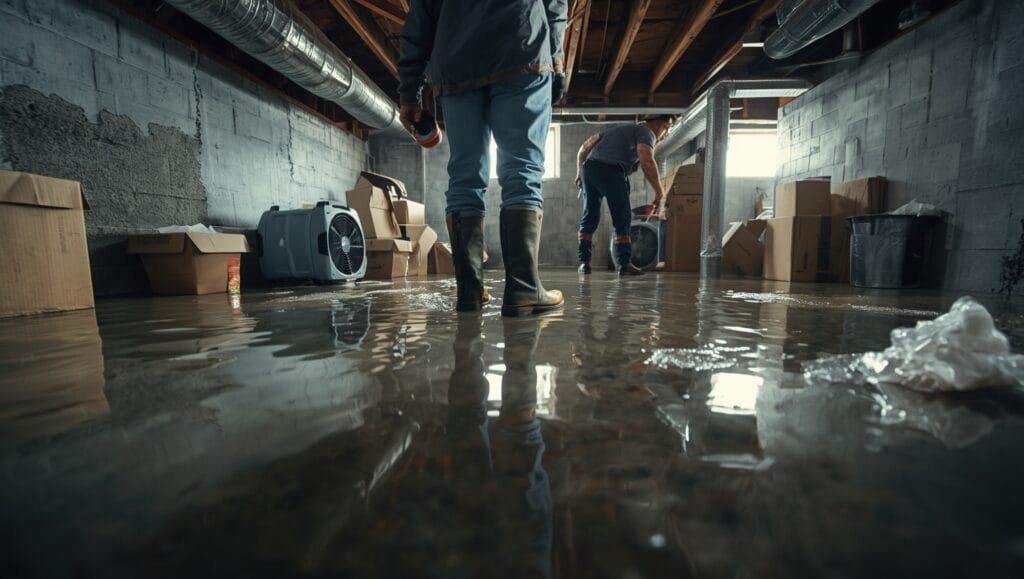
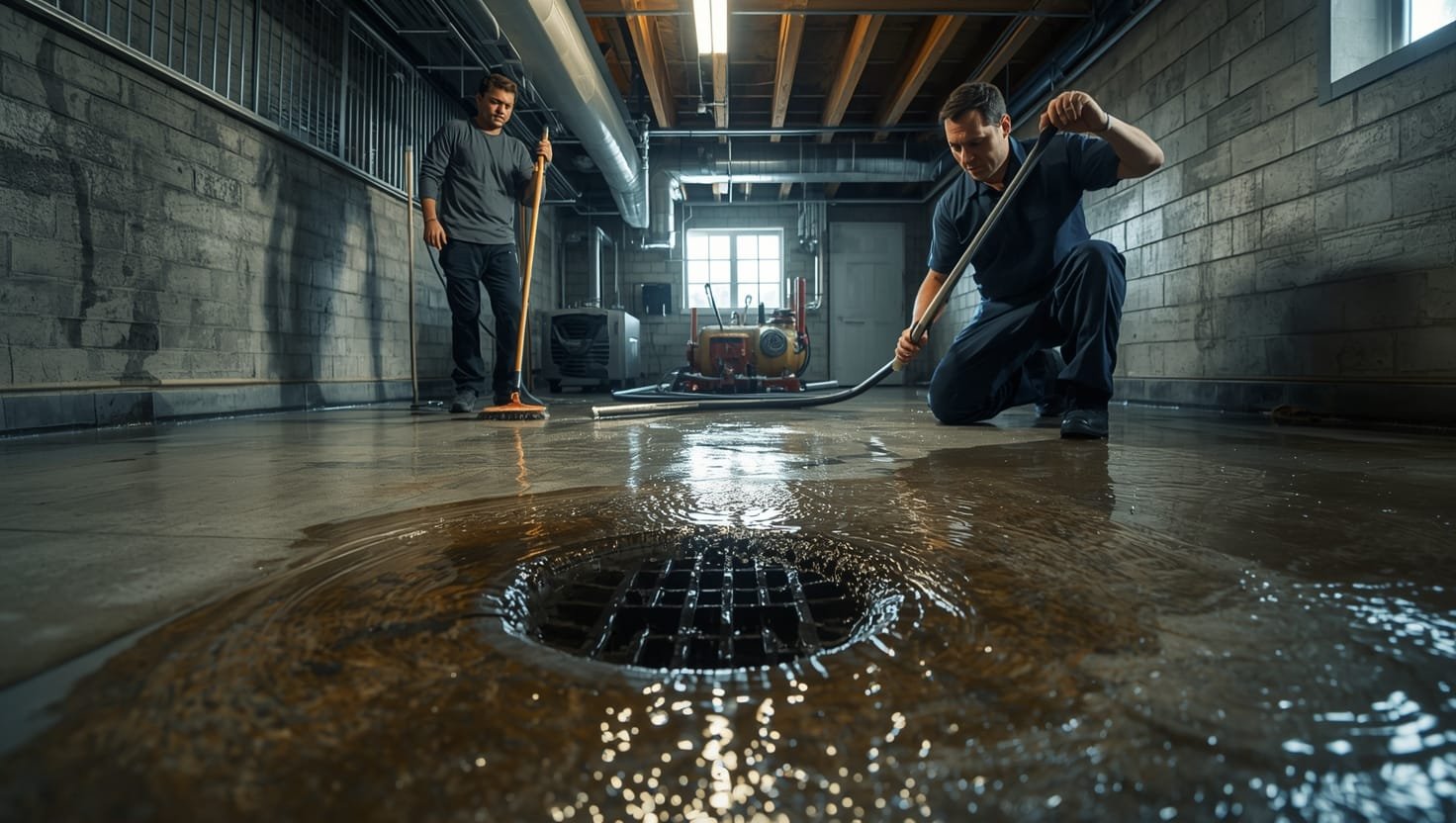
Your basement floor drain just backed up. Water’s rising. Panic sets in.
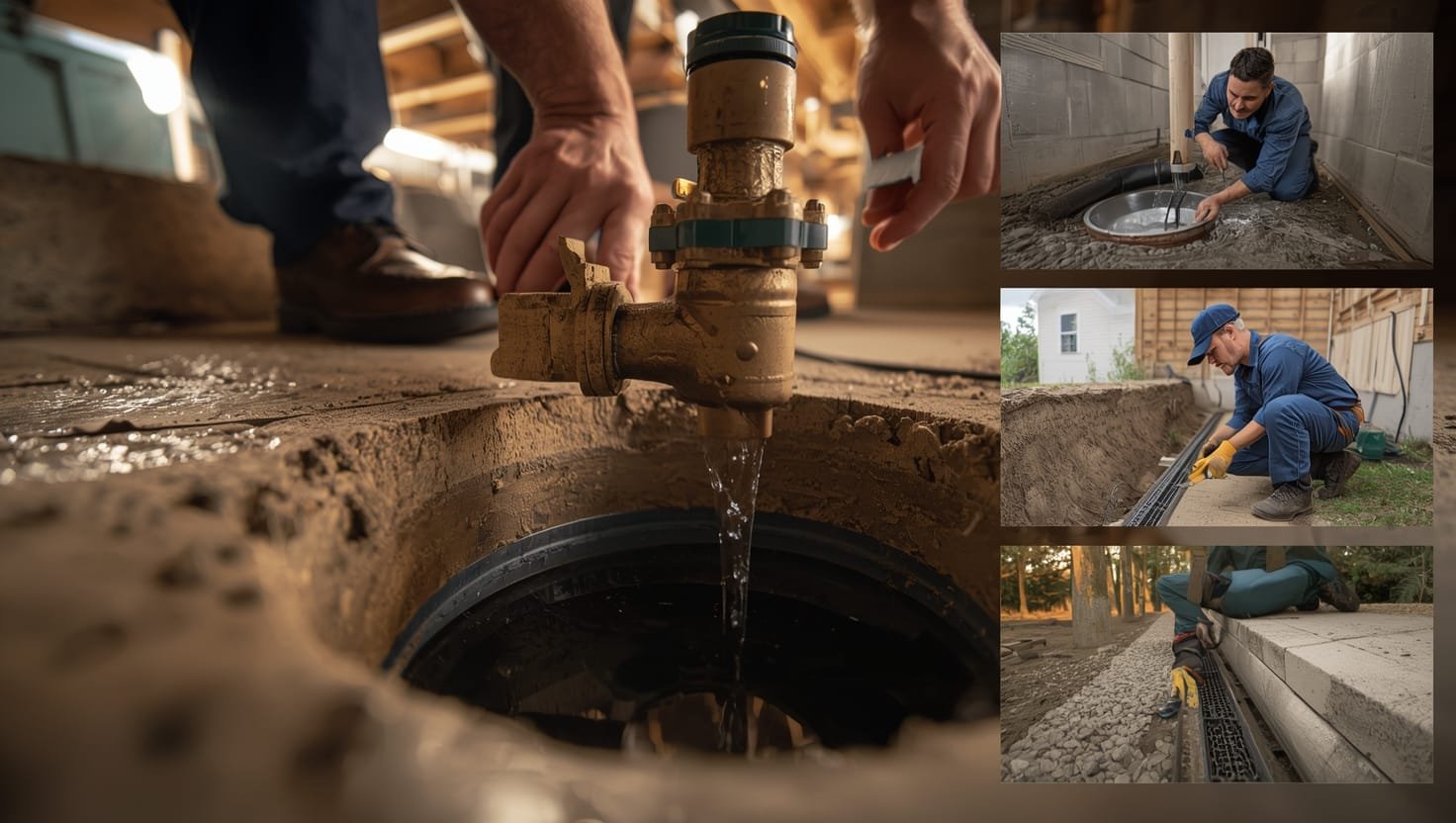
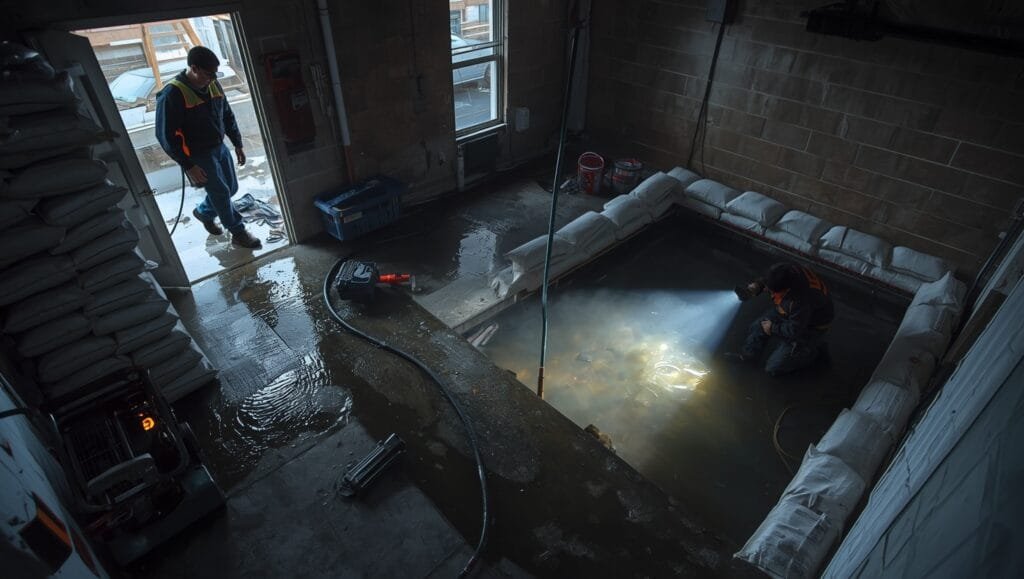
A floor drain backup isn’t just messy—it’s a potential disaster that can destroy your basement, compromise your home’s structure, and create serious health risks. In Rochester, NY, homeowners face this nightmare more often than you’d think. This comprehensive guide will walk you through understanding, preventing, and resolving floor drain backups before they turn into a $50,000 nightmare.
What Causes Floor Drain Backups?
Floor drain backups happen for multiple reasons, but they typically stem from these key issues:
- Clogged main sewer line
- Tree root intrusion in underground pipes
- Damaged or collapsed drainage pipes
- Heavy rainfall overwhelming municipal systems
- Improper basement waterproofing
One Rochester homeowner, Mike T., discovered his backup after a heavy rainstorm when sewage started pooling around his basement floor drain. “I thought it was just a minor issue,” he said. “Turns out, it was a major problem that could’ve cost me thousands.”
Bottom line: Floor drain backups result from complex underground pipe issues and environmental factors.
The Hidden Dangers of Basement Floor Drain Backups
Most homeowners don’t realize how dangerous a floor drain backup can be. It’s not just about water—it’s about what that water carries.
Health Risks
Sewage contains dangerous bacteria like E. coli, Salmonella, and hepatitis. One square inch of contaminated water can harbor millions of harmful microorganisms. These pathogens can cause serious illnesses, especially for children, elderly, and immunocompromised individuals.
Structural Damage
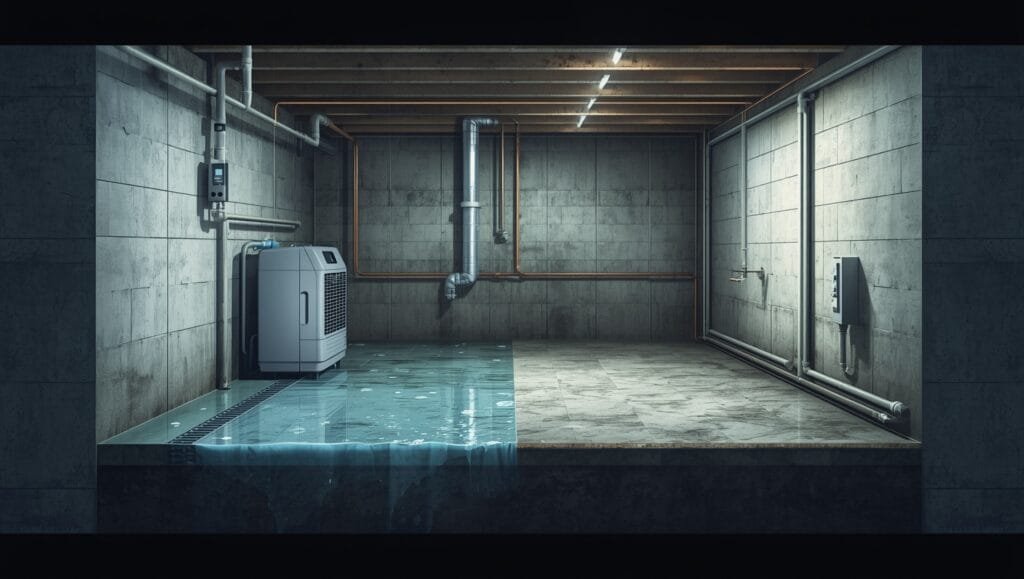
Water doesn’t just sit—it destroys. Continuous moisture can:
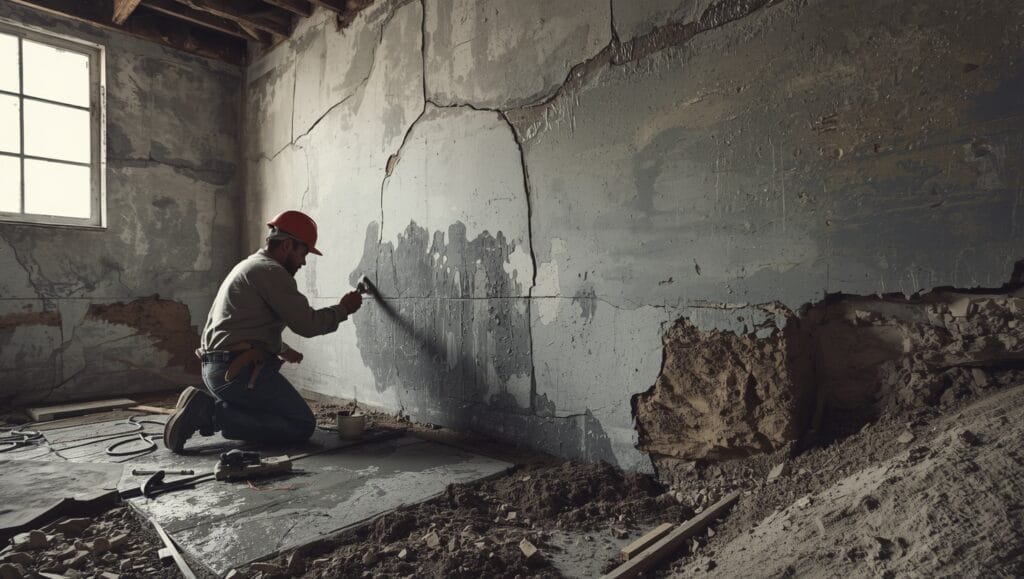
- Weaken foundation walls
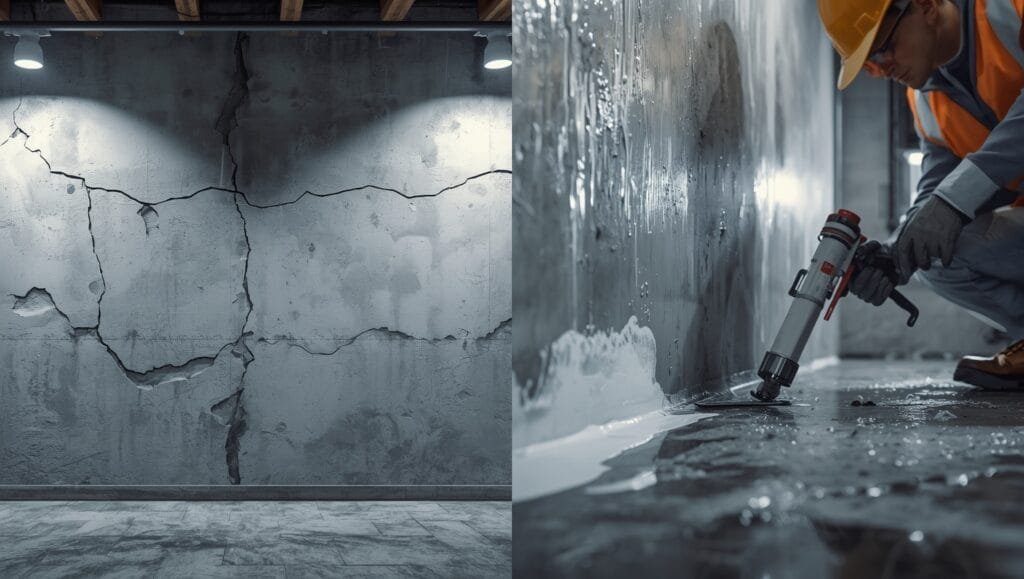
- Cause concrete deterioration
- Create perfect conditions for black mold growth
- Compromise electrical systems
- Destroy personal property and furniture
Mark Frillici from Healthy Spaces has seen countless homes in Rochester devastated by unchecked water damage. “Most homeowners wait too long,” he warns. “By the time they call us, the damage is extensive.”
Bottom line: Floor drain backups aren’t just inconvenient—they’re potential health and structural catastrophes.
Immediate Steps When Your Basement Floor Drain Backs Up
Time is critical. Here’s what you need to do immediately:
- Stop using all water sources in your home
- Shut off electricity to the affected area
- Wear protective gear (rubber boots, gloves)
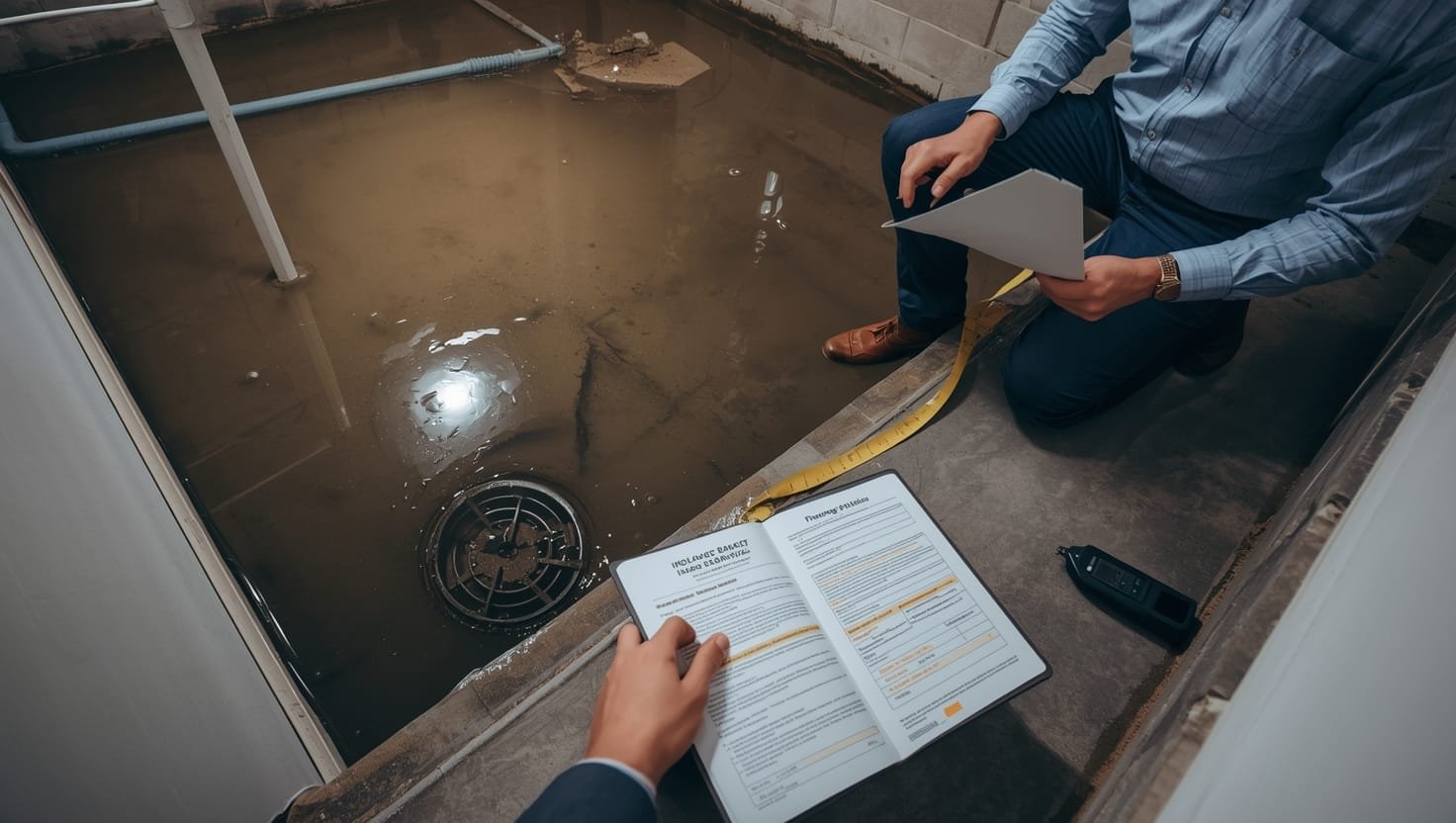
- Document everything for insurance
- Call a professional water damage restoration service
Pro tip: Don’t try to handle sewage backup alone. One wrong move can spread contamination and increase health risks.
Bottom line: Quick, strategic action prevents extensive damage and potential health hazards.
Rochester’s Unique Basement Challenges
Rochester’s climate and geological landscape make basement water issues particularly tricky. With heavy snowmelt, frequent rainfall, and aging municipal infrastructure, floor drain backups are more common here than in many other regions.
Local basement waterproofing isn’t just recommended—it’s essential for protecting your home.
Bottom line: Rochester homeowners face unique basement water challenges requiring specialized solutions.
Stay tuned for part 2, where we’ll dive deeper into prevention strategies and long-term solutions for floor drain backups.
Mark and his team have saved homes like yours for over 20 years. If you’re dealing with water or mold—don’t wait. Contact Healthy Spaces Now and get help fast.