Contact Us For a Free Qoute
Old Home Foundation Repair: Stop Costly Damage
Your Foundation Is Cracking—And You Might Not Even Know It Yet
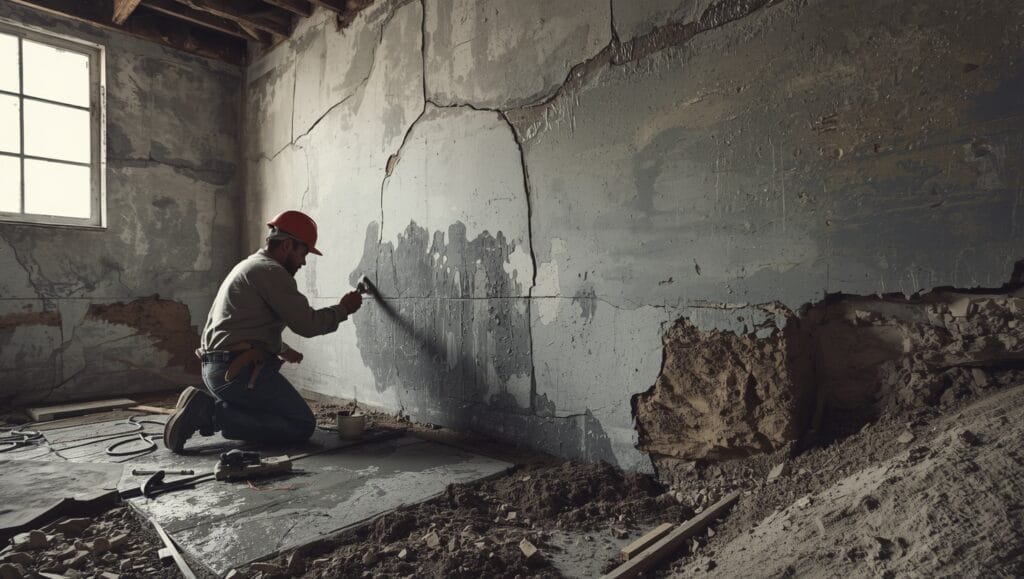
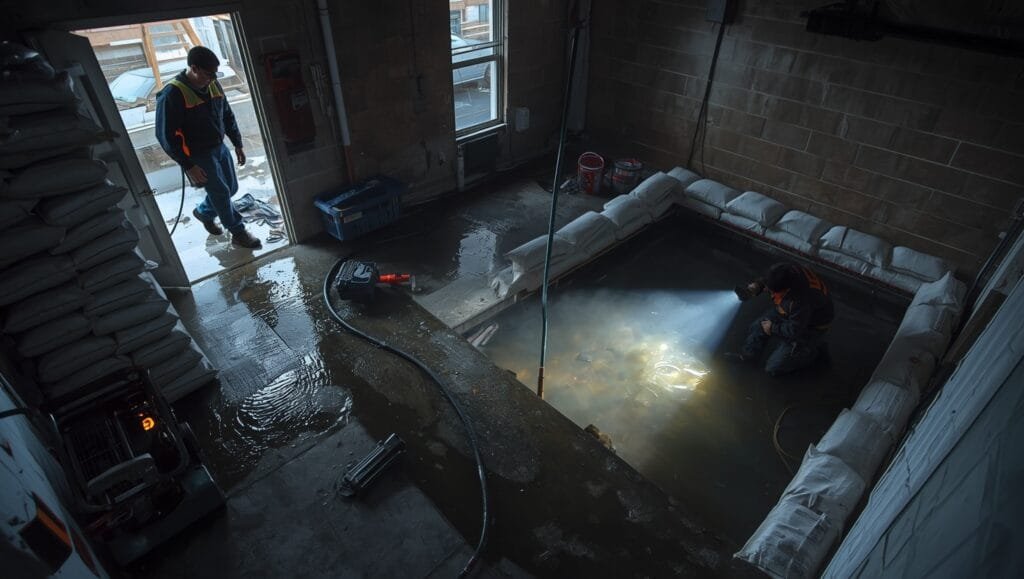
One homeowner in Rochester called us on a Tuesday morning after noticing their basement wall was bowing inward—just slightly, but enough to catch their eye. They’d owned the place for 14 years without incident. By the time they reached out, water was already seeping through at the base. That’s when they realized: old home foundation repair isn’t something you put off. It’s something you catch before it becomes a $40,000 disaster.
If you live in an older house, your foundation is probably working harder than you think. And yeah, foundations fail quietly. You don’t wake up to a dramatic collapse. Instead, you get small warnings—hairline cracks, damp patches, doors that stick in the frame. Ignore them, and you’re looking at structural damage that spreads like a virus through the rest of your property.
This guide breaks down everything you need to know about old home foundation repair—what’s actually worth worrying about, what you can fix yourself, and when you absolutely need professionals. We’re going to keep it real and skip the fluff, because your foundation literally holds up everything you own.
Why Old Foundations Fail (And Why Your House Might Be Next)
Older homes—especially those built before the 1980s—were constructed with different standards than today’s builds. Concrete wasn’t as refined. Drainage systems were either nonexistent or poorly designed. And here’s the thing: time is relentless. Soil shifts, water pressure builds, and materials degrade.
The main culprits behind foundation failure in older houses break down like this:
- Water infiltration — Groundwater pushes against your foundation walls, and without proper basement waterproofing, it finds its way in. Once water gets in, it weakens concrete and creates cracks that spread.
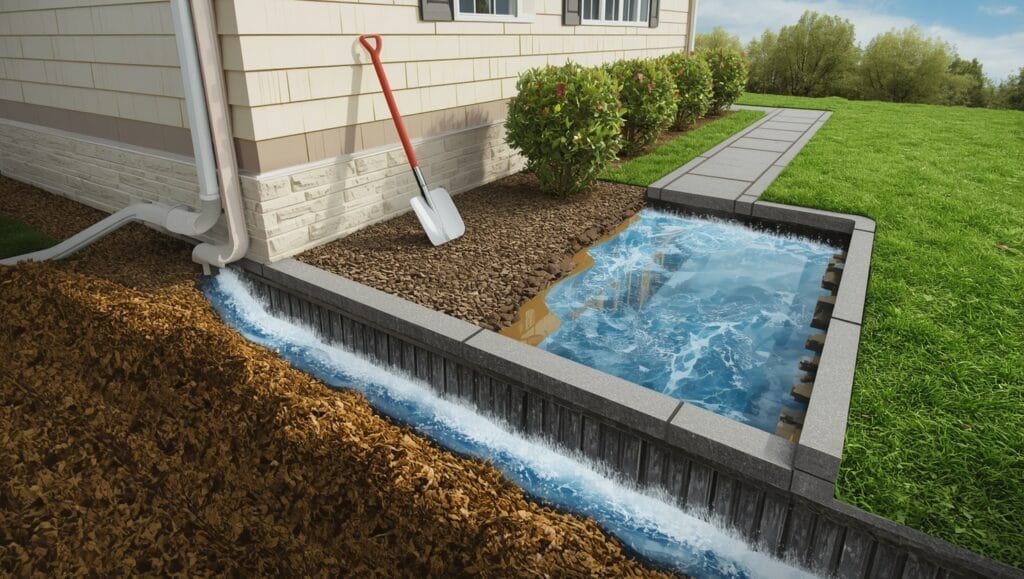
- Poor drainage around the perimeter — If gutters aren’t directing water away from your foundation, it pools against the walls. Over decades, this erodes the concrete and destabilizes the structure.
- Soil settlement and shifting — The ground beneath your house compacts unevenly over time. Clay soils are especially problematic because they expand when wet and shrink when dry, creating movement that cracks foundations.
- Lack of reinforcement — Older homes often have foundations with minimal or no rebar. This makes them brittle and prone to cracking under pressure.
- Freeze-thaw cycles — In Rochester winters, water seeps into tiny cracks, freezes, expands, and makes the cracks bigger. Repeat this 100 times over 30 years, and you’ve got serious structural issues.
Mark Frillici, founder of Healthy Spaces, has been dealing with these problems since 2006. He’s seen it all—foundations that lasted 60 years and then suddenly started failing, homes where the damage was hidden until a heavy rain exposed everything. The pattern’s always the same: water gets in, damage spreads, and the longer you wait, the worse it gets.
Bottom line: Old foundations fail because of water, soil movement, and time—not because builders were lazy back then, but because the science and materials have improved.
The Early Warning Signs You Can’t Ignore
Foundation problems don’t announce themselves with a bang. They whisper. Your job is to listen.
Here’s what to actually look for in your basement or crawl space:
- Visible cracks in the foundation walls or floor — Hairline cracks (less than 1/8 inch wide) are usually cosmetic. Anything wider than that, especially if it’s growing, needs attention. Diagonal or stair-step patterns are red flags.
- Bowing or leaning walls — If your basement walls are curved inward, that’s water pressure winning. This is serious and requires professional assessment.
- Water stains or dampness — Even if you don’t see active water, stains on the walls or a musty smell tell you moisture is getting in. This leads to mold and structural rot.
- Doors and windows that stick or won’t close properly — When your foundation shifts, it throws everything out of alignment. Doors that suddenly bind in their frames are telling you something’s moving.
- Gaps between walls and the foundation — If you notice separation between the rim joist and the foundation, that’s settling or shifting happening in real time.
- Efflorescence (white, chalky residue) — This mineral deposit on concrete means water’s been moving through it. It’s not dangerous by itself, but it’s a sign that your foundation’s wicking moisture.
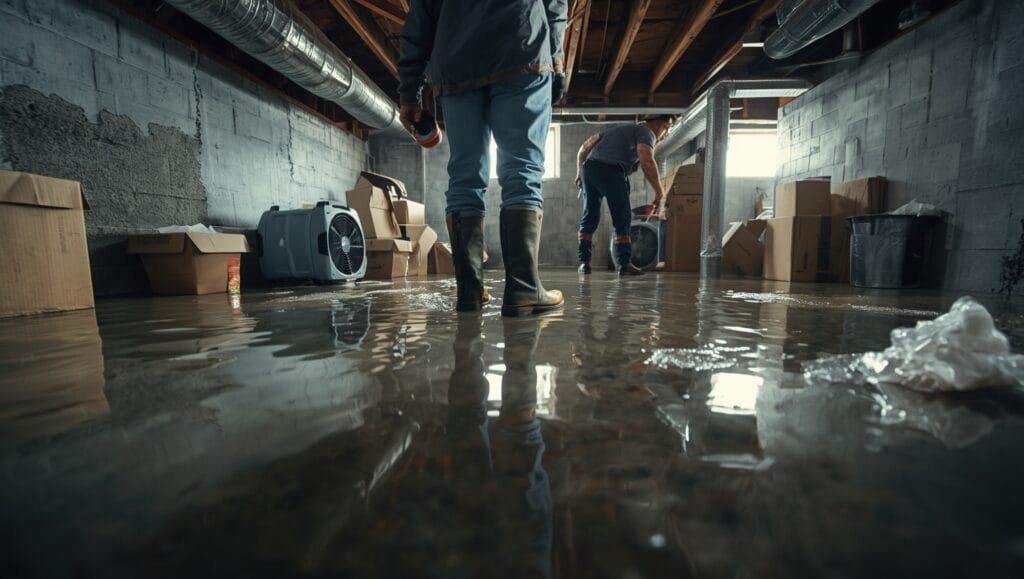
One thing people miss: check your basement after heavy rain. That’s when foundation weaknesses show up fastest. If water’s coming in during storms, your old home foundation repair needs to start with waterproofing—not structural work. Get the water out first, then assess what damage has already occurred.
Bottom line: Cracks wider than a credit card, bowing walls, and persistent moisture are your signals to get a professional assessment now.
The Difference Between Cosmetic Cracks and Structural Problems
Not every crack means your house is falling apart. But knowing the difference between cosmetic and structural damage will save you thousands in unnecessary repairs.
Cosmetic cracks are usually horizontal, less than 1/8 inch wide, and show up in concrete as it cures and shrinks. They’re annoying to look at, but they’re not compromising your foundation’s strength. You can seal them with hydraulic cement to prevent water from getting in, but you don’t need to panic.
Structural cracks are different. They’re typically:
- Wider than 1/8 inch (often 1/4 inch or more)
- Growing over time (measure them and check monthly)
- Diagonal or stair-step patterns
- Accompanied by bowing, leaning, or visible shifting
A homeowner in Rochester ignored a diagonal crack in their foundation for two years because they thought it was normal. When they finally called for an inspection, the crack had doubled in width and water damage had compromised the rim joist. The repair cost $8,000 instead of the $1,500 it would’ve cost if they’d acted early.
Here’s the move: take photos of any cracks you find, measure them, and date the photos. Check them every month. If they’re growing, you need professional help. If they’re stable and narrow, you can monitor them and seal them to prevent water entry. This is why getting a professional foundation inspection is worth the couple hundred bucks—experts can tell you exactly what you’re dealing with and what timeline you’re working with.
Bottom line: Thin, stable cracks are cosmetic; wide, growing, or diagonal ones need professional evaluation fast.
Water Damage and Its Connection to Foundation Failure
Water is the enemy of old foundations. It’s not just about leaks in your basement—it’s about what water does to concrete over time.
When water gets into concrete, it does several things simultaneously. It weakens the material from the inside out. It causes efflorescence, which is the mineral leaching that makes concrete look chalky and aged. And if you’re dealing with freeze-thaw cycles (which anyone in Rochester definitely is), that water freezes, expands, and cracks the concrete further.
But here’s the thing most people don’t connect: water damage to your foundation almost always leads to mold. And mold isn’t just a basement smell problem—it’s a health problem. If you’ve got moisture in your foundation, you’re creating the perfect environment for mold to colonize. We’ve seen basements where the mold spread so aggressively that it required professional mold remediation before any structural work could even begin.
The water-foundation-mold connection works like this: water seeps through cracks or poor drainage, moisture levels rise in your basement, mold spores (which are always present in air) land on damp surfaces and start growing. Within 48 hours, you’ve got a colony. Within weeks, you’ve got a problem that affects your health and your property value.
This is why wet basement solutions have to address both the water entry and the drainage system around your foundation. You can’t just patch a crack and call it done. You need to redirect water away from your foundation entirely.
Bottom line: Water destroys foundations and breeds mold—both problems need fixing together, not separately.
Common Old Home Foundation Repair Methods (And What Actually Works)
When your foundation’s got problems, there are a few repair approaches contractors will pitch you. Some are worth the money. Others are band-aids that’ll fail in five years.
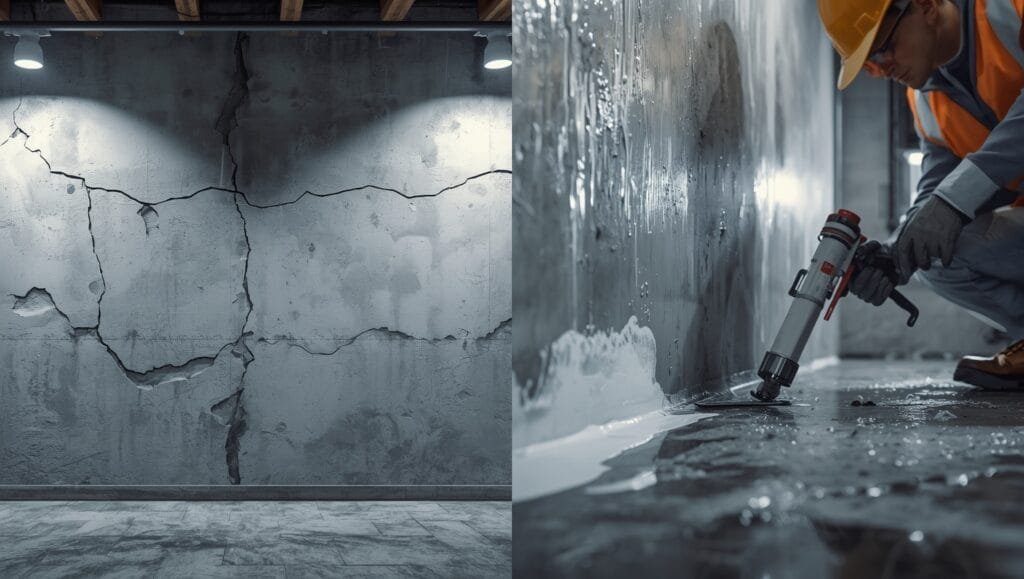
Concrete crack injection involves forcing epoxy or polyurethane sealant into cracks to fill them and stop water entry. This works for small, stable cracks that aren’t growing. Cost runs $200–$800 per crack depending on depth and length. It’s not a structural fix—it’s a water-sealing fix. Don’t expect it to stop a bowing wall or repair foundation settling.
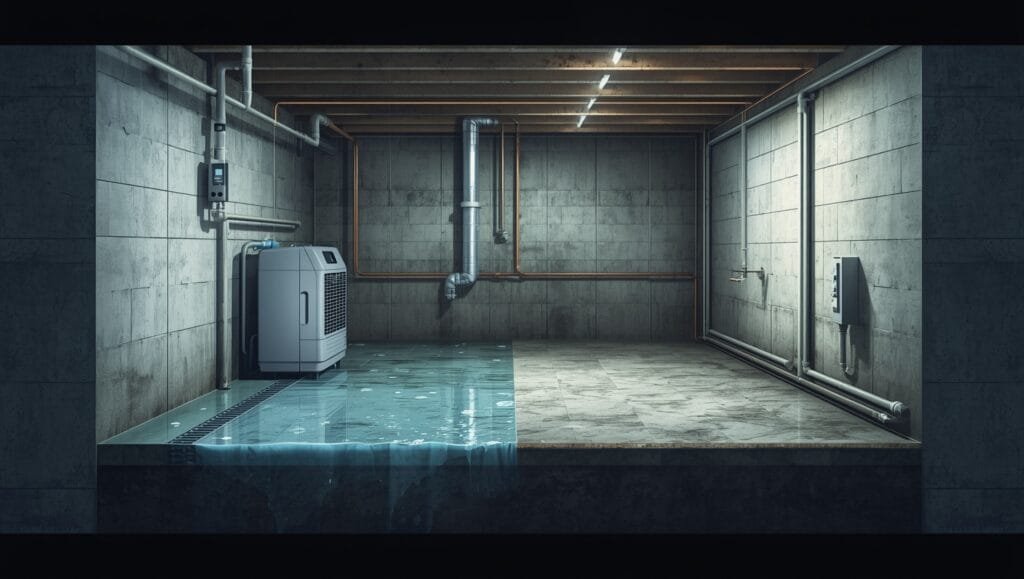
Interior waterproofing systems include sump pumps, interior drains, and dehumidifiers. These are what you do when water’s already getting into your basement. They manage the problem rather than prevent it. You’ll spend $3,000–$8,000 depending on the system’s complexity. They work, but they’re treating the symptom, not the cause. Smart homeowners use these as a stopgap while they plan exterior fixes.
Exterior waterproofing is the real deal. This involves excavating around your foundation, applying waterproof membranes to the outside walls, installing exterior drainage systems, and redirecting water away from the foundation. It’s more expensive—$5,000–$15,000+ depending on your foundation size and damage—but it stops water before it ever touches your foundation. This is the long-term solution.
Foundation underpinning or piering is for serious structural issues where the foundation has settled unevenly or shifted. Steel piers are driven deep into stable soil beneath your foundation to support it. This is expensive ($10,000–$40,000+) but necessary when your foundation’s no longer level or when walls are bowing severely. This isn’t a DIY project—it requires engineers and specialized equipment.
Carbon fiber reinforcement is newer technology. Flexible carbon fiber strips are glued to the inside of cracked walls to hold them together. It’s less invasive than underpinning and costs less ($2,000–$6,000), but it’s not appropriate for all damage types. It works best for specific crack patterns and situations.
Here’s what Mark’s team has learned: the best repair is the one that addresses the root cause. If water’s getting in, you need waterproofing first. If the foundation’s structurally compromised, you need reinforcement or underpinning. Most problems need both—you stop the water and then fix the damage.
Bottom line: Match the repair method to the actual problem—waterproofing for water, reinforcement for structural issues, or both.
DIY vs. Professional Help—Know Your Limits
Some foundation repairs you can tackle yourself. Most you can’t. Knowing the difference keeps you from making things worse.
You can DIY:
- Sealing small cracks with concrete caulk or hydraulic cement
- Improving drainage around your foundation by extending downspouts and grading soil away from the house
- Installing or maintaining sump pump systems (though you should have a pro check it annually)
- Cleaning gutters and ensuring water’s being directed away from your foundation
- Painting foundation walls with waterproofing sealant (though this is temporary and surface-level)
You need a professional for:
- Any crack wider than 1/8 inch or showing signs of growth
- Bowing or leaning walls
- Exterior waterproofing or excavation work
- Foundation underpinning or piering
- Structural assessment and engineering
- Mold remediation related to foundation moisture
The risk of DIY foundation work is that you’ll either miss the real problem or make it worse. A homeowner who tries to patch a crack without addressing water intrusion is just delaying the inevitable. One who attempts interior waterproofing without fixing the exterior source of water is treating a symptom.
Professional contractors have structural engineers, specialized equipment, and years of experience reading what your foundation’s actually telling them. They can spot problems you’d miss and recommend solutions that actually stick.
Bottom line: DIY small preventative maintenance; hire pros for diagnosis and structural repairs.
The Cost Reality of Old Home Foundation Repair
Let’s be straight: foundation repair isn’t cheap. But the cost of not repairing it is way worse.
A minor waterproofing project runs $1,500–$3,000. A comprehensive exterior waterproofing system with drainage goes $5,000–$15,000. Foundation reinforcement or underpinning hits $10,000–$50,000+ depending on severity. If you ignore problems long enough to need structural rebuilding, you’re looking at $30,000–$100,000+.
But here’s the thing: the cost scales with how long you wait. A crack sealed early costs $300. The same crack ignored for five years might require $5,000 in repairs. Ignored for ten years? You’re talking foundation replacement.
One homeowner in Rochester waited three years before addressing a bowing basement wall. By the time they called Healthy Spaces, the damage had spread to the rim joist and sill plate. What could’ve been a $6,000 wall reinforcement became a $18,000 project involving structural repairs and mold remediation.
The financial move is simple: get a professional assessment as soon as you notice problems. An inspection costs $300–$500 and gives you a clear picture of what’s actually wrong and what it’ll cost to fix. From there, you can prioritize—fix the critical issues first, plan for secondary work, and avoid the panic of discovering a catastrophic problem years later.
Bottom line: Early repair saves thousands; delayed repair multiplies costs exponentially.
Old Home Foundation Repair in Rochester’s Climate
If you’re in Rochester, your foundation’s fighting a specific battle. New York winters are brutal on concrete.
Freeze-thaw cycles are the killer. Water seeps into tiny cracks, freezes, expands by about 9%, and forces the crack wider. Next spring, it thaws. Next winter, it freezes again and cracks further. Repeat this for 30 years, and you’ve got serious structural damage that started as a hairline fracture.
Rochester’s also got clay-heavy soil in many areas. Clay expands when wet and shrinks when dry, creating movement beneath your foundation. Combined with our heavy spring rains and winter snow melt, your foundation’s dealing with constant pressure and shifting.
This is why preventative waterproofing is non-negotiable for older homes in this region. You can’t just ignore cracks or poor drainage—Rochester’s climate will exploit every weakness. The houses that hold up well are the ones where owners stayed on top of water management and sealed vulnerabilities before winter hit.
Bottom line: Rochester’s freeze-thaw cycles make waterproofing essential, not optional, for old foundations.
Old home foundation repair isn’t glamorous, but it’s critical. Your foundation is literally what stands between your family and the ground beneath you. When it’s compromised, everything above it is at risk—your structural integrity, your health (through mold), and your property value.
The move is to stop ignoring small signs, get a professional assessment before problems escalate, and address water issues before they become structural ones. Mark and his team at Healthy Spaces have spent nearly 20 years helping Rochester homeowners do exactly this. They’ve seen what happens when people wait, and they’ve seen what happens when they act fast.
If you’re noticing cracks, dampness, or any of the warning signs we covered, don’t sit on it. Contact Healthy Spaces now for a foundation assessment. They’ll tell you what’s actually going on, what it’ll cost to fix, and what timeline you’re working with. That clarity alone is worth the call.
Your Foundation’s Age is Working Against You—Here’s What That Really Means
A foundation built in 1975 isn’t the same as one poured last year.
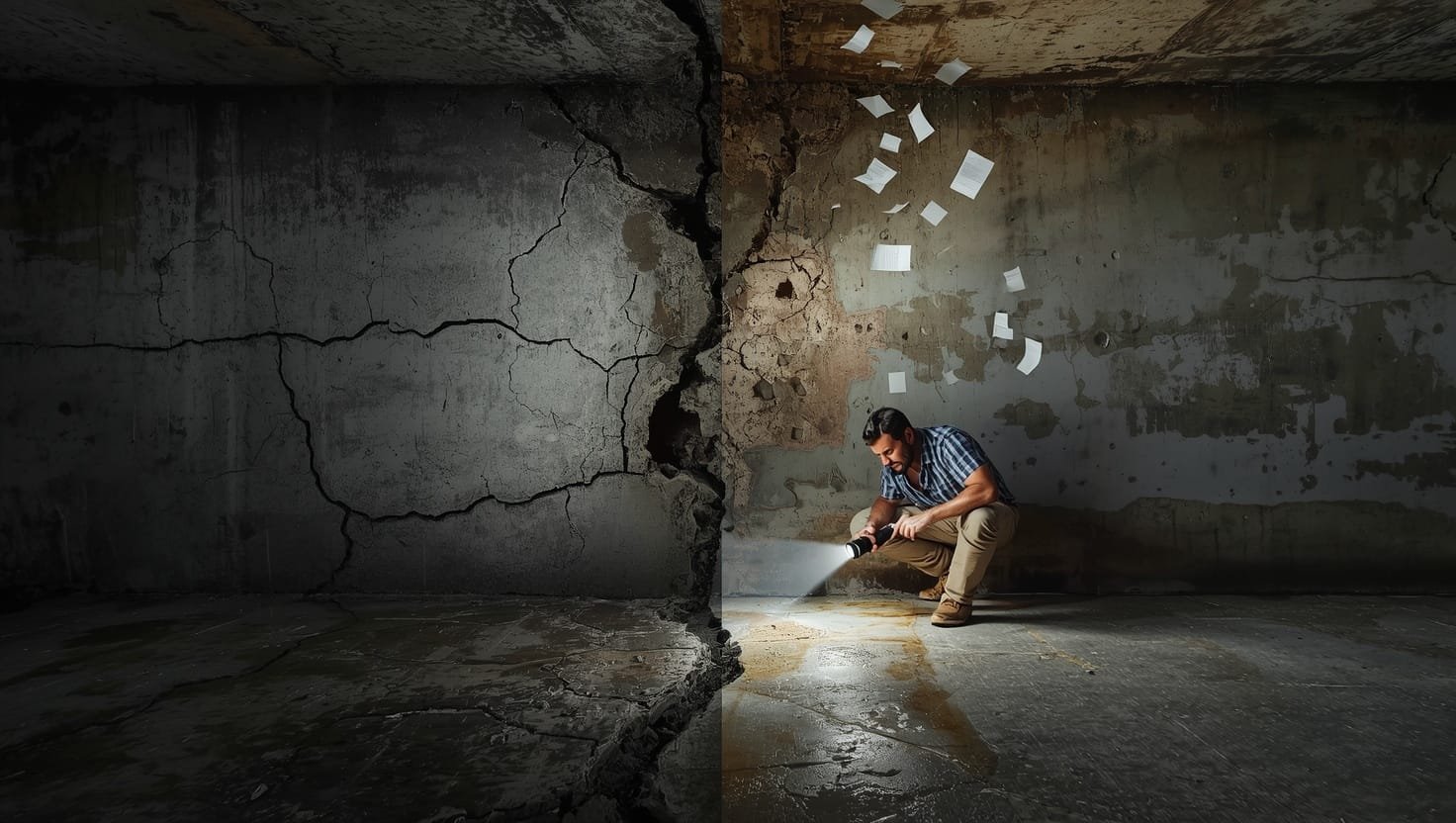
Materials degrade. Standards change. And the longer your house stands, the more stress compounds on a structure that was never designed to last forever. If you own an older home in Rochester, your foundation’s been through decades of weather cycles, soil pressure, and seasonal shifts that newer homes simply haven’t experienced yet. That’s not a scare tactic—it’s just physics.
Most homeowners don’t realize that old home foundation repair isn’t about fixing what broke yesterday. It’s about managing what’s been slowly breaking for 30, 40, or 50 years. The cracks you see today aren’t new. They’re just finally visible.
How Long Do Old Foundations Actually Last?
A typical concrete foundation is designed to last 75 to 100 years.
But that’s under ideal conditions—good drainage, no water infiltration, stable soil, and proper maintenance. Most older homes don’t have ideal conditions.
Mark Frillici, founder of Healthy Spaces, has been in the trenches with Rochester foundations since 2006. He’s seen houses built in the 1950s that are still solid, and he’s seen 1980s foundations failing at 40 years old. The difference isn’t the decade they were built—it’s what happened to them after.
A foundation’s lifespan depends on three things: the original construction quality, the environment it’s in, and whether water’s been kept out. Get two of those right, and you’re fine. Miss even one, and you’re looking at accelerated deterioration.
The reality in Rochester is harsh. Our clay-heavy soil, freeze-thaw cycles, and heavy precipitation don’t play nice with older concrete. Water’s relentless. It finds cracks, exploits them, and makes them bigger every winter. A foundation that might’ve lasted 80 years in a dry climate gets compressed into 50 in upstate New York.
Bottom line: Old foundations fail faster in harsh climates—Rochester’s winters speed up the clock.
The Hidden Damage You Can’t See (But It’s There)
This is where most homeowners get blindsided.
You can see a crack. You can spot water in the basement. But there’s a whole category of damage happening inside your foundation walls that you’ll never notice until it’s too late.
Concrete is porous. Water doesn’t just sit on the surface—it wicks through the material, pulling minerals with it. This process, called efflorescence, weakens the concrete from the inside. The exterior looks fine. The interior’s being eaten away.
At the same time, if there’s any rebar in your foundation (and older homes often have very little), water can reach the steel and cause it to rust. Rusted rebar expands, which creates internal pressure that cracks concrete from within. You see a hairline crack on the outside. Inside, the rebar’s already corroding.
There’s also the rim joist—the wooden band that sits on top of your foundation where the walls connect. This is critical structural material. Water wicks up from the concrete into the wood, and wood-eating fungi (dry rot) colonizes it. By the time you notice sagging floors or soft spots in your walls, the rot’s already advanced. A repair that should’ve cost $2,000 now costs $12,000 because structural elements need replacement.
One homeowner in Rochester discovered rot in their rim joist during a routine inspection. They’d owned the house for 8 years without knowing water was seeping through their foundation walls. The wood had been quietly deteriorating the whole time. Caught early, it would’ve been a waterproofing project. Instead, it became a structural rebuild.
Bottom line: Internal concrete deterioration and wood rot are silent killers in older foundations.
Why Older Homes Need Different Repair Strategies
You can’t treat a 1970s foundation the same way you’d repair a 2020 build.
Older concrete is weaker. It has fewer additives, less reinforcement, and lower psi (pounds per square inch) ratings than modern concrete. This means it’s more brittle and more vulnerable to pressure. A repair method that works on new concrete might not stick on old concrete because the surface is already compromised.
The soil composition around older homes is also different. Over 50 years, soil settles unevenly. Clay soils swell and shrink with seasonal moisture changes. The foundation’s no longer sitting on stable ground—it’s sitting on a foundation that’s constantly shifting beneath it. This is why underpinning (driving piers deep into stable soil) often works better than trying to patch the surface.
Drainage systems around old homes are frequently nonexistent or completely failed. Gutters might be clogged or missing. Downspouts empty two feet from the house. Grading slopes toward the foundation instead of away from it. All of this means water’s been pooling against your foundation walls for decades, breaking down the concrete systematically.
New repairs need to account for these realities. Waterproofing an old foundation often requires excavation on the exterior, installation of modern drainage systems, and application of flexible membranes that can move with the concrete as it settles. It’s more invasive and more expensive than patching, but it’s the only way to stop the damage long-term.
Bottom line: Old foundations need aggressive waterproofing and drainage—patching won’t cut it.
The Timeline Problem: Why Waiting Kills Your Budget
Here’s what most people don’t understand about foundation damage: it’s exponential, not linear.
A crack that’s 1/8 inch wide doesn’t get 1/8 inch wider each year. It gets wider faster and faster. Year one: 1/8 inch. Year two: 1/4 inch. Year three: 1/2 inch. The rate of deterioration accelerates because water’s doing more damage, which creates more pathways for water, which does more damage.
The cost curve works the same way. A 1/8-inch crack sealed early costs $300. The same crack at 1/4 inch costs $1,200. At 1/2 inch with water damage visible, you’re looking at $5,000. If you wait until the wall’s bowing and the rim joist’s rotting, you’re in the $15,000-to-$30,000 range.
One homeowner in Rochester noticed a small crack in 2021 but didn’t call anyone because “it wasn’t that bad.” By 2024, water damage had spread to the floor joists, mold was growing behind the drywall, and the basement was getting wetter every spring. The repair estimate was $22,000. If they’d acted in 2021, it would’ve been $3,500.
The math is brutal. Every year you wait multiplies your risk. Not just the risk of more damage, but the risk of secondary problems—mold, structural rot, pest infestation. These things compound. A water problem becomes a water-plus-mold problem becomes a water-mold-structural problem. Each layer adds cost and complexity.
Bottom line: Three-year delay turns a $3K fix into a $20K disaster.
What Inspection Actually Reveals (And Why It Matters)
A professional foundation inspection isn’t just someone looking at your basement and saying “yeah, that’s cracked.”
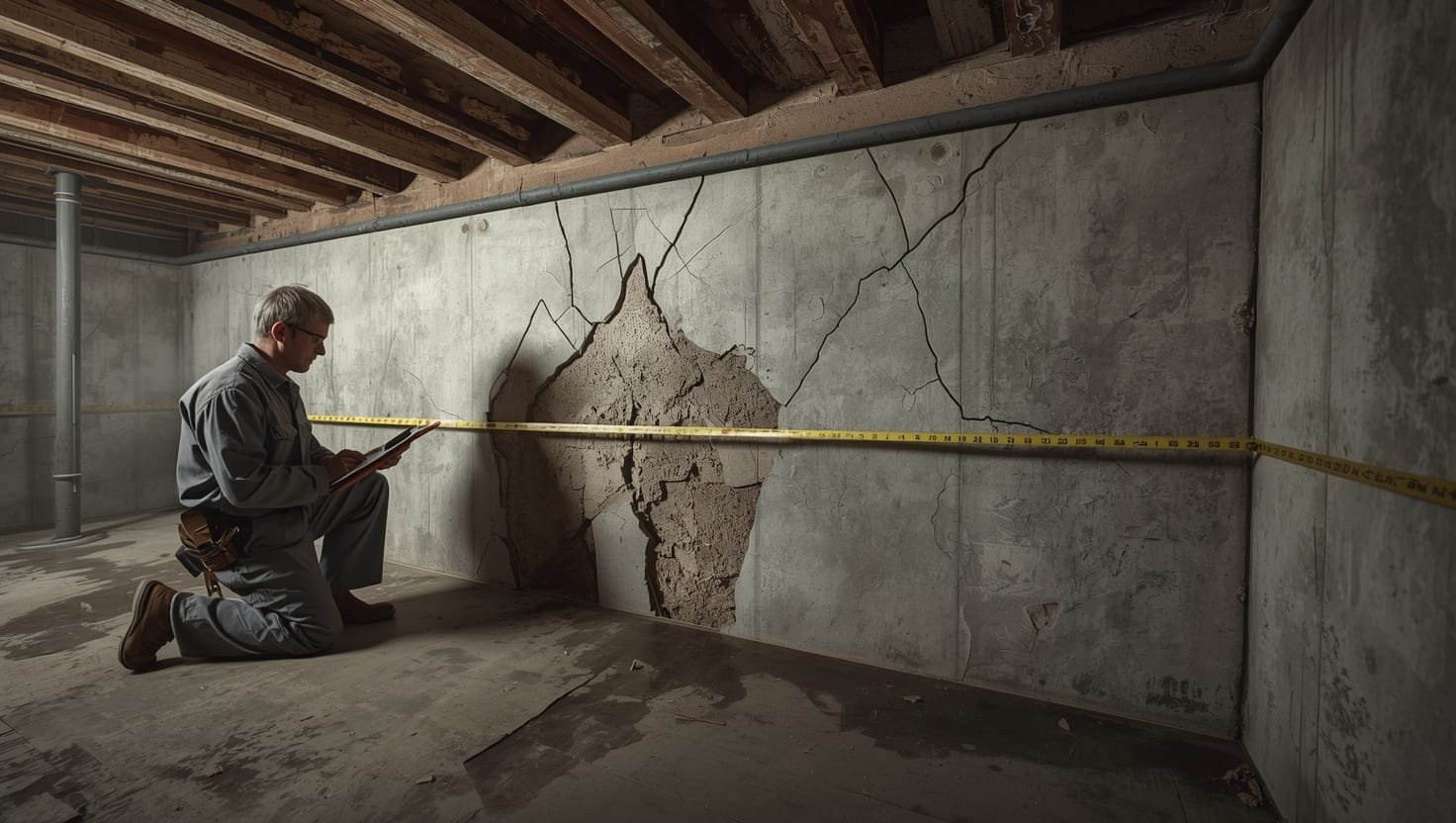
Real inspections involve measurement, photography, and structural analysis. Inspectors check crack widths with gauges. They measure wall deflection with laser levels. They assess soil stability and drainage patterns. They look at how water’s moving through the basement—where it’s coming in, where it’s pooling, what path it’s taking.
They’re looking for patterns. A single crack might be cosmetic. But if you’ve got cracks in a diagonal pattern across multiple walls, that’s foundation settling. If cracks are widest at the bottom and narrower at the top, that’s water pressure. If you’ve got horizontal cracks running the full width of a wall, that’s hydrostatic pressure winning.
An inspection also reveals things you can’t see. Inspectors probe the concrete with tools to find soft spots where deterioration’s already started. They check for efflorescence and mineral deposits that indicate water movement. They assess the condition of the rim joist and sill plate. They evaluate your drainage systems and point out where water’s getting in.
From all this, a real inspector gives you a timeline. Not “fix this eventually,” but “this needs attention in the next 6 months” or “this can wait 2 years, but monitor it.” They prioritize what’s critical versus what’s secondary. They tell you the true cost and what happens if you do nothing.
This is where Mark’s team excels. They’re not just looking for problems to sell repairs. They’re reading the foundation like a book, understanding its history, and predicting what comes next.
Bottom line: Inspections reveal hidden damage, predict failures, and save thousands by catching problems early.
The Real Cost of Ignoring Old Home Foundation Repair
Let’s talk about what actually happens if you ignore foundation problems in an older home.
Year one: You notice a crack. It’s small. You tell yourself you’ll deal with it later.
Year two: Water starts seeping through during heavy rains. Your basement smells damp. You buy a dehumidifier and think that’s enough.
Year three: Mold appears on the walls. It’s just a little bit, so you wipe it down with bleach. The smell gets worse. You’re running the dehumidifier 24/7.
Year four: The crack’s doubled in size. Water’s coming in regularly now. Your kids are getting respiratory issues from the mold. You’re thinking about selling the house, but you know you can’t disclose foundation damage without losing $50,000 in value.
Year five: The foundation wall’s starting to bow. Your floor’s slightly uneven. Structural engineers tell you that underpinning is now necessary. The cost is $35,000. If you’d fixed it five years ago, it would’ve been $4,000.
This isn’t hypothetical. Mark’s team sees this pattern constantly in Rochester. Homeowners delay, problems cascade, and suddenly they’re facing a five-figure repair that could’ve been prevented with a $2,000 waterproofing project.
The hidden cost is even worse—the health impact. Mold exposure causes respiratory problems, allergies, and immune system issues. Kids living in moldy basements get more ear infections, asthma, and bronchitis. That’s not just an inconvenience. That’s your family’s health being affected by a problem you could’ve fixed years ago.
Then there’s the property value hit. A foundation with visible damage, water problems, or mold reduces your home’s value by 10-30% depending on severity. If your house is worth $400,000, that’s a $40,000 to $120,000 loss. Buyers will walk away from a property with foundation issues, no matter how nice everything else is.
Bottom line: Ignoring old home foundation repair costs you money, health, and home value exponentially.
When to Call a Pro vs. When You Can Wait
Not every crack needs immediate professional attention.
If you’ve got a thin horizontal crack (less than 1/8 inch) that’s been stable for years, you can monitor it. Take photos monthly. If it’s not growing, you don’t need emergency repairs. You can seal it yourself with concrete caulk to prevent water entry, and you’re good.
But there are red flags that mean you need a professional now, not next month.
Bowing walls are non-negotiable. If your basement wall is curved inward—even slightly—water pressure’s already winning. This is structural failure in progress. You need an engineer and you need repairs before the wall gives way.
Growing cracks are another one. If you measure a crack and it’s wider than it was three months ago, something’s wrong. It might be foundation settling, water damage, or soil movement. Either way, you need professional assessment because this is accelerating.
Active water intrusion during heavy rain is also a call-now situation. If water’s coming through your foundation walls during storms, you’re not preventing future damage—you’re managing current damage. The longer this goes, the more mold risk you have, and mold in your basement spreads fast.
Musty smells combined with visible efflorescence (that white chalky stuff) means water’s moving through your concrete. This is a waterproofing call. Not emergency, but soon.
The rule of thumb: If you’re not sure, get an inspection. It costs $300-$500. Not calling a professional when you need one costs $20,000 later.
Bottom line: Bowing walls, growing cracks, and active leaks need professionals immediately.
The Foundation Inspection Checklist
If you’re getting an inspection, here’s what a good one should cover:
- Visible cracks—location, width, direction, and whether they’re growing
- Wall deflection and bowing—measured with precision tools
- Water stains and moisture patterns—showing where water’s entering
- Efflorescence and mineral deposits—indicating water movement
- Drainage system condition—gutters, downspouts, grading, and exterior drains
- Soil stability—type of soil, compaction, and movement patterns
- Rim joist and sill plate condition—checking for rot and deterioration
- Sump pump functionality—if present, whether it’s actually working
- Mold or fungal growth—and the extent of infestation
- Structural elements—floor joists, beams, and load-bearing walls
A real inspection takes 2-3 hours. If someone’s done in 45 minutes, they’re not thorough.
After the inspection, you should get a detailed report with photos, measurements, and recommendations prioritized by urgency. You should understand what needs to happen first, what can wait, and what the timeline looks like.
Bottom line: Comprehensive inspections take time and reveal everything—don’t rush the process.
What Healthy Spaces Brings to Old Home Foundation Repair
Mark started Healthy Spaces in 2006 because he was tired of seeing homeowners get ripped off by contractors who didn’t understand foundations.
Most contractors treat foundation repair like any other job. They show up, patch the obvious problem, and leave. Mark’s approach is different. He reads the foundation like a structural engineer. He understands how water moves, how soil settles, and how damage cascades. He doesn’t just fix what’s broken—he stops what’s breaking.
This matters because old home foundation repair isn’t one-size-fits-all. A 1960s foundation with clay soil and poor drainage needs a completely different approach than a 1980s foundation with decent drainage but settling issues. Mark’s team assesses each foundation individually and builds a repair plan that addresses the root cause, not just the symptom.
They also use modern technology. Laser levels for measuring deflection. Moisture meters for detecting hidden water. Fiber optic cameras for inspecting interior cracks. This isn’t guesswork—it’s precision diagnosis.
And they stand behind their work. Mark personally oversees projects because he cares about getting it right. He’s been doing this for nearly 20 years. He’s seen what works and what doesn’t. He’s not trying to upsell you—he’s trying to solve your actual problem at the price it deserves.
Bottom line: Mark’s approach solves root causes, not symptoms—and saves homeowners thousands.
FAQ: Old Home Foundation Repair Questions Answered
How do I know if my old foundation needs repair?
Look for cracks wider than 1/8 inch, water stains, bowing walls, or persistent moisture in your basement. If you see any of these, get a professional inspection. These are the clearest signs that repair is necessary.
Can I repair an old foundation myself?
You can seal small cracks with concrete caulk and improve drainage around your foundation, but structural repairs—underpinning, waterproofing, or wall reinforcement—require professionals. DIY attempts often make problems worse.
How much does old home foundation repair cost in Rochester?
Minor waterproofing runs $1,500-$3,000. Comprehensive exterior waterproofing costs $5,000-$15,000. Structural repairs like underpinning can hit $10,000-$50,000. Costs scale with how long you wait—early intervention saves thousands.
How long does a foundation repair take?
Simple repairs like crack injection take 1-2 days. Exterior waterproofing takes 1-2 weeks. Structural work like underpinning can take 2-4 weeks. The timeline depends on the repair scope and weather conditions.
Will foundation repair increase my home’s value?
Yes. A repaired, waterproofed foundation increases your home’s value and makes it sellable. A damaged foundation reduces value by 10-30%. Fixing it before selling protects your equity.
What’s the difference between waterproofing and water resistance?
Water-resistant slows water entry. Waterproofing stops it completely. For old foundations with active leaks, you need true waterproofing—exterior membranes and drainage systems that prevent water from ever reaching the concrete.
How often should I inspect my old foundation?
Get a professional inspection every 3-5 years if your foundation’s in good condition. If you’ve noticed cracks or water issues, inspect annually. Monitor crack widths monthly with photos to catch growth early.
Take Action on Your Foundation Today
Old home foundation repair isn’t something you put off hoping it’ll go away.
It won’t.
Water’s patient. Damage compounds. Costs multiply. But you can stop this cycle right now by getting a professional assessment. Mark and his team at Healthy Spaces have helped hundreds of Rochester homeowners catch foundation problems before they became disasters. They’ll tell you exactly what’s happening, what it’ll cost, and what timeline you’re working with—no pressure, no upselling.
Contact Healthy Spaces now for a foundation inspection. Find out what your old foundation’s actually dealing with. Get a plan. Stop the damage. Protect your investment.
Your foundation’s been holding up your house for decades. It’s time to return the favor.
Your Old Home Foundation Repair Will Cost You $50K—Unless You Act This Month
Most homeowners don’t realize they’re sitting on a ticking clock.
You’ve got a 30-to-60-day window from the moment you notice foundation problems until those problems start compounding in ways that’ll drain your wallet fast. Miss that window, and the repair bill doesn’t just grow—it multiplies. A $3,000 fix in month one becomes $12,000 in month four and $40,000+ by year two. That’s not an exaggeration. That’s what happens when old home foundation repair gets pushed to the back burner while you’re busy with life.
The thing is, your foundation’s been slowly failing for years. You just haven’t seen it yet. By the time cracks show up on your basement walls or water starts pooling in the corner, the damage is already weeks—if not months—ahead of where you think it is. Internal concrete deterioration, rebar corrosion, wood rot in your rim joist—these things are happening right now, behind the scenes, while you’re deciding whether foundation work is worth the investment.
The Hidden Timeline: When Foundation Problems Actually Start
Here’s what most contractors won’t tell you.
Your foundation didn’t fail yesterday. It failed months ago. You’re just now catching up to the damage that’s already been done. Think about it like this: if you’re seeing a crack that’s 1/4 inch wide, that crack’s been growing for probably 6-12 months already. You didn’t wake up one morning and suddenly have a quarter-inch fracture. It started at a hairline, grew slowly, and by the time it caught your eye, it was already substantial.
This is why the “I’ll deal with it next year” approach kills so many homeowners.
Water doesn’t wait. It’s working on your foundation right now—every single day. It’s seeping through microscopic cracks, weakening the concrete from the inside, and creating pathways for more water to follow. In Rochester’s freeze-thaw cycles, that water freezes at night, expands, and cracks the concrete further. Then spring comes, the ice melts, and your foundation’s got brand-new damage on top of the old damage.
One homeowner in Rochester noticed a small water stain in their basement in June. They thought it was from a heavy rain and figured they’d monitor it. By September, they had standing water after every thunderstorm. By December, mold was visible on the basement walls. By February, the rim joist was showing signs of rot. What started as a waterproofing project in June had become a waterproofing-plus-mold-remediation-plus-structural-repair situation by winter. Total cost difference? About $18,000.
Bottom line: Foundation damage accelerates month-to-month; early action saves thousands in compound costs.
The Ripple Effect: How One Problem Creates Five More
Water damage never stays isolated.
It’s like a virus. One crack lets water in. That water weakens the concrete around it, creating two more cracks. Those cracks let in more water. Now your rim joist’s getting wet. Wood-eating fungi start colonizing. The wood loses structural integrity. Your floor starts sagging. Now you need structural repairs on top of waterproofing.
Meanwhile, the moisture in your basement has created the perfect environment for mold. Mold spores are always in the air—they land on damp surfaces and start multiplying within 48 hours. Now you’ve got a mold remediation problem on top of your water problem. Your family’s breathing mold spores. Your property value’s dropping. Your insurance company’s asking questions.
And here’s the kicker—most homeowners don’t realize these problems are connected until they’re all happening at once.
You think you’ve got a water leak. Turns out you’ve got water damage, mold, structural rot, and a failing foundation all at the same time. The repair that should’ve been $4,000 is now $22,000 because you’re dealing with multiple interconnected failures instead of one isolated problem.
This is exactly what Mark’s team sees when they walk into older homes. The foundation problem is always real, but it’s never just one thing. It’s layers of damage that accumulated because the first problem wasn’t addressed.
Bottom line: One water problem spreads into mold, rot, and structural failure—each layer multiplies repair costs.
The Money Conversation Nobody Wants to Have
Let’s talk actual numbers because vague estimates don’t help anybody.
A minor waterproofing project—sealing cracks, improving drainage, installing a sump pump—runs about $2,500 to $4,000. That’s if you catch it early. If water’s been actively getting in for a while, you’re looking at interior waterproofing plus mold remediation, which pushes you to $6,000 to $10,000. If structural damage has started, you’re in the $15,000 to $25,000 range. If you need underpinning because the foundation’s settling unevenly, you’re looking at $25,000 to $50,000+.
But here’s what really matters—the cost scales with how much damage has already happened by the time you call someone.
Month one: You see a crack. Cost to seal it and waterproof the area: $1,500.
Month three: The crack’s wider, water’s coming in during rain. Cost to waterproof and address water damage: $5,000.
Month six: Mold’s visible, the rim joist’s soft to the touch. Cost to remediate mold and address structural damage: $16,000.
Year one: The foundation wall’s bowing, floor’s sagging, structural engineers are talking about underpinning. Cost: $35,000 to $50,000.
The difference between catching it in month one versus year one is $33,500. That’s not a small gap. That’s life-changing money. That’s the difference between a manageable repair and a financial crisis.
Most homeowners know this on some level, but they don’t act on it because the problem isn’t urgent yet. The crack’s not that big. The water only comes in during heavy rain. The mold’s just a little bit. By the time it feels urgent, it’s already expensive.
Bottom line: Waiting six months can triple repair costs; waiting a year can multiply them by ten.
Why Professional Assessment Isn’t Optional—It’s Insurance
You wouldn’t skip a doctor’s visit if you had chest pain.
Same logic applies to your foundation. A professional foundation inspection costs $300 to $500. It takes 2-3 hours. You get a detailed report with photos, measurements, and a clear action plan. Most importantly, you get clarity on what’s actually happening and what timeline you’re working with.
That clarity is worth way more than the inspection fee.
Because here’s what happens without it: you’re guessing. You’re looking at a crack and wondering if it’s serious. You’re seeing water stains and trying to figure out if they’re old or new. You’re smelling dampness and not knowing if it’s a minor moisture issue or a mold infestation. You’re making decisions based on incomplete information, which means you’re either overreacting and spending money you don’t need to spend, or you’re underreacting and letting a serious problem get worse.
A real inspection removes the guesswork. An inspector measures your cracks with precision tools. They assess wall deflection with laser levels. They check for mold with moisture meters. They look at your drainage systems and tell you exactly where water’s getting in and why. They evaluate your soil type and foundation age. They predict what’s going to happen next if you do nothing.
From all that data, they give you a prioritized action plan. Not “fix everything at once,” but “address this in the next 30 days, this in the next 3 months, and this within a year.” You know what you’re dealing with. You know what it’ll cost. You know the timeline.
That’s not just worth the inspection fee—that’s worth thousands in prevention.
Bottom line: A $400 inspection prevents $20K+ in surprise repairs by catching problems early.
The Seasonal Window: Why Winter and Spring Matter Most
If you’re in Rochester, timing matters.
Winter is when your foundation gets stressed hardest. Water seeps into cracks, freezes, expands by about 9%, and forces the crack wider. This happens repeatedly—freeze at night, thaw during the day, freeze again the next night. Over a few months, hairline cracks become quarter-inch fractures. By spring, the damage is done.
Spring is when you see the real damage. Snow melts, groundwater rises, water pressure builds against your foundation walls. If there are cracks, water’s coming through. If your drainage system is failing, water’s pooling around your foundation. This is when leaks become visible.
Summer is when you think everything’s fine. Water pressure drops, your basement’s dry, the cracks aren’t actively leaking. You figure the problem solved itself and go back to ignoring it.
Fall is when you should be acting. You’ve got a few months before winter hits again. If you repair in fall, you’re reinforcing your foundation before the freeze-thaw cycle starts. You’re installing waterproofing and drainage systems while weather’s manageable. You’re preventing the damage that winter’s about to cause.
But most homeowners wait until winter to deal with it. Water’s already coming in. Damage is already accelerating. Now you’re doing emergency repairs in terrible weather, paying premium prices for fast service, and still not preventing the damage that’s already happening.
If you’re noticing foundation problems right now, fall is your window. Get an inspection. Get a plan. Get repairs scheduled before winter hits. Don’t wait for spring to see how bad it gets.
Bottom line: Fall repairs prevent winter damage; spring repairs are treating damage that’s already done.
The Selling Problem: Foundation Issues Kill Property Value
Here’s something that hits different when you think about selling.
A foundation with visible damage, active water problems, or mold reduces your home’s value by 10 to 30 percent. If your house is worth $400,000, that’s a $40,000 to $120,000 hit. Buyers know what they’re looking at. They get their own inspections. They see the cracks. They see the water stains. They see the mold. And they either walk away or they demand a massive price reduction to cover the cost of repairs they’re going to make themselves.
You can’t hide foundation problems during a sale.
It’s not like cosmetic issues where a fresh coat of paint covers things up. Structural damage and water intrusion are deal-killers. Buyers have inspectors. Their lenders require structural assessments. Insurance companies ask about foundation history. You can’t sell a house with foundation problems without either fixing them first or accepting a drastically lower offer.
Most people don’t think about this until they’re actually trying to sell. Then they discover that the $3,000 repair they could’ve done five years ago would’ve prevented a $50,000 value loss. Suddenly, old home foundation repair doesn’t look like an optional expense—it looks like the difference between keeping your equity or losing it.
The move is simple: fix it before you sell, not after someone’s inspector finds it. You’ll recover the repair cost through a higher sale price, and you won’t lose buyers who are scared off by structural problems.
Bottom line: Foundation problems tank resale value; fixing them early protects your equity and sale price.
What Healthy Spaces Does That Other Contractors Don’t
Mark started Healthy Spaces in 2006 because he kept seeing homeowners get ripped off by contractors who didn’t understand foundations.
Most contractors show up, patch the obvious problem, and leave. They seal a crack without addressing water intrusion. They install a sump pump without fixing the drainage that’s causing water to pool. They treat the symptom instead of the disease.
Mark’s approach is different. He reads your foundation like a structural engineer. He understands how water moves through concrete. He knows how soil settles and creates pressure. He can predict what’s going to happen next based on what he’s seeing now. He doesn’t just fix what’s broken—he stops what’s breaking.
This matters because every foundation is different. A 1960s foundation with clay soil and zero drainage needs a completely different approach than a 1980s foundation with decent drainage but settling issues. Mark assesses each one individually. He builds a repair plan that addresses the root cause, not just the symptom.
He also uses modern diagnostic tools. Laser levels for measuring wall deflection. Moisture meters for detecting hidden water. Fiber optic cameras for inspecting interior cracks. This isn’t guesswork—it’s precision diagnosis. You get a clear picture of what’s actually happening, not what someone thinks might be happening.
And he stands behind his work. Mark personally oversees projects because he cares about getting it right. Nearly 20 years in the business. He’s seen what works and what doesn’t. He’s not trying to upsell you on repairs you don’t need—he’s solving your actual problem at the price it deserves.
Bottom line: Mark solves root causes, not symptoms—and saves homeowners thousands in the process.
The Next Step: Getting Your Foundation Assessed
If you’re noticing cracks, water stains, dampness, or any of the warning signs we’ve covered, you’re already in the window where action matters.
Don’t wait another month. Don’t wait until winter. Don’t wait until the problem gets worse. Call Healthy Spaces and get a professional assessment. Find out what’s actually happening to your foundation. Get a clear action plan. Know your timeline. Know your costs.
That information alone is worth the call. From there, you can decide what to fix first, what to plan for later, and what timeline makes sense for your situation. You’re not locked into anything—you’re just getting clarity so you can make smart decisions instead of panic decisions.
Mark’s helped hundreds of Rochester homeowners catch foundation problems before they became disasters. He knows what to look for. He knows what to fix. He knows how to prevent the cascading damage that turns a manageable repair into a financial nightmare.
Your foundation’s been holding up your house for decades. It’s time to return the favor.
FAQ: Old Home Foundation Repair Questions
How much does an old home foundation inspection cost?
A professional foundation inspection runs $300 to $500 and takes 2-3 hours. You get detailed photos, measurements, and a prioritized action plan—way worth it for clarity.
Can I repair my old foundation myself?
You can seal small cracks with concrete caulk and improve drainage around your foundation, but structural repairs, waterproofing, and wall reinforcement need professionals. DIY attempts usually make things worse.
What’s the difference between interior and exterior waterproofing?
Interior waterproofing manages water that’s already getting in. Exterior waterproofing stops water before it reaches your foundation. For old foundations with active leaks, exterior waterproofing is the real fix.
How long does old home foundation repair take?
Simple repairs like crack injection take 1-2 days. Exterior waterproofing takes 1-2 weeks. Structural work like underpinning can take 2-4 weeks depending on scope and weather.
Will fixing my foundation increase my home’s value?
Yes. A repaired, waterproofed foundation increases your home’s value and makes it sellable to buyers. A damaged foundation reduces value by 10-30%—fixing it protects your equity.
What’s the best time of year to repair a foundation in Rochester?
Fall is ideal—you prevent winter freeze-thaw damage and avoid emergency repair prices. Spring repairs treat damage that’s already happened. Don’t wait until winter.
How do I know if my foundation crack is serious?
Cracks wider than 1/8 inch, growing over time, or in diagonal/stair-step patterns are red flags. Get a professional assessment. Stable, thin cracks are usually cosmetic and can be monitored.
Stop Guessing. Get Answers.
Mark Frillici and his team at Healthy Spaces have been protecting Rochester homes from foundation damage for nearly 20 years. They know what your old foundation is dealing with. They know what needs to happen. They know how to stop the damage before it becomes a disaster.
If you’re seeing cracks, water, dampness, or mold—don’t wait another month. Contact Healthy Spaces now for a foundation assessment. Get clarity on what’s actually happening. Get a plan. Get help fast. Your foundation’s been holding up your house for decades. It’s time to protect your investment before the next freeze-thaw cycle hits.