Contact Us For a Free Qoute
How To Deodorize A Flooded Basement Fast
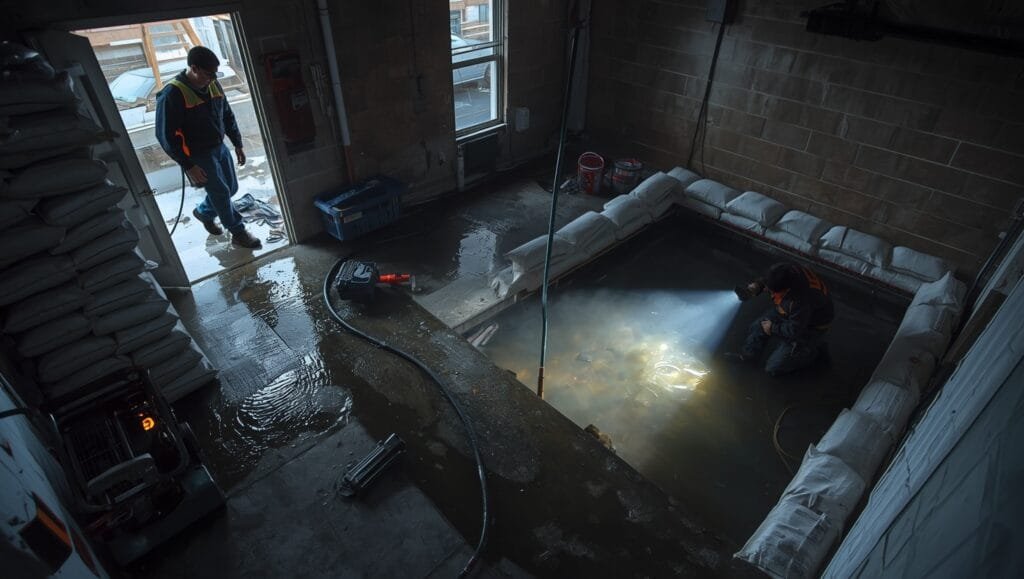
Your Basement Smells Like Death—And You’ve Got 48 Hours to Fix It
A flooded basement isn’t just a water problem—it’s a smell problem that gets worse by the hour.
You’re standing at the top of those stairs, and that stench hits you like a wall. Wet drywall. Rotting wood. Something organic decaying in the dark. That’s not going away on its own, and it sure isn’t just cosmetic damage.
The truth? Mold colonizes wet spaces fast. Within two days, you’ve got a full-blown infestation brewing behind your walls. The smell is your basement’s way of screaming for help.
Learning how to deodorize a flooded basement means tackling three things at once: removing the water, killing the source of the odor, and making sure it doesn’t come back. Skip any one of those, and you’re just spraying air freshener on a ticking time bomb.
This guide walks you through exactly what to do—right now, today—to reclaim your basement and protect your family’s health.
Why Your Flooded Basement Smells So Bad (And Why It’s Worse Than You Think)
That smell isn’t random.
Water sits. Bacteria bloom. Mold spores multiply. Dead organic matter—dust, pet hair, insulation, wood fibers—gets saturated and begins breaking down. All of that creates volatile organic compounds (VOCs) that your nose picks up instantly. It’s your body’s alarm system firing on all cylinders.
One homeowner in Rochester discovered her basement flooded after a heavy rain, and by day two, the smell had crept into her entire first floor. Her kids started getting headaches. Her HVAC system was spreading contaminated air through the whole house. By the time she called for help, the problem had spread beyond just the basement.
Here’s the kicker: the smell is often a sign of something you can’t see yet.
Mold grows in hidden spots—inside walls, under flooring, in insulation. The odor reaches your nose before you ever spot black or green patches. That’s why deodorizing isn’t about masking the smell. It’s about finding and eliminating what’s causing it.
Bottom line: That smell means mold is already growing; ignoring it costs thousands in remediation later.
Step 1: Stop the Water (Seriously, Do This First)
You can’t deodorize a basement that’s still flooding.
This sounds obvious, but most people waste time and money trying to dry out a space while water’s still pouring in. It’s like trying to bail out a boat with a hole in it.
Your first move: shut off the water source.
If it’s a burst pipe, find your main shutoff valve (usually near the street or in your basement) and turn it off. If it’s groundwater or heavy rain, you need sump pump action fast. Got a sump pump already? Make sure it’s running. No sump pump? You’re looking at installing one ASAP—this is non-negotiable if you’re in a wet climate or dealing with poor drainage.
If water’s actively flowing, you might need a temporary pump to get it out faster. Rental companies in Rochester carry these, and they’re cheap compared to what mold remediation costs.
Standing water sitting for 24 hours? That’s when bacteria really takes off. At 48 hours, you’re in serious mold territory. Speed matters here.
Bottom line: Stop the water source before you touch anything else—it’s the foundation of every deodorizing effort.
Step 2: Remove Standing Water and Wet Materials
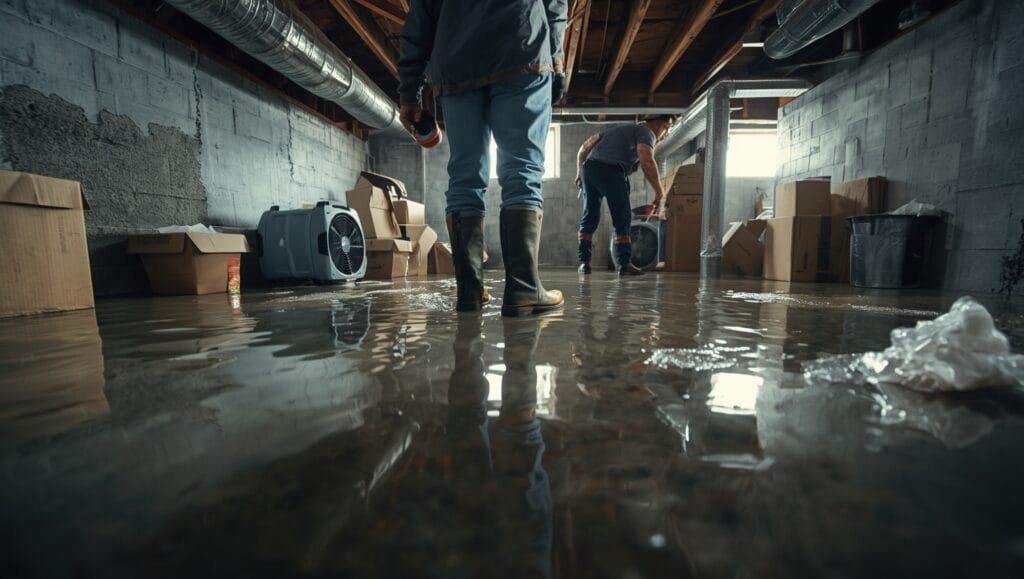
Once the water source is controlled, you’ve got to get that water out.
Wet vac, pump, mop—whatever it takes. Don’t leave puddles sitting around. Every hour counts when you’re fighting mold growth and odor.
Now here’s where it gets real: anything that’s been soaked for more than 24 hours probably needs to go.
Drywall absorbs water like a sponge and becomes a breeding ground for mold. Carpet and padding? Trash it. Insulation? Gone. Wooden studs and joists can sometimes be saved if they dry quickly, but if they’re soft or spongy, they’re compromised and need removal.
I know that sounds expensive—and yeah, it can be. But leaving wet materials in place is like leaving a rotting corpse in your basement. The smell gets worse, the mold spreads, and you’re looking at foundation damage next.
A Rochester homeowner tried to save his carpet by running dehumidifiers for a week. By day 10, the smell was so bad his neighbors complained. He ended up ripping out the carpet, subflooring, and treating the concrete anyway—plus he paid extra for emergency mold remediation. He could’ve saved $8,000 by removing the wet materials immediately.
Bottom line: Wet materials are mold factories—remove them fast or pay triple later.
Step 3: Dry Everything Aggressively (Not Just “Kind Of”)
Now you’re getting to the deodorizing part.
Mold and bacteria thrive in moisture. Kill the moisture, and you’re cutting off their food supply. But here’s the thing—a couple of fans and an open window won’t cut it. You need industrial-grade drying.
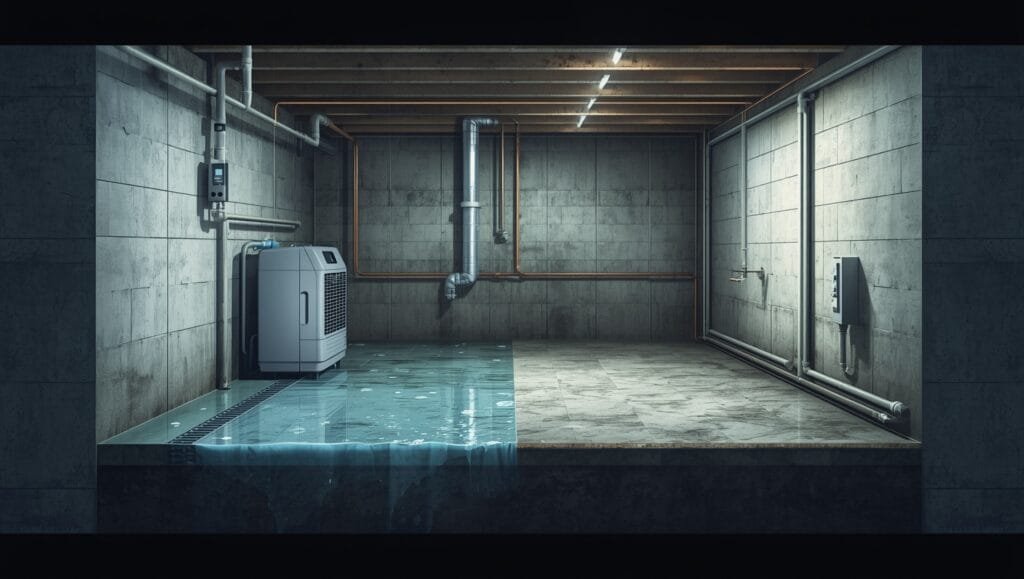
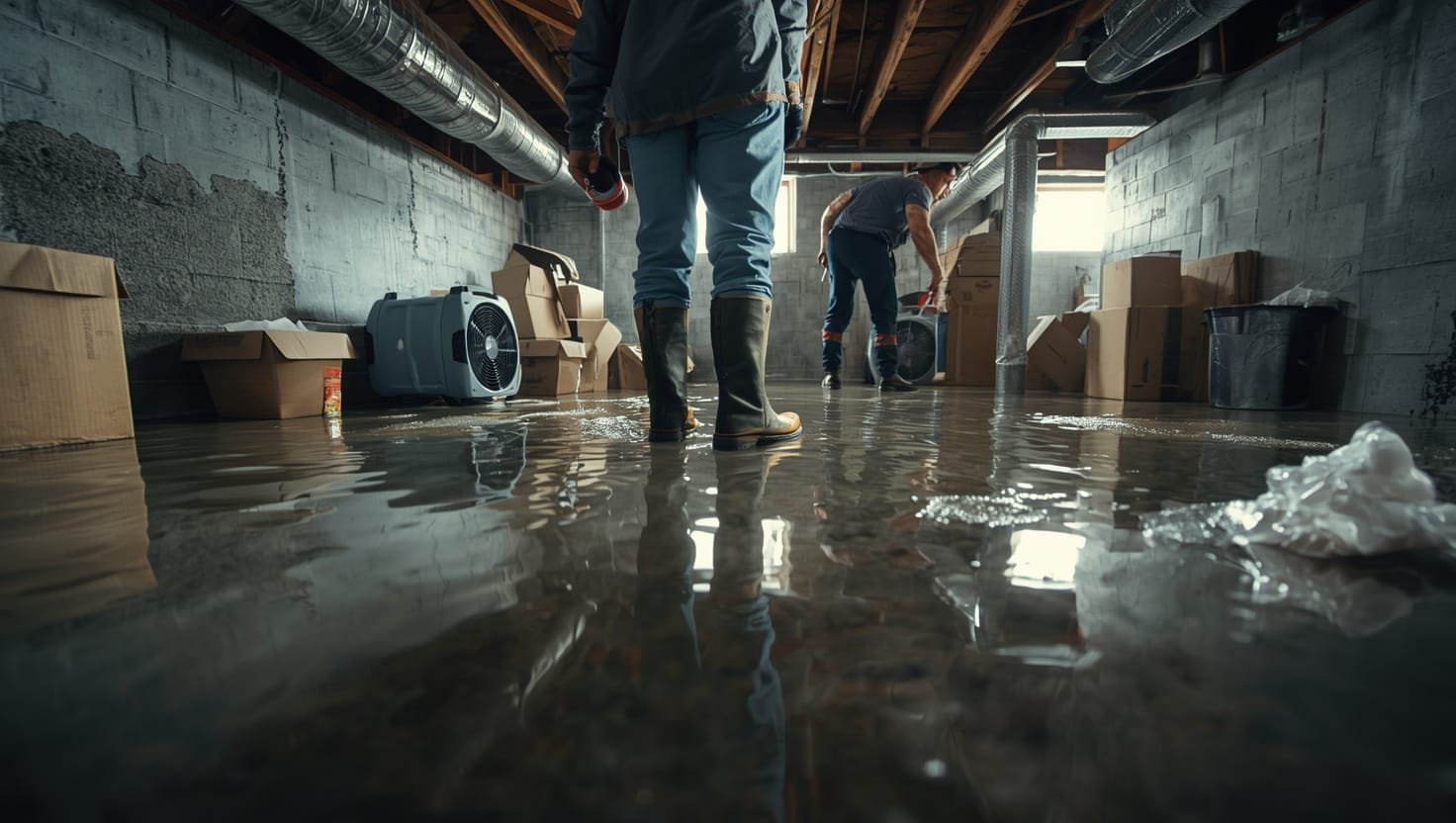
Bring in dehumidifiers (the big ones, not your bedroom model). Set them to run 24/7 until humidity levels drop below 50%. Use air movers to create constant circulation. Open windows if weather permits, but don’t rely on fresh air alone—your basement is probably below grade, which means air movement is naturally terrible down there.
Concrete and foundation walls hold moisture deep inside. You’re not just drying the surface; you’re pulling water out of the actual structure. This takes time—sometimes 5 to 10 days depending on how wet things got and how big your basement is.
Check humidity levels every day. You want to see steady progress. If humidity plateaus (stays stuck at 60% for days), your equipment isn’t cutting it, and you need to upgrade or add more units.
Bottom line: Aggressive drying beats passive drying by weeks—use dehumidifiers and air movers, not hope.
Understanding the Source: Where the Smell Really Lives
Before you start spraying anything, you need to know where you’re actually fighting.
The smell isn’t just floating around your basement. It’s coming from specific places: wet insulation, mold colonies on wood, bacteria in standing water, and decomposing organic material trapped in walls or under flooring.
If you can see visible mold, that’s one problem. But invisible mold—the kind growing inside walls or under concrete—is actually worse because you can’t treat what you can’t see.
This is where professional mold inspection comes in. A trained inspector uses moisture meters and thermal imaging to find hidden moisture and mold growth before it becomes a catastrophe. They’re not guessing; they’re measuring.
Mark Frillici and his team at Healthy Spaces have been doing this for nearly 20 years. They’ve found mold hidden behind finished basements, in crawlspaces, and in places homeowners had no idea existed. Catching it early means you’re treating the actual problem, not just the smell.
Bottom line: Find the mold, not just the smell—invisible growth is your real enemy.
The Deodorizing Arsenal: What Actually Works
Now you’re ready to attack the odor itself.
First, let’s be clear: Febreze and scented candles are a joke. You’re not masking this problem. You’re solving it.
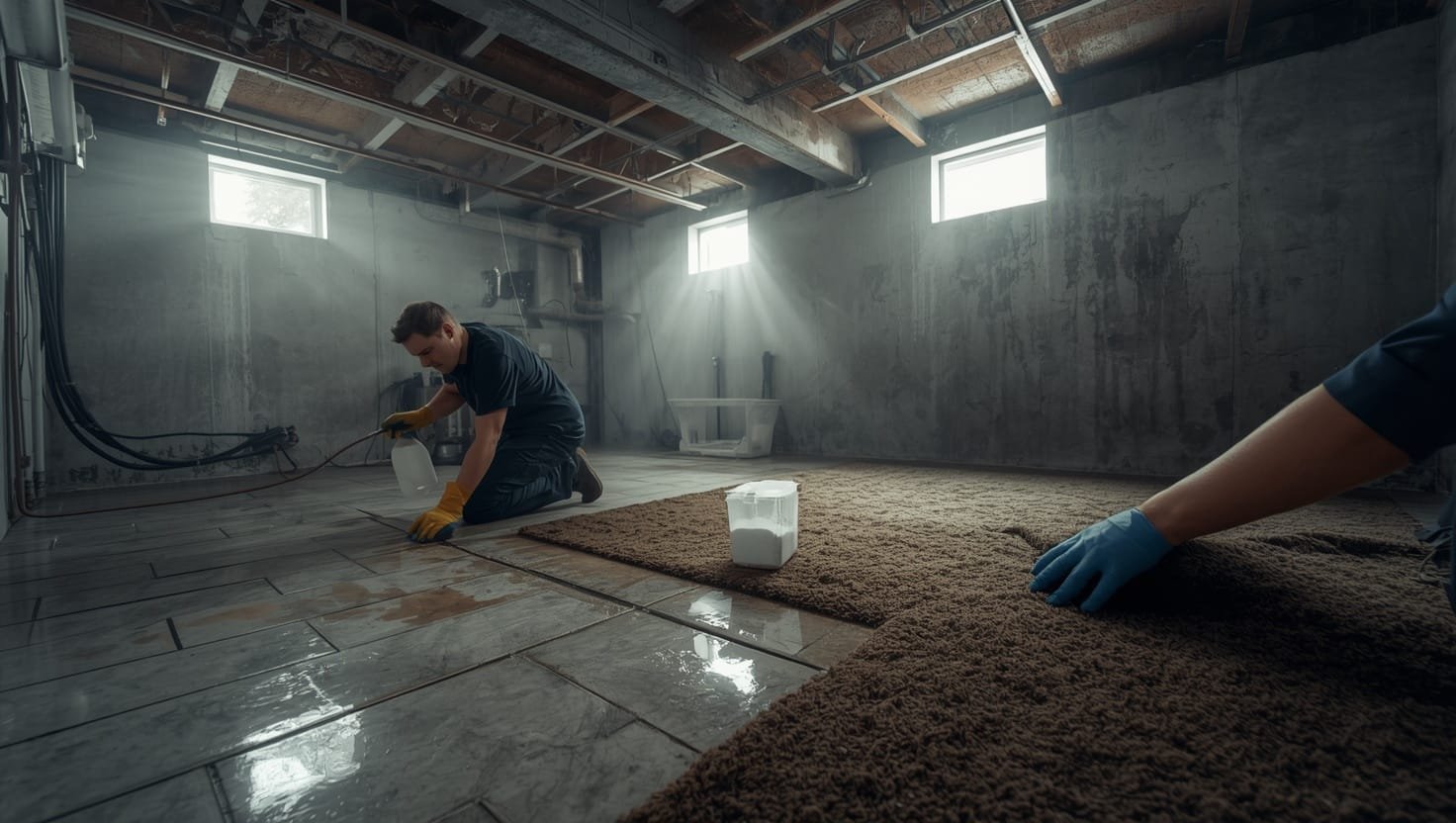
Baking soda. Spread it everywhere—on concrete, on any remaining surfaces. Let it sit for 24 to 48 hours. It absorbs odors at a molecular level, not just covering them up. It’s cheap, non-toxic, and it works.
Activated charcoal. Similar principle to baking soda but stronger. Grab bags of it from any hardware store and place them around your basement. They’ll pull odors out of the air constantly.
White vinegar solution. Mix one part white vinegar with three parts water and spray surfaces. Vinegar kills odor-causing bacteria and mold spores on contact. Your basement will smell like vinegar for a bit, but that’s way better than that death-smell, and it fades as things dry.
Enzyme-based cleaners. These are the heavy hitters. Enzymes literally break down the organic compounds causing the smell—they don’t just cover it. Brands like Nature’s Miracle or similar enzyme cleaners work on concrete and wood. They’re more expensive than vinegar, but they’re worth it for serious odor problems.
Ozone generators (use with caution). These machines create ozone gas that kills mold spores and neutralizes odors. But here’s the catch—ozone is toxic to humans. You can’t be in the room while it’s running, and you need to ventilate thoroughly afterward. If you go this route, rent one from a professional equipment company and follow instructions exactly.
Bottom line: Baking soda and vinegar work; enzymes and ozone work faster—pick based on how bad the smell is.
What Not to Do (Learn From Others’ Mistakes)
People panic when their basement smells bad, and panic leads to dumb decisions.
Don’t just paint over wet drywall. You’re trapping moisture inside. Paint will peel, and the smell will get worse. Remove the drywall first.
Don’t rely on air fresheners or perfume sprays. You’re just covering up the problem. The mold keeps growing underneath while you think you’ve fixed it.
Don’t run your HVAC system to spread air around. If your basement has mold, running your central air system spreads mold spores throughout your entire house. Shut it down until the basement is clean and dry.
Don’t skip the dehumidifier phase. Fans alone won’t work. You need active humidity control, or you’re just moving wet air around.
Don’t ignore hidden moisture. If your basement still smells after two weeks of drying, there’s moisture somewhere you can’t see. That’s when you need a professional to find it.
Bottom line: Shortcuts on water damage always cost more money later—don’t take them.
The Timeline: When Your Basement Should Stop Smelling
So how long does this actually take?
Day 1 to 2: Water removal, wet material removal, initial drying setup. Smell is still brutal because everything’s wet and bacteria are in overdrive.
Day 3 to 5: Humidity starts dropping. You’ll notice the smell beginning to fade—not gone, but noticeably better. This is when you apply baking soda and enzyme cleaners.
Day 5 to 10: With aggressive drying (dehumidifiers running 24/7), humidity should be dropping below 60%. Smell continues to fade. Surfaces are visibly drying.
Day 10 to 14: Humidity should be approaching 50% or lower. Smell should be mostly gone, though you might notice it if you go nose-to-concrete close to the floor. This is normal—the concrete is still releasing trapped moisture.
Day 14+: Smell should be gone or barely noticeable. If it’s not, you’ve got hidden moisture or mold that needs professional attention.
Every situation is different though. A small, well-ventilated basement might clear in a week. A large, finished basement with lots of wet material could take three weeks or longer.
Bottom line: Two weeks is your benchmark for a normal flooded basement—longer means you need professional help.
When to Call a Professional (Don’t Be a Hero)
Real talk: sometimes your basement is too far gone for DIY fixes.
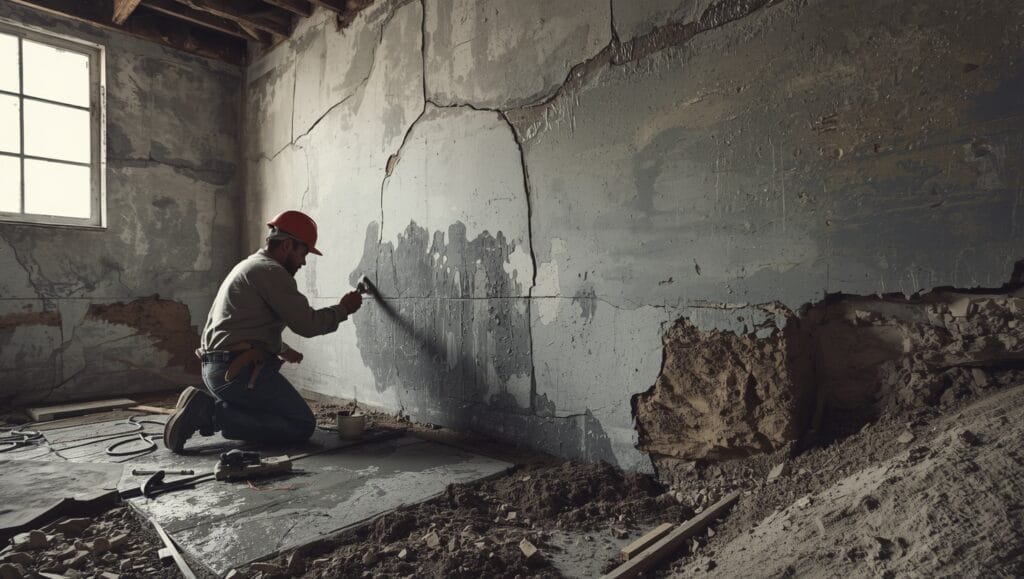
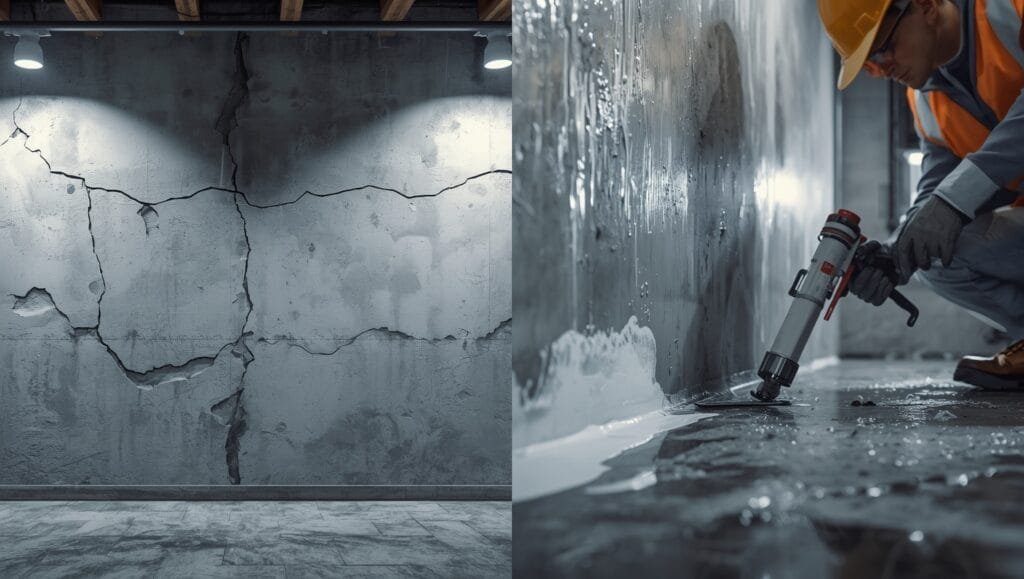
If you see black or green mold spreading across surfaces, if the smell comes back after you’ve dried everything, or if moisture keeps returning—you’re dealing with something bigger. Maybe it’s mold remediation work. Maybe it’s a foundation crack letting water seep in. Maybe your drainage system is failing.
This is when you call someone who actually knows what they’re doing.
Healthy Spaces handles exactly this. They come in, assess what’s really going on (not just what you can smell), and fix the root cause. Mark Frillici’s team has saved basements in Rochester and across New York from becoming total losses because they caught problems early.
The cost of a professional inspection? Usually $300 to $500. The cost of waiting and letting mold spread? Easily $5,000 to $15,000 in remediation. Do the math.
Bottom line: If smell returns after drying or you see mold growth, call a pro—DIY stops working fast.
The Smell Won’t Go Away—Here’s Why Your Basement Recovery Isn’t Working
You’ve dried everything. You’ve sprayed vinegar. You’ve bought baking soda by the bag. But that stench is still there, creeping up the stairs and making your whole house smell like a tomb.
Welcome to the part of basement recovery nobody talks about—the waiting game where nothing seems to work.
The truth is, most people fail at how to deodorize a flooded basement because they’re treating the symptom instead of the disease. They tackle the obvious stuff (standing water, soggy carpet) but miss the hidden culprits that keep pumping out smell for weeks.
This part of the recovery process is where patience meets strategy. You’ve already done the hard labor. Now you need to understand why the smell lingers and what actually kills it for good.
Why the Smell Comes Back (Even When Everything Looks Dry)
This is the part that drives people crazy.
You’ve been running dehumidifiers for a week. Humidity’s dropping. Surfaces look dry. But walk down those basement stairs and—boom—that smell hits you again.
What’s happening is concrete is a liar. It looks dry on top while still holding water deep inside its pores. That trapped moisture keeps feeding bacteria and mold colonies that you can’t see. They’re literally living inside the concrete itself, releasing odor compounds as they feed.
Concrete is also porous like a sponge—it can hold up to 20% of its weight in water. A 1,000 square foot basement floor can be hiding hundreds of gallons of water that won’t surface until you stop running dehumidifiers. That’s when it wicks back up and the smell returns.
Another culprit: your foundation walls. Water soaks into the masonry and brick, then slowly migrates outward. You’ve been treating the basement floor, but the walls are still wet. The smell is coming from there, and you won’t notice it’s better until the walls fully dry—which takes longer than the floor.
One Rochester homeowner called Healthy Spaces after three weeks of running dehumidifiers herself. The smell was still there. Turns out, water was trapped behind her foundation walls from a crack that nobody caught. The dehumidifier was fighting a losing battle. Once Mark’s team sealed the crack and brought in proper drainage equipment, the smell cleared in five days.
Bottom line: Concrete holds water deep inside—surface drying doesn’t kill hidden moisture or the smell it creates.
The Humidity Plateau Problem (And Why Your Equipment Might Be Useless)
You set up two dehumidifiers on day one. Humidity dropped from 95% to 70% in three days. Then it got stuck. For a week. Nothing changed.
That’s the plateau, and it’s where most people give up.
What’s really happening: your dehumidifiers are fighting moisture that’s deeper than they can reach. The top layer of concrete and drywall is dry enough that the machines are just circulating air around. The water that matters—the stuff trapped in the middle of your foundation walls or under concrete slabs—isn’t being touched.
The equipment you rented might not be sized right either. A 50-pint dehumidifier works fine for a small, well-ventilated basement. But if you’re in a 2,000 square foot basement that was underwater, that thing’s basically a fan.
You need to calculate based on square footage and how wet things got. A good rule: one large (70+ pint) dehumidifier per 500 square feet of flooded space. If you’re hitting a plateau, you probably need to double your equipment.
Also, where you place them matters. Put dehumidifiers in the dampest spots—usually corners, along foundation walls, and anywhere water sat longest. If you’ve got them in the middle of the room, they’re fighting moisture from far away instead of pulling it from where it’s concentrated.
Bottom line: Humidity plateaus mean undersized equipment or wrong placement—upgrade before giving up.
The Smell That Lives in Your HVAC System
You’ve been careful. You shut down your central air system like you were supposed to. But here’s the thing—if water made it to your basement before you closed the vents, spores and bacteria might already be living in your ductwork.
Your basement is connected to your whole house through the HVAC system. Even if you sealed off the basement vents, air moves through those ducts. Mold spores are microscopic. They travel.
Now when you turn the system back on, you’re spreading that smell (and worse—mold spores) through your entire home. You’ll notice the smell coming from upstairs vents. It’s not a new problem. It’s the old problem with a wider reach.
The fix: get your ducts inspected and cleaned before you restart your HVAC system. Some HVAC companies offer mold-specific duct cleaning. It’s not cheap (usually $500 to $1,500), but it’s way cheaper than treating mold in your living room later.
Better option—keep your HVAC off until your basement is genuinely dry (humidity below 50% for at least three days). Use portable space heaters if you need warmth. Portable AC units if you need cooling. Keep that system isolated until you’re sure the basement is clean.
Bottom line: HVAC ducts spread basement mold through your house—keep the system off until basement humidity is under 50%.
The Insulation Problem Nobody Wants to Deal With
Fiberglass insulation is cheap. It’s also a mold factory once it gets wet.
If your basement has insulation in the walls or ceiling, and it got flooded, that insulation is now a breeding ground. Mold loves fiberglass. It’s organic, porous, and holds moisture forever. You can’t dry it out. You can’t save it. It has to go.
But here’s the catch—most people don’t remove it. They just leave it there, hoping it’ll dry. It won’t. It’ll sit there releasing smell and spores for months while you wonder why your basement still reeks.
If your basement was finished (drywall, insulation, flooring), and it flooded, you’re probably looking at ripping out the walls down to the studs. That’s a bigger job, which is why people avoid it. But leaving wet insulation in place guarantees the smell won’t go away.
One thing you can do: if the insulation is only partially wet, carefully remove it and replace it with mold-resistant foam board insulation instead. Foam doesn’t absorb water. It dries fast. It’s not cheap, but it beats dealing with smell for months.
Bottom line: Wet fiberglass insulation can’t be saved—remove it or accept permanent smell.
The Concrete Sealer Trick (That Actually Works)
Once your basement is actually dry (humidity below 50% for at least a week), concrete sealers can help lock in any remaining smell.
Concrete breathes. It releases moisture and odors constantly. A good concrete sealer creates a barrier that stops some of that from happening. It won’t solve the problem if your basement is still wet, but once things are dry, it’s a smart move.
You’ve got two main options: penetrating sealers and membrane-forming sealers. Penetrating ones soak into the concrete and don’t change the appearance. Membrane ones sit on top and create a visible coating. Both work, but penetrating is usually better for basements because it’s less slippery.
Cost runs $0.50 to $2 per square foot depending on the sealer. A 1,000 square foot basement is $500 to $2,000. It’s not nothing, but it’s insurance against smell coming back if moisture ever returns.
Don’t seal until the concrete is actually dry. Sealing wet concrete traps moisture inside and makes things worse. Use a moisture meter to check—concrete should read 3% moisture or lower before you seal.
Bottom line: Concrete sealers lock in odors once dry—apply only after humidity drops below 50%.
The Bacteria That Lives in Your Sump Pump Basin
Your sump pump is working overtime. Water’s flowing out. But that basin at the bottom? It’s a swamp.
Sump pump basins collect all the water and debris. They’re dark, wet, and warm—basically a petri dish for bacteria and mold. Even as water flows out, new water sits in the basin waiting for the pump to kick on. That water gets stagnant. Bacteria bloom.
The smell from your sump pump basin can fill your entire basement on its own.
Clean it out. Use a wet vac to remove water and sediment. Scrub the walls with a brush and a diluted bleach solution (one part bleach to ten parts water). Let it dry. Then, here’s the key—keep it clean going forward. Check it weekly and remove any buildup.
Some people add a sump pump filter (a mesh screen that sits over the pump intake) to keep debris out. Others use a sump pump cover with a vent to reduce smell. Either way, a clean sump basin means less odor.
If your sump pump is running constantly and the basin keeps filling up, you’ve got a bigger problem—water is still coming in faster than the pump can handle. That’s when you need to look at your drainage system. Your sump pump is a band-aid. It’s not the cure.
Bottom line: Sump pump basins breed bacteria—clean weekly and install a cover to reduce smell.
When Smell Means You’ve Got a Leak You Missed
It’s been two weeks. You’ve done everything right. Humidity’s down. Materials are removed. But the smell is still there, or it comes back every few days.
That’s not a deodorizing problem. That’s a water problem you haven’t found yet.
Water is still coming in somewhere. Could be a crack in the foundation you didn’t see. Could be a window well that’s still leaking. Could be a pipe that’s still dripping. Could be groundwater seeping in from below.
The smell is your clue that moisture is still present. And if moisture is still present, mold and bacteria are still active.
This is where you stop treating and start investigating. Walk your basement on humid days—you’ll see water forming on walls or floors where it’s leaking in. Check all your window wells. Look for cracks in the foundation. Check every pipe connection. Trace water back to its source.
If you can’t find it, that’s what professional mold inspection is for. Mark Frillici’s team uses moisture meters and thermal imaging to find water you can’t see. They’ve caught leaks from foundation cracks, failed sealant around basement windows, and even hairline cracks in concrete that were weeping water constantly.
One Rochester homeowner spent three weeks fighting basement smell before calling Healthy Spaces. Turns out, a crack in the foundation wall—barely visible—was letting groundwater seep in. Once sealed, the smell cleared in days. She could’ve saved two weeks of frustration by getting professional help earlier.
Bottom line: Smell that returns or won’t leave means water’s still getting in—find and fix the leak.
The Reality of Enzymatic Cleaners (And When They Actually Help)
Enzyme-based cleaners work, but they’re not magic.
They break down organic compounds—the actual stuff causing the smell. But they only work on surfaces they touch. You spray them on concrete, wood, or carpet, and they eat away at the smell-causing bacteria and mold. But if moisture is still present, new bacteria colonize immediately after.
Think of enzymes as a cleanup crew. They’re excellent at their job. But if you keep pouring garbage into the room, the cleanup crew can’t keep up.
Enzymes work best after your basement is mostly dry and you’ve removed wet materials. Use them as a final step—not the main event. Apply them to concrete, let them sit for the time recommended on the label (usually 24 hours), and let them do their thing.
Brands like Nature’s Miracle are solid. So are commercial enzyme cleaners made specifically for water damage. Cost is usually $20 to $50 per bottle depending on concentration and brand. One bottle covers maybe 500 to 1,000 square feet.
Don’t waste money on enzymes if your basement is still wet. Dry first, clean second.
Bottom line: Enzymes clean surfaces—they don’t dry basements or kill smell from active moisture.
The Long Game: Preventing Smell From Coming Back
Once your basement is finally deodorized and dry, you want it to stay that way.
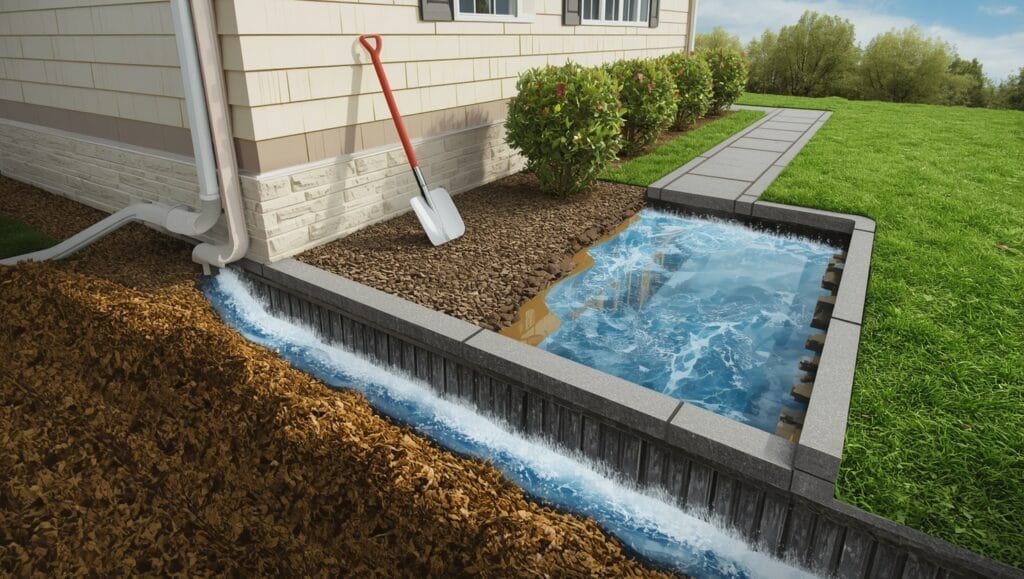
The best defense is preventing water from getting in again. That means proper drainage systems—both exterior and interior. Grading around your foundation should slope away from the house. Gutters should direct water at least 4 to 6 feet away. Interior drains or a sump pump system should be ready if water ever tries to come in again.
Humidity control matters long-term too. Keep a dehumidifier running year-round in your basement, especially in seasons when moisture is high. Target humidity below 60%. That’s the threshold where mold starts to love life.
Ventilation helps. If your basement is finished, make sure there’s air movement. Stagnant air holds moisture. Fans running for a few hours a day can make a difference.
And honestly—if your basement flooded once, it’ll probably try again. Getting a professional assessment of why it flooded is the smartest move you can make. Basement waterproofing and proper drainage keep problems from repeating.
Bottom line: Prevent future floods with drainage, grading, and year-round humidity control below 60%.
Frequently Asked Questions About Deodorizing Flooded Basements
How long does it take to completely deodorize a flooded basement?
Two to four weeks with aggressive drying and proper equipment. If you’re still smelling it after four weeks, there’s hidden moisture or a water leak you haven’t found—get professional help.
Can I use air fresheners to mask basement smell while things dry?
No. Air fresheners cover the smell temporarily but don’t address what’s causing it. Mold and bacteria keep growing underneath. Focus on drying and removing wet materials instead.
Will opening basement windows help deodorize faster?
Only if humidity outside is lower than inside. On humid days, opening windows makes things worse. Use dehumidifiers instead—they actively pull moisture out regardless of outside conditions.
Is concrete sealer necessary after a flood?
Not necessary, but smart. Once concrete is dry (below 3% moisture), sealing locks in remaining odors and prevents future moisture issues. Cost is reasonable compared to dealing with smell again.
What if the smell comes back after my basement dries?
Water is still getting in somewhere, or you’ve got hidden mold growth. Stop treating smell and start investigating leaks. Use moisture meters on walls and floors to find where water’s entering.
Can mold in basement ducts cause smell in upstairs rooms?
Absolutely. Mold spores travel through HVAC systems. Keep your central air off until basement humidity is below 50%, then have ducts professionally cleaned before turning it back on.
Is it safe to live in a basement while it’s drying and being deodorized?
Not if there’s active mold growth. Mold spores cause respiratory issues, especially for kids and people with asthma. Wait until the smell is gone and humidity is below 50% before using the space regularly.
The Bottom Line on How to Deodorize a Flooded Basement
Deodorizing a flooded basement isn’t about sprays and tricks. It’s about understanding what’s creating the smell and eliminating it at the source.
You remove water. You remove wet materials. You dry aggressively. You seal cracks and fix drainage so water doesn’t come back. And you do it all before the smell becomes a permanent part of your basement.
Most people fail because they skip steps or try shortcuts. They leave wet insulation. They don’t use enough dehumidifiers. They don’t find the water leak. Then they’re stuck with smell for weeks.
Mark Frillici and the team at Healthy Spaces have been solving this problem for nearly 20 years in Rochester, NY and beyond. They know where water hides. They know what causes smell that won’t go away. And they know how to fix it permanently.
If you’re dealing with a flooded basement right now—or the smell that won’t leave—don’t guess. Contact Healthy Spaces now for a professional assessment. Mark’s team will find what you missed and give you a real plan to reclaim your basement.
Because living with that smell? That’s not an option. And neither is hoping it goes away on its own.
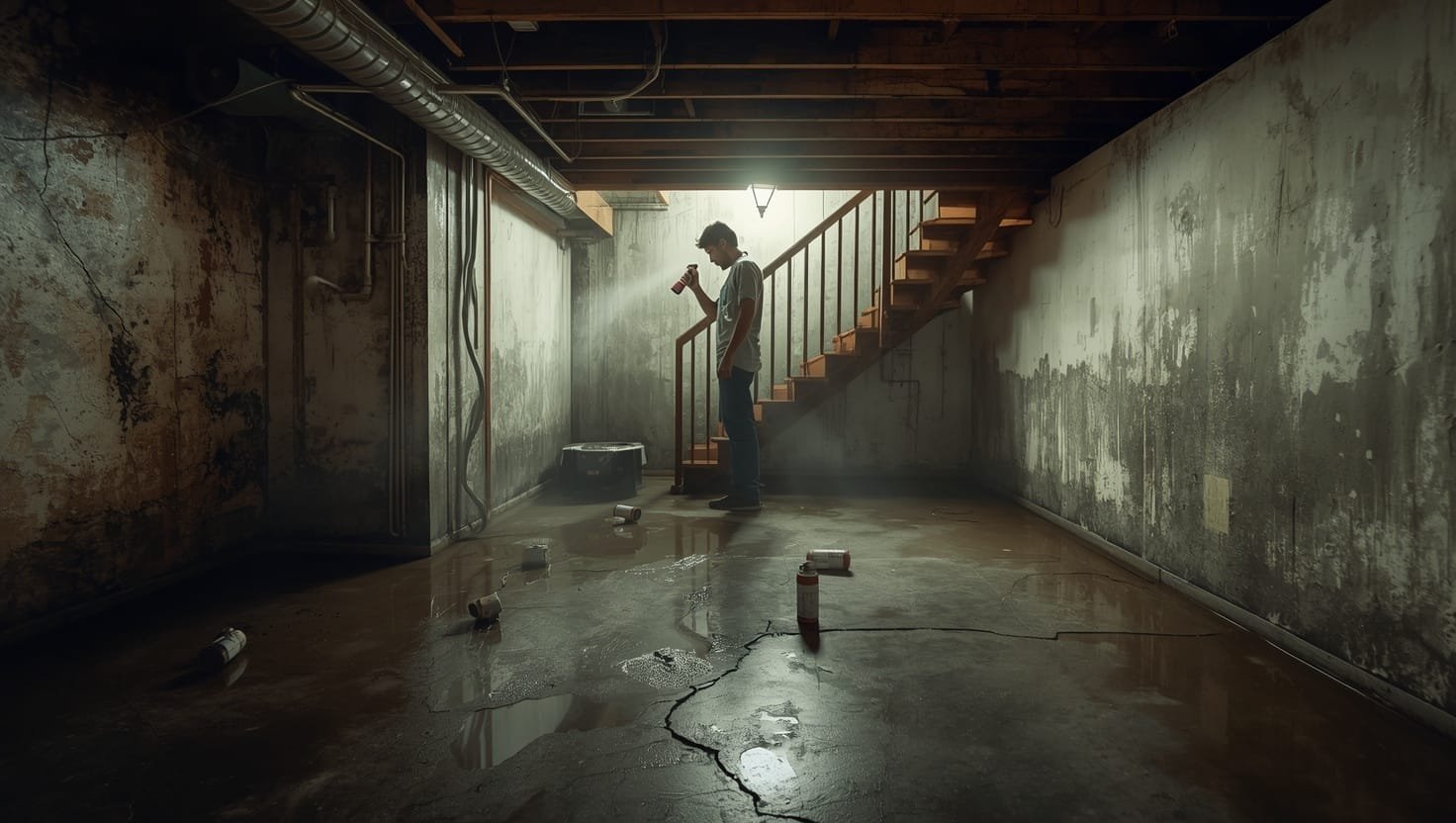
Your Basement Smells Like a Graveyard—But You’re Using the Wrong Tools to Fix It
You’ve done the work. Pulled out the wet carpet. Ran dehumidifiers for days. Sprayed vinegar until your eyes watered. Yet that smell—that thick, suffocating stench—is still creeping up the stairs like it owns the place.
The problem isn’t that you’re lazy or doing it wrong. It’s that you’re fighting an enemy you can’t see, and you don’t know where it’s actually hiding.
Most people think deodorizing a flooded basement is about masking smell or killing surface bacteria. It’s not. How to deodorize a flooded basement means understanding where smell lives, why it persists, and what actually kills it—not just covers it up for a week.
This section cuts through the noise and shows you what’s really happening beneath those floorboards and behind those walls.
The Hidden Places Where Smell Actually Lives (And Why You’re Missing Them)
Walk into your basement right now and take a breath.
That smell isn’t coming from one spot. It’s coming from multiple sources at once, and most of them are invisible.
Subflooring is one of the biggest culprits. You can’t see it—it’s buried under your finished floor or carpet. But if water got underneath, that wood is soaked. It’s rotting. Bacteria are feasting on it. Even if you removed the top layer, the subfloor stays wet and keeps producing odor for weeks.
Crawlspaces are another nightmare. They’re dark, damp, and rarely inspected. Water pools down there. Mold colonizes. Dead rodents decompose. And all of that smell seeps up through your basement floor and walls like a slow poison.
Wall cavities—the hollow spaces between your drywall and studs—trap moisture for months. You can’t reach them without opening up your walls. So while you’re spraying enzyme cleaner on the surface, mold is throwing a party inside those cavities.
One homeowner in Rochester had her basement professionally cleaned three times. The smell kept coming back. Turned out, water had seeped into the cavity walls during the flood. The drywall looked dry on the outside, but inside was a mold farm. Once Mark’s team at Healthy Spaces opened those walls and treated the cavity, the smell finally died.
Bottom line: Smell lives in places you can’t see—cavities, subflooring, crawlspaces are the real culprits.
The Thermal Imaging Trick That Finds Moisture Before Your Nose Does
Here’s something most people don’t know: you can see moisture with the right tools, even when it’s hidden.
Thermal imaging cameras detect temperature differences. Wet materials are cooler than dry ones. That’s not magic—it’s physics. A trained professional with a thermal camera can scan your basement and spot moisture hiding in walls, under flooring, and in cavities before it becomes a smell problem.
Moisture meters work the same way. They measure water content in materials. Stick one in drywall, concrete, or wood, and you get a reading. Below 15% is generally safe. Above that, you’ve got a problem brewing.
The thing is—these tools aren’t fancy or expensive. But they require someone who knows how to use them and what the readings actually mean. That’s where professional mold inspection makes the difference.
Mark’s team uses both tools on every water-damaged basement. They’re not just looking for mold. They’re mapping moisture patterns to understand exactly where water is, how deep it goes, and what’s at risk. Then they build a deodorizing strategy based on real data, not guesses.
Most homeowners never think to check for hidden moisture. They just assume if something looks dry, it is dry. That’s how you end up fighting smell for months while moisture secretly grows behind the walls.
Bottom line: Thermal imaging and moisture meters reveal hidden water—guessing costs you weeks of wasted effort.
The pH Factor (And Why Your Deodorizing Products Might Be Useless)
Different surfaces need different treatments. That’s the secret most people miss.
Concrete is alkaline. Vinegar is acidic. When you spray vinegar on concrete to kill odor-causing bacteria, the concrete neutralizes the acid. You’re spending money on a product that loses its power the second it hits the surface.
Enzyme cleaners work better on concrete because they’re pH-neutral. They don’t get neutralized by the surface. They just go to work breaking down organic compounds.
Wood is different. It’s porous and absorbs acidic cleaners well. Vinegar actually works on wood because the acid penetrates and kills bacteria inside the grain.
Then there’s drywall—which shouldn’t be wet at all, so you’re not treating it anyway. You’re removing it.
The point is, spraying the same product on every surface hoping it works is like throwing spaghetti at a wall. Some sticks. Most doesn’t.
Smart deodorizing means matching your product to your surface. Enzyme cleaners for concrete. Vinegar for wood. Baking soda for general odor absorption everywhere. And honestly—if you’re not sure what surface you’re treating, you’re already losing.
Bottom line: Wrong product on wrong surface wastes money—match cleaners to materials for real results.
The Temperature Problem (Why Cold Basements Stay Smelly Longer)
Bacteria and mold thrive in specific temperature ranges. Most grow fastest between 50°F and 90°F.
Your basement is probably around 55°F to 65°F year-round. That’s the perfect breeding ground.
Here’s the kicker—when your basement is cold and wet, dehumidifiers work harder and slower. Cold air holds less moisture, so humidity readings look better on paper. But the actual moisture content in materials stays high. You think you’re making progress when you’re really just moving damp air around.
Heating your basement speeds up the drying process. It sounds counterintuitive—more heat means more moisture release, which means faster dehumidification. A portable space heater running in your basement while dehumidifiers work can cut drying time by 30% to 40%.
But there’s a balance. Too much heat too fast can cause moisture to move deeper into materials instead of out of them. You want gradual warming—maybe 65°F to 75°F—paired with consistent dehumidification.
Most people don’t think about temperature when they’re trying to deodorize. They just crank up the dehumidifier and hope. That’s why the process takes so long.
Bottom line: Cold basements dry slower—add heat gradually to speed dehumidification and odor elimination.
The Bacterial Bloom Cycle (Why Smell Gets Worse Before It Gets Better)
This is something that freaks people out.
Day one after a flood: the smell is bad but manageable.
Day three: it’s significantly worse.
Day five: it’s unbearable.
What’s happening?
Bacteria are multiplying exponentially. Standing water is a breeding ground. Mold spores are colonizing surfaces. Dead organic matter is breaking down. All of this creates more volatile organic compounds (VOCs)—the stuff your nose detects as “death smell.”
The smell doesn’t peak on day one. It peaks around day three to five when bacterial population is at its highest. Then, as you remove water and dry things out, bacterial growth slows. The smell starts to fade.
But if you’re not actively removing water and wet materials, the smell just keeps getting worse. You’re feeding the bacteria by leaving moisture in place.
This is why speed matters so much in the first 48 hours. You’re racing against bacterial reproduction. Every hour you wait, the population doubles. By day three, you’re dealing with millions of bacteria instead of thousands.
One homeowner waited four days before calling for help. By then, the smell had penetrated into his HVAC system. When they finally got the basement dried, it took an additional week of duct cleaning to get the smell out of the upstairs.
He could’ve saved a week by acting on day one.
Bottom line: Bacterial population peaks day three—act before then or smell gets exponentially worse.
The Air Movement Mistake (Fans Aren’t Dehumidifiers)
People love fans. They’re cheap, they’re loud, they make you feel like something’s happening.
But a fan circulating wet air around your basement isn’t drying anything. It’s just moving moisture from one spot to another.
Dehumidifiers pull moisture out of the air and condense it into water that drains away. Fans move air around without removing moisture. They serve a purpose—helping dehumidifiers work more efficiently—but they’re not the main tool.
The mistake most people make is setting up two fans and thinking they’re drying the basement. Then they get frustrated when humidity stays stuck at 70% for a week.
You need dehumidifiers as your primary tool. Fans as secondary support. And proper ventilation to move dried air out of the space.
If your basement is below grade (which most are), natural ventilation is terrible. Air doesn’t flow. Opening windows helps a little on dry days, but on humid days it makes things worse. You’re pulling humid outside air into an already-wet basement.
This is why industrial-grade equipment matters. A commercial-sized dehumidifier can pull 100+ pints of water per day. Your bedroom dehumidifier pulls maybe 30 pints. If you’re trying to dry a 1,500 square-foot basement with a bedroom dehumidifier and two fans, you’re fighting a losing battle.
Bottom line: Fans move air, dehumidifiers remove moisture—don’t confuse the two or you’ll dry nothing.
The Smell That Returns After Everything Looks Dry
This is the one that makes people lose their minds.
You’ve been running dehumidifiers for two weeks. Humidity dropped from 95% to 52%. Surfaces look and feel dry. But the smell is still there—faint, but present.
What’s happening is concrete is still releasing moisture from deep inside. Concrete doesn’t dry from the outside in. It dries from the outside in AND from the inside out simultaneously. The interior of a concrete slab can stay wet for weeks while the surface feels bone-dry.
This is why the timeline matters. Two weeks is usually the minimum for a small basement. Larger basements with thick concrete slabs can take four to six weeks for complete drying.
The smell fading to barely-noticeable doesn’t mean you’re done. It means you’re getting close. Keep running the dehumidifier. Keep humidity below 50%. Once you hit that threshold and hold it for at least a week, the concrete is genuinely dry.
Then you can think about sealing, finishing, or whatever comes next.
Bottom line: Concrete releases moisture for weeks—fading smell means progress, not completion.
The Professional Assessment That Saves Thousands
At some point, you have to ask yourself: is this worth my time and guesswork?
A professional assessment costs $300 to $500. It gives you exact data about moisture levels, mold growth, and what’s actually causing the smell.
Compare that to spending three months fighting a smell that won’t go away because you missed a moisture source. Or ripping out materials twice because your first approach didn’t work. Or developing respiratory issues from mold exposure while you’re trying to DIY your way through this.
Mark Frillici and his team at Healthy Spaces have handled thousands of flooded basements across Rochester and New York. They know what works and what doesn’t because they’ve seen every variation of this problem.
They use professional-grade waterproofing and drainage solutions paired with mold remediation to make sure the problem doesn’t come back.
It’s not about being lazy. It’s about getting it right the first time instead of wasting weeks on trial-and-error.
Bottom line: Professional help costs less than months of guessing and failed attempts.
FAQ: More Questions About Deodorizing a Flooded Basement
Can I seal concrete while it’s still damp?
No. Sealing damp concrete traps moisture inside and makes smell worse. Wait until moisture readings are below 3% before sealing.
How often should I check humidity levels?
Daily for the first week, then every other day after that. Look for steady progress downward, not one good day followed by stagnation.
Will baking soda actually eliminate smell or just mask it?
Baking soda absorbs odors at a molecular level—it’s not masking. But it only works on surfaces it contacts. It won’t reach smell coming from inside walls or crawlspaces.
What’s the difference between a moisture meter and a humidity meter?
Humidity meters measure moisture in the air. Moisture meters measure water content in materials. Both matter, but moisture meters tell you if concrete or wood is actually dry.
Should I paint or seal my basement before it’s completely dry?
Absolutely not. Any coating traps moisture inside. Wait until humidity is below 50% and moisture meter readings are low before finishing anything.
How do I know if smell is coming from mold or just bacteria?
You can’t tell by smell alone. Both produce odors. Professional inspection with thermal imaging can identify mold growth before it becomes visible.
Can I use a regular home dehumidifier for a flooded basement?
Not effectively. Home units pull 30-50 pints per day. Flooded basements need 100+ pint capacity. You’ll need commercial equipment.
Your basement doesn’t need guessing or shortcuts. It needs a real plan based on what’s actually happening, not what you hope is happening.
Mark and his team at Healthy Spaces have spent nearly 20 years solving exactly this problem in Rochester and across New York. They know where moisture hides. They know what kills smell permanently. And they know how to keep it from coming back.
If you’re dealing with a flooded basement right now—or smell that won’t leave—don’t spin your wheels. Contact Healthy Spaces now for a professional assessment and get the real answer about what’s happening in your basement.